


Quick Answer: What Does Yi Mean?
Yi (义, yì), written 義 in traditional Chinese, is often translated as righteousness, rightness or moral appropriateness. It can describe a fitting act and a person’s disposition to choose it. The Analects (论语, Lúnyǔ) asks what guides judgment when gain is available. Mencius (孟子, Mèngzǐ) uses a case in which the manner of offering food matters to whether someone accepts it.[1][2][3]
- Act: An offer, judgment or response can be appropriate to a situation.
- Disposition: A person can be committed to choosing what is right even when an advantage pulls in another direction.
- Cultivation: Attention to the conditions of a choice helps make that disposition dependable.[1][2][3]
The range of the term becomes clearer when a text presents a specific choice.
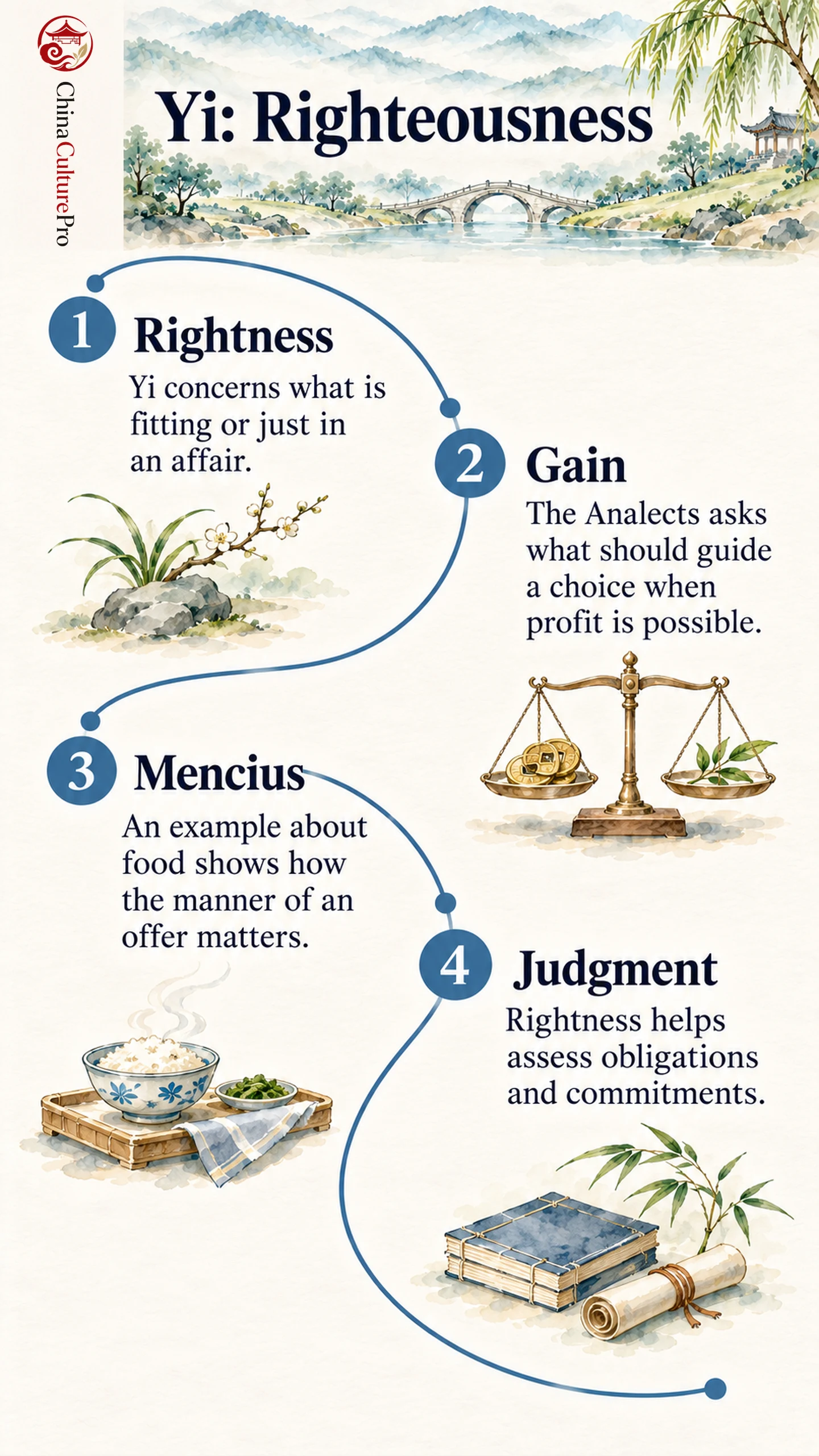
Someone may be offered something they want and still have to decide whether it is right to take it. The circumstances of the offer can make a difference. In the classical examples, an attractive outcome leaves questions about how the gain is obtained and what accepting it would involve.
Rightness and Gain in the Analects
In 4.16, the Analects distinguishes the orientation of the exemplary person toward rightness from an orientation toward gain. The point concerns what someone understands as worth attending to. If a person starts by asking how they can profit, they may overlook a feature that makes the available action inappropriate.[1]
This way of reading the contrast leaves a place for benefits. A person can earn a return through conduct they also judge to be right. The question is whether the prospect of a return decides the matter when another responsibility is at stake. The passage asks what governs the choice.[1][3]
What Mencius Shows With an Offer of Food
Mencius 6A.10 imagines food that someone needs and a humiliating manner of offering it. The example includes an offer made contemptuously and one in which the food is kicked toward the recipient. The recipient’s response brings out a feature of the act beyond the value of the food. How someone is treated can enter the decision alongside what they would gain.[2][3]
The passage then turns to a large stipend someone might take without the same concern for rightness. That comparison makes the example more than a general claim about dignity. It tests whether the readiness to reject a degrading offer continues when a different kind of benefit is large and attractive. Mencius treats the capacity to register such concerns as something that can be cultivated.[2][3]
What Rightness Adds to Other Virtues
In Analects 1.13, a promise is assessed by whether it is close to what is right. The example shows how yi can bear on trustworthiness. A commitment gives other people a basis for expectation, and its content still matters when the person decides what to undertake or carry out.[4]
This relationship helps explain the usefulness of reading the Five Constants together. Humaneness can direct attention to the other person and what a choice will do to them. Rightness asks whether the particular response is fitting given the people, obligations and circumstances involved. A single decision can call for both.[2][3][4]
FAQs About Yi Righteousness
Is righteousness the only translation of yi?
“Righteousness” can name a quality of character. “Rightness” or “appropriateness” can make the sense clearer where a text is evaluating a particular action.[1][2][3]
Does yi mean rejecting every benefit?
The Analects makes rightness a guide to decisions about benefit. Its concern is how a person judges an available gain and what they are willing to do to obtain it.[1][3]
How does yi differ from humaneness?
Humaneness emphasizes regard for others. Yi can emphasize the fittingness of a choice and the commitment to act accordingly. Both can matter in the same affair.[2][3]
資料來源
[1] The Analects. 4.16: Rightness and Gain
[2] Mencius. Book 6A, Including Passage 10
[3] Stanford Encyclopedia of Philosophy. Chinese Ethics
[4] The Analects. 1.13: Promises and Rightness