
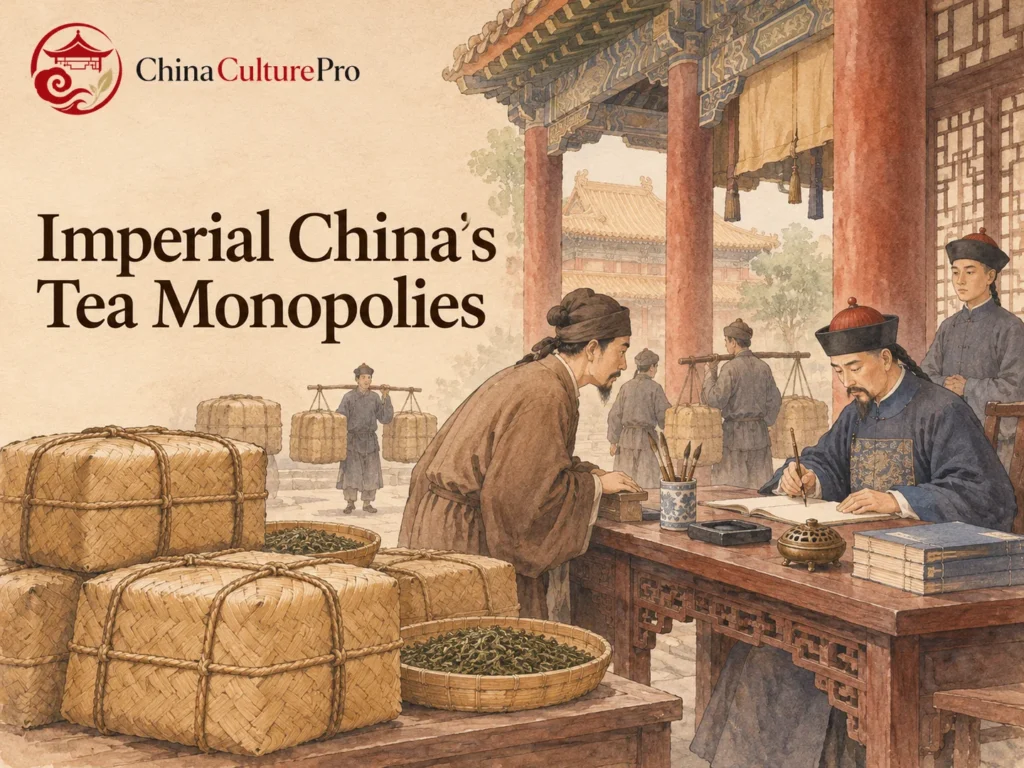

Quick Answer: What Is Tea Monopolies in Imperial China?
Imperial China’s tea monopoly (榷茶, quèchá) refers to state controls over tea commerce. Different governments taxed sales, reserved purchase and resale for authorized offices, or sold merchants rights to trade. Policy varied by period and region, even within the same dynasty.[1][2]
- Tang: Late Tang policy alternated between taxing tea and more direct intervention.
- Song: Official buying and selling coexisted over time with regulated private trade.
- Ming: Tea could also serve as a state-controlled commodity in exchanges for horses.
A tea tax raised revenue from trade. A monopoly could also determine who was allowed to buy, transport or sell a shipment.
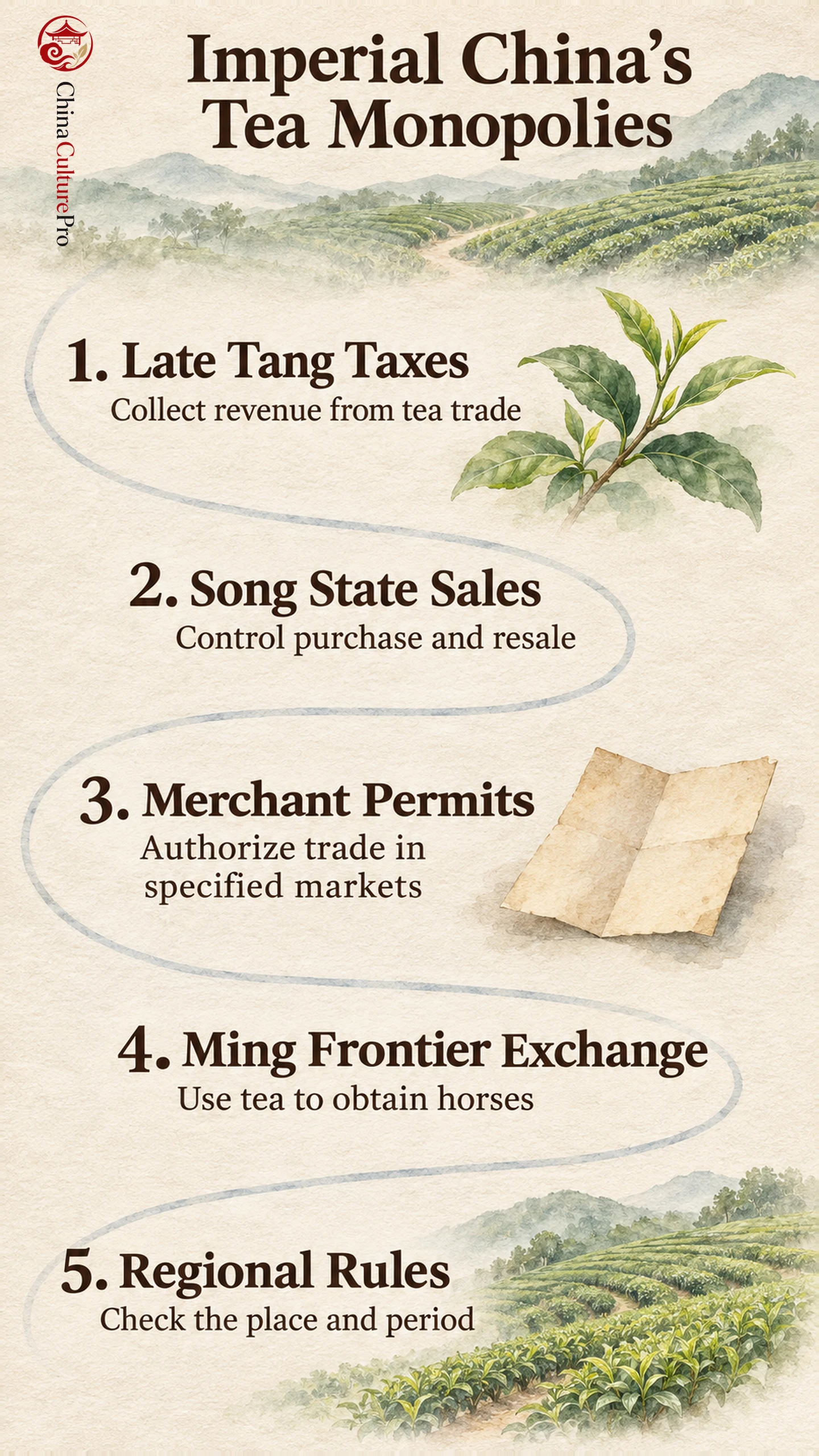
For a merchant, the key question was what had to happen before a shipment could leave a producing district. Paying a levy, buying from the state and buying permission to trade put officials at three different points in the transaction.
From Tang Levies to Song State Sales
The growth of the tea economy gave the late Tang government a new source of revenue. At different times officials taxed tea and experimented with more direct control. Growing, processing and drinking tea still belonged to a wider Chinese tea culture that fiscal documents only partly capture.[1]
In parts of the Northern Song, producers sold tea through government-controlled channels and officials regulated how merchants acquired it for resale. These arrangements mattered for both treasury receipts and for growers’ access to buyers. The rules could vary between producing districts and could change even where a monopoly was well established.[1][2]
What Changed When Merchants Bought Permits?
Under later Song arrangements, tea permits (茶引, cháyǐn) could give merchants the right to buy tea from growers and carry it to authorized markets. State revenue could come from the permit even when the government did not handle every load. The early twelfth-century reforms under Huizong illustrate that shift.[1][2]
For evidence about licensed trade, look for the place, year and stated terms of the permit. Papers governing where a merchant could sell explain a different part of the system from accounts recording what a producer was paid. This is one reason the history of the Chinese tea trade extends beyond any one monopoly.
Ming Tea and Horse Exchange
Ming frontier exchange gave tea an additional fiscal and political role. State tea could be exchanged for horses through designated offices. From 1490, the court invited merchants to deliver tea under a regulated arrangement that combined official deliveries and licensed commercial sales.[3]
The policy concerned specified routes and markets. Tea that supplied everyday domestic demand, tea covered by a merchant permit and tea designated for frontier exchange could move under different rules.[1][3]
FAQs About Tea Monopolies in Imperial China
Was a Tea Tax the Same as a Monopoly?
A tax took revenue from trade. A monopoly or licensing arrangement could also restrict who handled tea and where it could go.
Did Licensed Tea Merchants Pay for the Tea Separately?
Under some Song permit arrangements they paid for the right to trade and then paid growers separately for the tea.
資料來源
[1] Xiamen University. Studies in History, Volume 4, on Changes to Tea Policy
[2] Palace Museum. Research on Song Tea Controls
[3] Chinese Society for the History of Commerce. Tea Horse Routes and Trade Regulations