
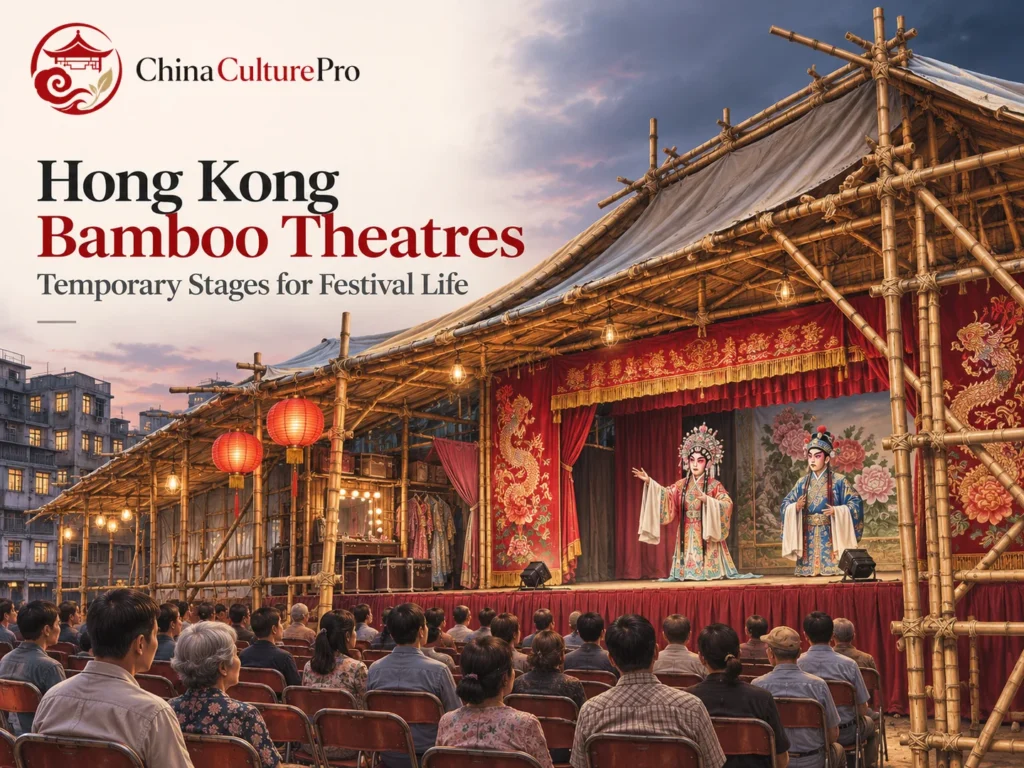

Quick Answer: What Is a Hong Kong Bamboo Theatre?
A Hong Kong bamboo theatre (戲棚, xì péng) is a temporary covered space built for an occasion, such as a festival with opera or religious rites. Experienced crews shape the structure for the available ground and expected audience. Inside, a raised stage, audience area and backstage space allow a troupe to perform at a site that serves other purposes during the year. [1][2]
- Structure: Bamboo and other materials make a covered framework for a temporary gathering.
- Performance: A stage and backstage support singers, musicians, costume changes and entrances.
- Festival space: Organizers gain an auditorium close to where people gather for the observance.
The theatre and the opera are separate crafts. An event brings builders, organizers and performers together. [2][3]
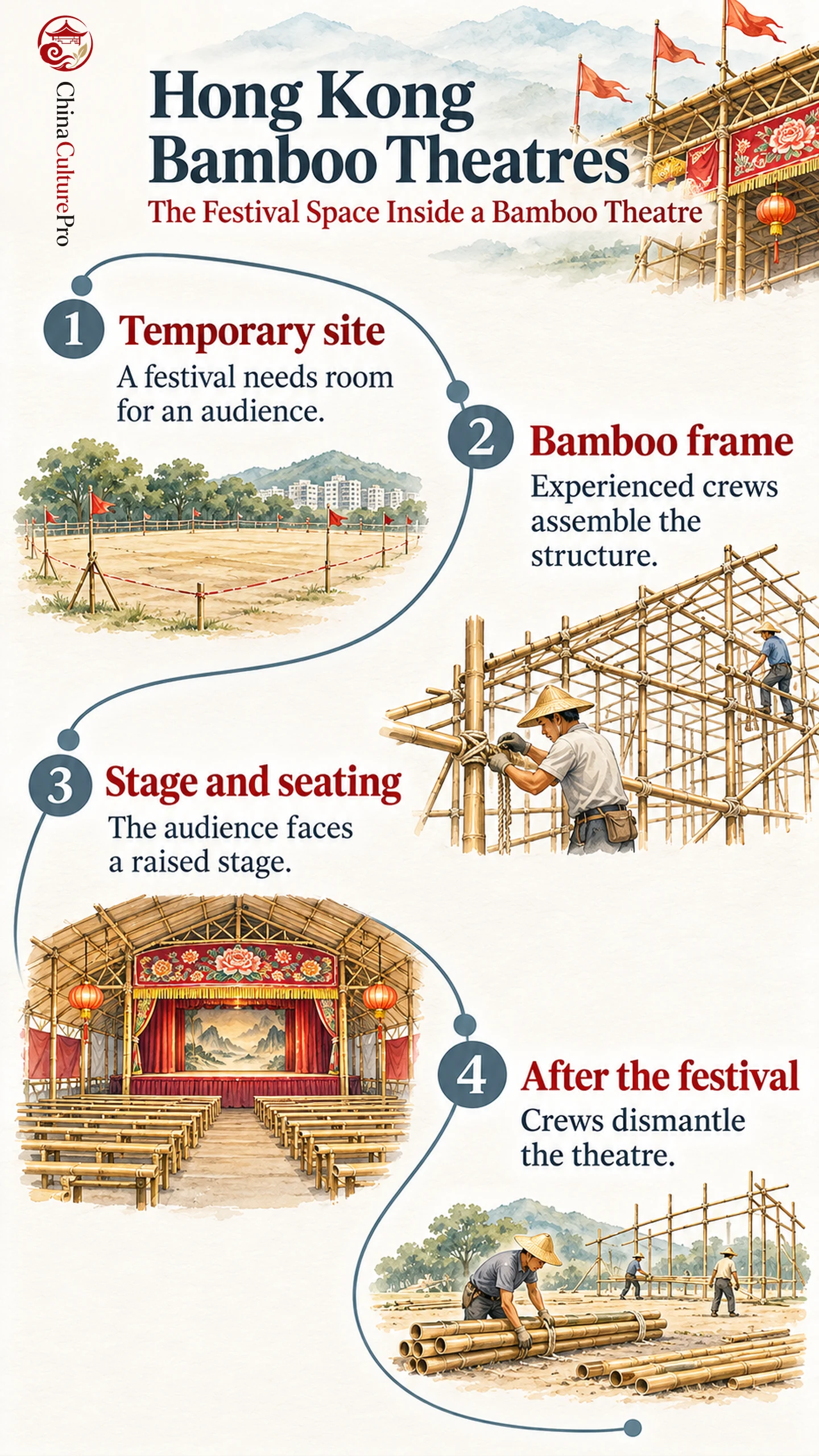
A bamboo theatre is easy to recognize by its temporary shell. Its interior tells you why someone commissioned it and how the festival will use it.
Why Festivals Build a Temporary Theatre
Hong Kong Memory traces local written records of bamboo theatres to the late nineteenth century. These structures could provide a venue for ritual activity or for an opera staged to thank deities. A festival committee can arrange a local venue on suitable open ground even where there is no permanent theatre nearby. [1]
The audience should be able to see performers and hear the singers and musicians. The troupe needs backstage space out of the audience’s view. Providing both in a temporary structure takes coordination between the workers who build the space and the people who will use it. Its importance lies in what a crew can provide for the occasion: shelter, room to see the stage and a place for the troupe to work. [1][2]
What to Notice Inside a Bamboo Theatre
| Espacio | What it supports | Qué buscar |
|---|---|---|
| Audience area | Viewing and gathering | Seats and aisles oriented toward the stage |
| Raised stage | Opera and other activities | A visible performance floor separated from the audience |
| Backstage area | Costumes, props and performer movement | Screened work areas and approaches to the stage |
Roof profile and layout can vary with the ground, the event and attendance. Hong Kong Memory describes more than one recognizable shed form. The outer framework and the stage plan answer different questions: where the building can fit and how the performance can happen inside it. [1][2][4]
What the Craft Makes Possible
At venues used during the Chiu Chow Yu Lan Festival, a stage can support opera performed as thanksgiving. The stage craft also serves Ópera china in other community settings. Cantonese opera can incorporate Cantonese naamyam, a form of narrative singing that also has a separate history outside staged opera. [7] Within Hong Kong culture, performance may take very different forms. In the Hakka unicorn dance of Hang Hau, musicians and dancers share a moving performance space shaped by the occasion. [2][3][5][6]
FAQs About Hong Kong Bamboo Theatres
Are the theatres built entirely out of bamboo?
Builders use bamboo alongside other materials, such as timber and roofing sheets. The name refers to the recognizable bamboo framework. [4]
Are the theatres permanent?
They are set up for an occasion and taken down afterward. The site can then return to other uses. [1][2]
Can a bamboo theatre serve ritual as well as opera?
Yes. Hong Kong Memory records temporary sheds used for ritual activities and for thanksgiving opera. Arrangements depend on the event. [1]
Fuentes
[1] Hong Kong Memory. History of the Bamboo Theatre
[2] Hong Kong Heritage Museum. The Majestic Stage: The Story of Cantonese Opera Theatres
[3] Hong Kong Government. Chinese Opera Festival Bamboo Theatre Showcase
[4] Hong Kong Memory. Special Features of the Bamboo Theatre
[5] Hong Kong Memory. Special Features of the Yu Lan Festival
[6] Hong Kong Intangible Cultural Heritage Office. Hakka Unicorn Dance in Hang Hau in Sai Kung
[7] Hong Kong Intangible Cultural Heritage Office. Nanyin: Southern Tunes