

Quick Answer: How Do Chinese Foods Get Their Symbolic Meanings?
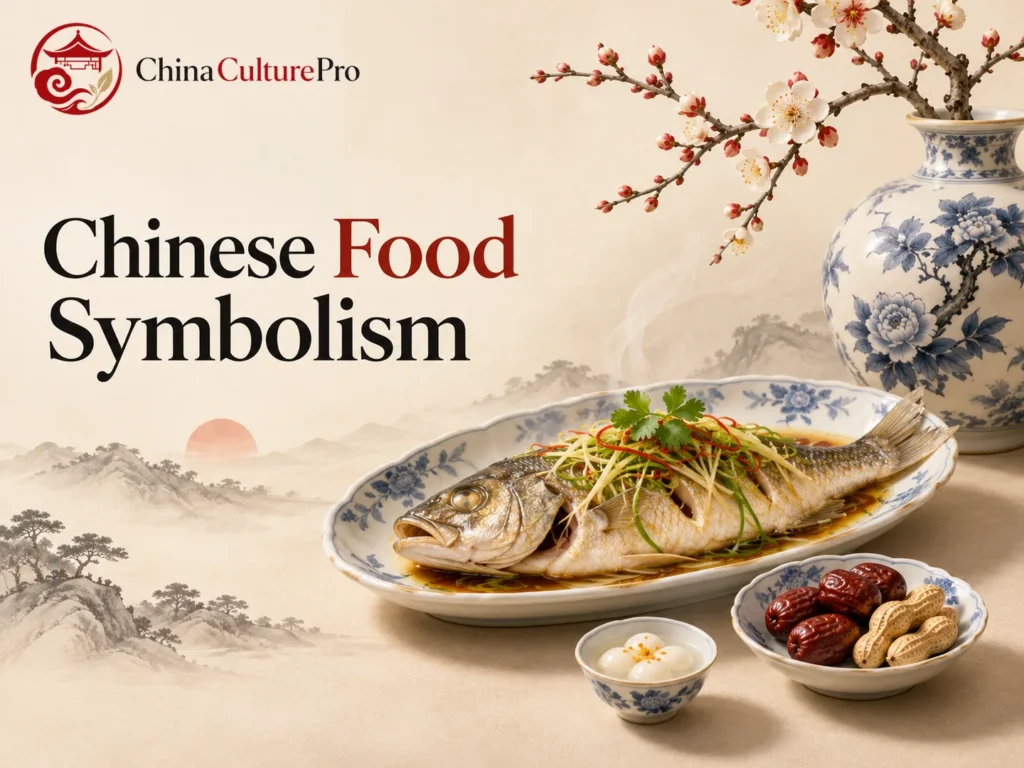
Chinese food symbolism often works through sound, shape and occasion. People serve a dish because its name echoes a wish, its shape makes the wish visible, or it marks the occasion on which a family serves it.[1][2][3][4][5][6]
- Sound: A word for fish sounds like the word for surplus.[2]
- Shape: The roundness of sticky rice balls evokes reunion.[3]
- Occasion: Long noodles can stand for long life when served for a birthday.[6]
These are ways of expressing good wishes. Which foods carry them, and how people serve them, can vary by community and family.[1][5][6]

A fish on a Chinese New Year table, a peanut at a wedding and a noodle at a birthday all carry wishes. One depends on how two words sound, another on a wedding expression, and another on the shape of the food. The occasion tells you which meaning the hosts have in mind.[1][4][6]
Chinese Food Symbols by Occasion
Start with what the meal is celebrating. The same ingredient may be ordinary at one meal and carry a particular wish at another. These are documented examples from holiday and family tables.[1][2][3][4][6]
| Plato | Ocasión | What it expresses |
|---|---|---|
| Pescado entero | New Year reunion meal | A wish for surplus and abundance |
| Round rice balls | Festival de los Faroles | Family unity and reunion |
| Jujubes and peanuts | Weddings in some communities | A traditional wish for the couple to have children soon |
| Long noodles | Birthday meal | Un deseo de larga vida |
What Food Means at New Year and the Lantern Festival
Whole fish at a reunion meal offers a clear example of a sound association. In Mandarin, fish (鱼, yú) and surplus (余, yú) sound alike. Hong Kong’s tourism board records the same pun in Cantonese. The fish thus expresses a hope that there will be plenty to carry forward into the next year. Some families use other food shapes. Dumplings shaped like old ingots, for example, suggest prosperity by their appearance. See the guide to Chinese New Year food for dishes from different regions.[1][2][7]
On the fifteenth day of the first lunar month, round glutinous rice balls called tangyuan (汤圆, tāngyuán) are one familiar Lantern Festival food. Their round shape suggests the family coming together. Methods and names vary. The guide to Chinese festival food covers how food choices change across the calendar.[1][3]
What Jujubes and Peanuts Say at a Wedding
An eighteenth-century carving of jujubes and peanuts at the Metropolitan Museum of Art shows that the association extends beyond food served at a table. In Mandarin, jujube (枣, zǎo) sounds like early (早, zǎo). The second syllable of peanut (花生, huāshēng) is the same as the word for giving birth (生, shēng). The pairing evokes a traditional blessing, 早生贵子 (zǎo shēng guì zǐ), which expresses the wish that the newlyweds have children soon. Suying Yang also documents lotus seeds as a wedding food with its own association with successive generations.[4][5]
The fruit and nuts can appear as snacks or be placed with wedding bedding. The custom reflects historical expectations about marriage and family. Specific foods and their importance vary.[4][5]
Why Birthday Noodles Are Served Long
Longevity noodles (长寿面, chángshòumiàn) make the wish visible through length. In one account in the USC Digital Folklore Archives, members of a family lift a long strand with chopsticks and take a photo. When they are apart, they still send photos to the person whose birthday they are celebrating. The longevity noodles guide explores the custom in more detail.[6]
FAQs About Chinese Food Symbolism
Does a Chinese dish always carry the same meaning?
The meal gives the dish context. Long noodles at a birthday express wishes for the person celebrating. The same kind of noodles on an ordinary day can simply be lunch.[6]
Does food symbolism work the same way in every Chinese language?
Some associations work in more than one language or variety. The fish-and-surplus pun works in both Mandarin and Cantonese. Other wordplay depends on the words and pronunciation people use locally.[2][5]
Fuentes
[1] Smithsonian National Museum of Asian Art. Lunar New Year
[2] Hong Kong Tourism Board. Traditional Dishes to Eat During Chinese New Year
[3] Shanghai Municipal Government. Explore the Charm of Lantern Festival
[4] The Metropolitan Museum of Art. Peanuts and Jujube Dates
[5] Suying Yang. Purely Linguistic Taboo/Good Luck Language and Its Impact on Behaviors in China
[6] Camille Zhang, USC Digital Folklore Archives. Chinese Birthday Tradition of Longevity Noodles
[7] Laurie Barnes, Norton Museum of Art. Celebratory Fare to Welcome Good Fortune for the Year of the Snake