
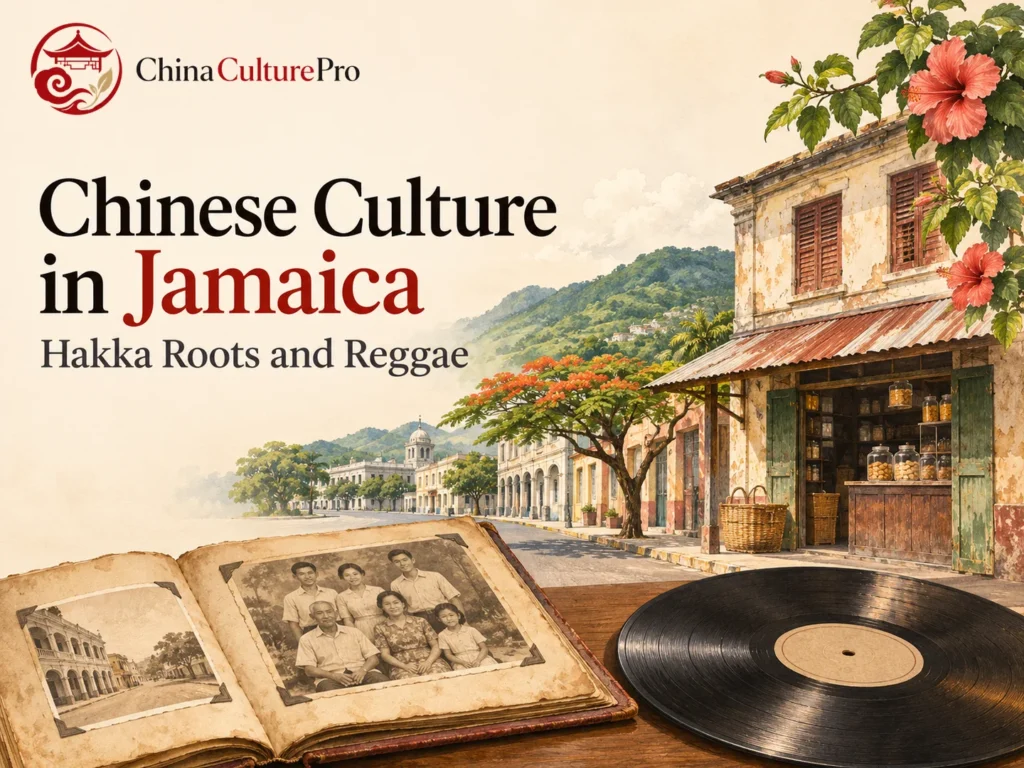

Quick Answer: What Shapes Chinese Culture in Jamaica?
Chinese Jamaican history includes indentured labor, village networks and participation in Jamaica’s music industry. Many early migrants belonged to the Hakka (客家, Kèjiā), a Chinese language and cultural community with roots in Guangdong. [1][3][4]
- Migration. Workers arrived in 1854 both directly from China and by way of Panama. [1]
- Mutual aid. Shops provided livelihoods, and community institutions supported families and preserved records. [2][3]
- Music. Chinese Jamaican producers and studio owners helped record and distribute Jamaican popular music. [4]
These histories connect the island to other Caribbean destinations, ancestral villages in China and Jamaica’s recording industry.
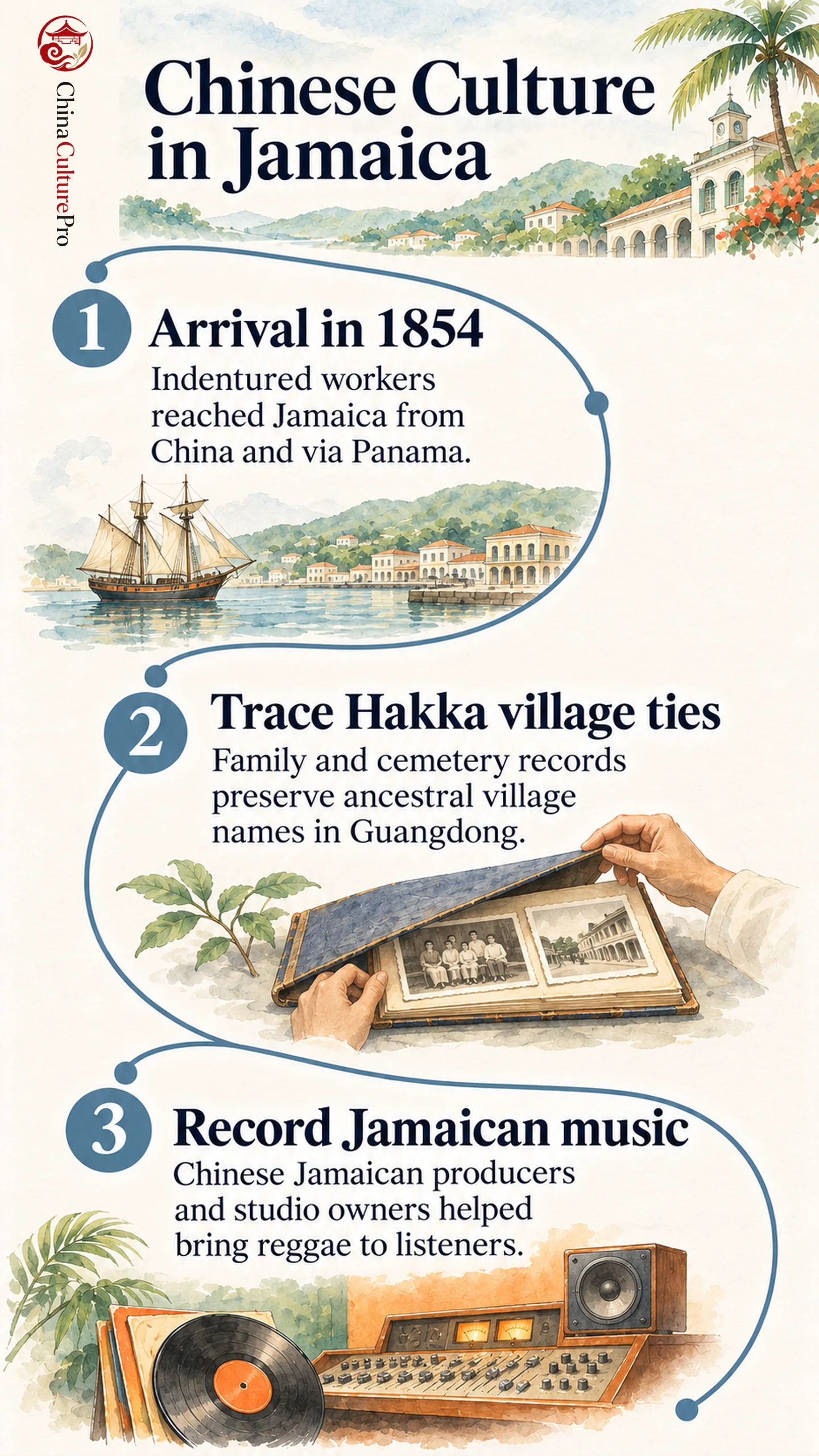
Village names in Kingston cemetery records tell one part of the Chinese Jamaican story. Record sleeves from Kingston studios tell another.
From Indentured Labor to Kingston Shops
After emancipation, plantation owners recruited indentured workers. Some people contracted in China reached Jamaica in 1854. Others arrived that year from Panama, and later groups came through Trinidad and Tobago and what is now Guyana. The routes show how a migrant’s last port of departure could differ from their place of birth. [1]
Some people who stayed after their contracts ended earned a living in the grocery trade. Shops opened in Kingston during the late nineteenth century. Free migrants arrived in the twentieth century, including people who followed earlier migrants from the same region. [1][2]
Hakka Villages and Community Institutions
The Chinese Benevolent Association traces many ancestral villages to a part of Guangdong historically called Fui Toong On. The name groups the Hakka names for three neighboring districts now commonly rendered as Huiyang, Dongguan and Bao’an. Cemetery inscriptions and family records help connect Jamaican surnames with specific villages. [3]
Benevolent organizations offered charitable assistance and helped resolve disputes. Their local role offers a comparison with other Chinese diaspora associations, where shared regional origins helped sustain mutual aid. [2][3]
From Record Shops to Reggae Studios
A 2014 tribute recognized producers including Leslie Kong and Vincent and Patricia Chin, as well as the Hoo Kim brothers of Channel One. The tribute covered different jobs in the industry, from running studios and record shops to playing in bands and engineering sound. These roles helped Jamaican recordings get made and reach listeners. [4]
FAQs About Chinese Culture in Jamaica
When did indentured Chinese workers arrive in Jamaica?
Indentured workers arrived in 1854. That year included arrivals directly from China and from Panama. Further groups followed in subsequent decades. [1]
What does Fui Toong On mean in Chinese Jamaican history?
It combines the Hakka names of three ancestral districts in Guangdong. Families use more specific village names to trace their origins within that area. [3]
Fuentes
[1] Jamaica National Heritage Trust. Atlas of Jamaica: Ethnic Populations
[2] National Library of Jamaica. History Notes: Chinese in Jamaica
[3] Chinese Benevolent Association of Jamaica. Ancestral Villages
[4] Jamaica Observer. Night of the Chinese