
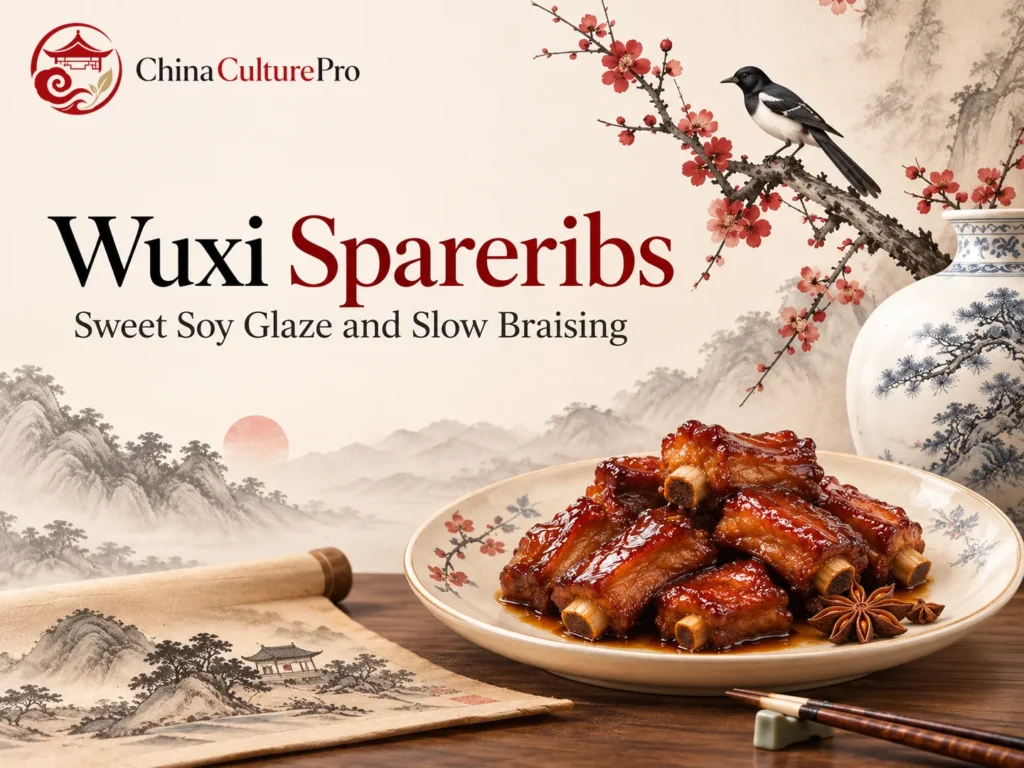

Quick Answer: What Are Wuxi Spareribs?
Wuxi spareribs (无锡酱排骨, Wúxī jiàng páigǔ) are bone-in pork ribs cooked in a sweet-savory braise in Wuxi, Jiangsu. The meat softens as it simmers, and the reduced cooking liquid leaves a glossy reddish-brown glaze.[1][2]
- Seasoning: Soy sauce and sugar give the glaze its salty-sweet balance.[2][3]
- Cooking: The ribs simmer in liquid before the sauce is concentrated around them.[2][3]
- Local variation: A documented shop method uses a red coloring ingredient that a soy-based home version can omit.[2][3]
Look for a glossy coating and tender pieces that still hold together.[1]

Wuxi’s sauced ribs are served at banquets and sold as a local specialty to take home. A soy-only home version can be darker brown than a specialist shop’s red-tinted ribs. Those differences make sense once you separate what gives the braise color from what gives it body.[1][2][3]
What Gives the Ribs Their Color and Flavor?
Use bone-in pork spareribs cut into short, meaty pieces. Soy sauce seasons the liquid and darkens it. Rock sugar is a common home choice, while ginger, rice wine and spices such as star anise and cinnamon bring fragrance. Sugar remains noticeable alongside the saltiness of the soy.[2][3][4]
A documented Wuxi shop preparation adds powdered red yeast rice (红曲米, hóngqūmǐ) and seasoned cooking stock. The red yeast rice contributes a red hue. A published home version uses ordinary and dark soy sauce and leaves the red yeast rice out. The color can therefore vary with the seasoning even when the basic method stays recognizable.[2][3]
How Wuxi Cooks Braise and Glaze the Ribs
- Blanch the ribs: After trimming and cutting, briefly cook the pieces in boiling water and drain. The documented shop method salts the ribs before blanching.[2][3]
- Braise until tender: Simmer the ribs with soy sauce, sugar, aromatics and enough liquid to cook them gently. The piece should hold its shape when lifted while yielding readily to a chopstick.[1][2][3]
- Reduce the cooking liquid: Finish uncovered so water evaporates and the seasoning concentrates into a shiny coating. Some home recipes add a small starch slurry after reduction for a sauce that clings more closely.[2][3]
The transfer from a covered simmer to an uncovered finish matters. If the pan goes dry before the pork has softened, add a little water. Over-reducing a sweet braise can make it too salty or scorch the sugar.[2][3]
Wuxi Shop, Home and Regional Comparisons
| Preparation | Hal yang perlu diperhatikan |
|---|---|
| Wuxi specialist shop | A sweet-savory rib braise. The documented shop uses red yeast rice and reserved cooking stock.[2] |
| Wuxi-style home braise | Short-cut ribs, soy sauce and a glossy finish. The home example uses rock sugar and star anise.[3] |
| Cantonese sweet-and-sour pork | Crisp-coated pork dressed in a tangier sauce, where vinegar typically defines the sweet-and-sour balance. |
Wuxi’s liking for sweetness shows up in other local foods as well.[4] The wider guide to Jiangsu cuisine puts the ribs in local context, while Chinese red-braised pork belly shows a related wet-cooking and reduction technique on a different cut. For another sweet pork dish with a different finish, compare Cantonese sweet-and-sour pork. In Xiamen shacha noodles, the signature seasoning instead flavors a soup.
FAQs About Wuxi Spareribs
Are Wuxi spareribs the same as sweet-and-sour ribs?
The Wuxi style relies on a sweet soy braise. A sweet-and-sour rib dish balances sweetness with prominent acidity, typically from vinegar.[1][2]
Does every version use red yeast rice?
No. It is documented in a Wuxi specialist shop formula, while one home formula gets its color from soy sauces.[2][3]
What should the finished sauce look like?
It should be shiny and thick enough to coat the surface of the ribs, with a reddish-brown or deep brown color.[1][3]
Sumber
[1] Wuxi Municipal Government. Wuxi sauced spare ribs
[2] Ministry of Commerce digital museum. Sanfengqiao history and documented rib preparation
[3] Epicurious. Wuxi spareribs home recipe
[4] China Daily. A place where treats are truly sweet