

Quick Answer: How Do Chinatowns and Qiaoxiang Differ?
A Chinatown is a neighborhood formed in a place of Chinese settlement abroad. A qiaoxiang (僑鄉, qiáoxiāng) is a hometown area in China whose households, economy, or buildings were shaped by sustained emigration. The two places can be connected through migration, letters, and remittances.[1][2][3]
- Chinatown. Shops, homes, and associations can serve people at the destination.[2]
- Qiaoxiang. Emigration and overseas earnings can change life in the place of origin.[1]
- The connection. Letters and receipts can record relationships between specific households across borders.[3]
One district abroad may gather families with many different places of origin.[2]

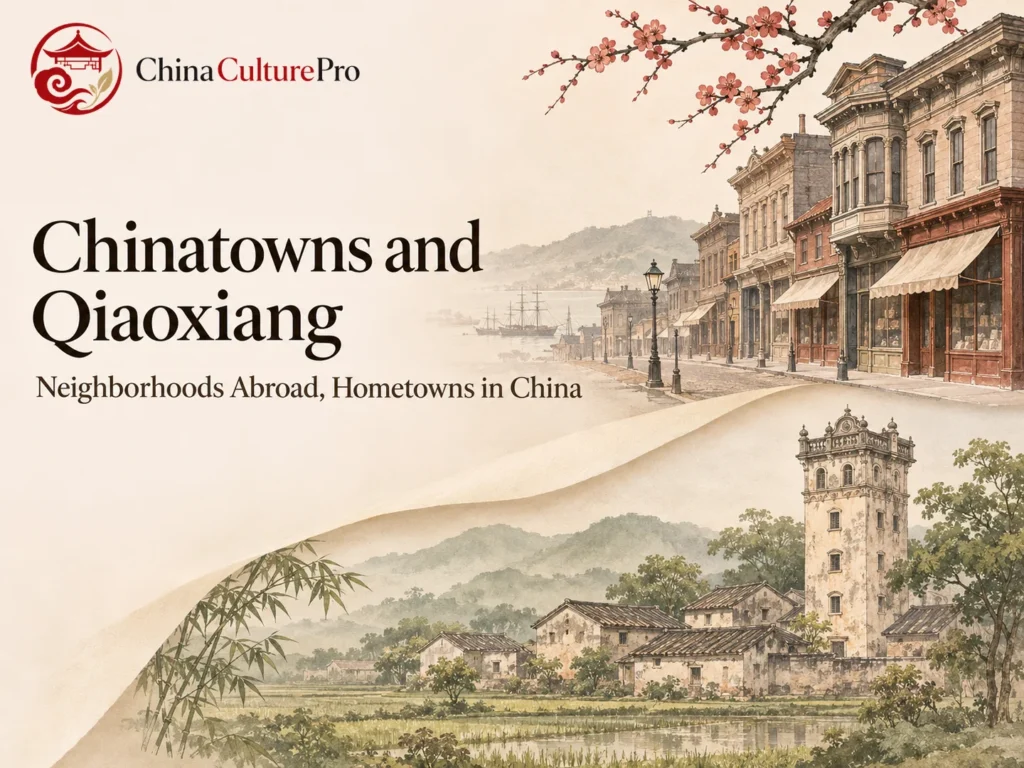
A district association building in San Francisco and a fortified village tower in Kaiping belong to different landscapes. Both can tell part of a migration story, if you know who organized, paid for, or used them.[1][2][4]
What You Can See in a Chinatown
A Chinatown can give newcomers places to find work, goods, and people who share contacts. Historical Chinatown culture in San Francisco included district associations that helped members with housing and employment. The Chinese Six Companies brought several of those associations together, so the neighborhood connected people from several districts.[2]
A neighborhood also develops in response to its own city. San Francisco’s 1906 earthquake damaged Chinatown and prompted attempts to relocate residents. That struggle belongs to the neighborhood’s local history as well as to Chinese diaspora culture.[5]
What Emigration Changed in a Qiaoxiang
In a qiaoxiang, relatives who stayed could use money sent from abroad to maintain households or contribute to schools, roads, and other buildings. Archaeological research on Kaiping links remittances and migrant connections to changes in village architecture.[1]
Kaiping’s diaolou (碉樓, diāolóu) are multistory fortified buildings. UNESCO describes communal refuges, private fortified residences, and watchtowers, with a mix of Chinese and Western architectural elements. The buildings show how an origin community could incorporate ideas encountered abroad.[4]
How People Linked the Two Places
Letters, remittance receipts, and account books can connect individual households and payments. The UNESCO-listed collections preserve correspondence between overseas Chinese and relatives in China, while surviving Taishan records document one family’s links through Hong Kong to the United States.[3][6]
That example is part of the wider history of Cantonese diaspora networks. A remittance receipt can trace one family connection, while association records show which districts organized together abroad.[2][6]
FAQs About Chinatowns and Qiaoxiang Communities
Can a qiaoxiang be larger than one village?
Yes. The term can refer to a home village or to a broader place of origin shaped by emigration. Identify the scale used by the account you are reading.[1]
Does a Chinatown have one ancestral hometown?
A Chinatown can bring together people from several districts. In San Francisco, multiple district associations were represented in the Chinese Six Companies.[2]
Sources
[1] American Antiquity. The archaeology of home: Qiaoxiang and nonstate actors
[2] Library of Congress. Community bonds and the early history of the Chinese Six Companies
[3] UNESCO Memory of the World. Qiaopi and yinxin correspondence and remittance documents
[4] UNESCO World Heritage Centre. Kaiping Diaolou and Villages
[5] U.S. National Park Service. 1906 earthquake and Chinese displacement
[6] The Development of Humanities and Social Sciences. Wu family remittance letters in Taishan