
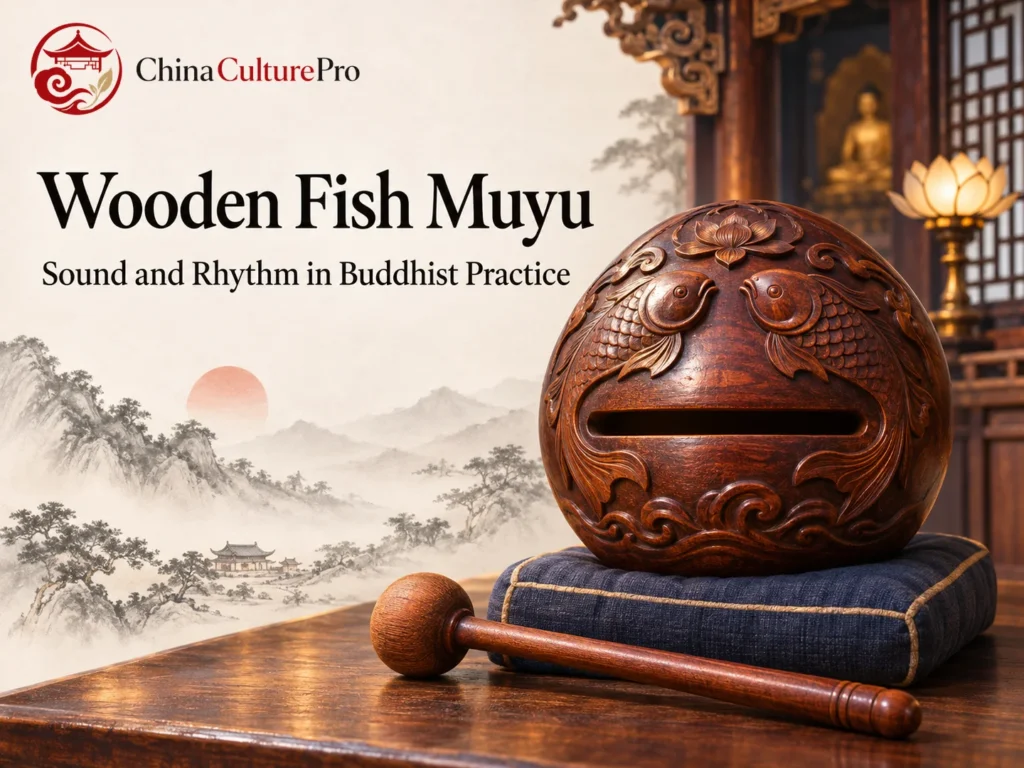

Quick Answer: What Is a Wooden Fish?
A wooden fish (木鱼, mùyú) is a Chinese Buddhist percussion instrument. A rounded form gives chanting a steady beat. A long fish suspended in a monastery can signal meals or gatherings. The fish is associated with watchfulness.[1][2][4]
- Sound: A hollow body and slit give a struck instrument its resonant wooden tone.[1][5]
- Chanting: The beat helps a group keep time as it recites.[2]
- Signals: A hanging form can mark activities outside a chanting session.[3][4]
Look at how the instrument is mounted as well as what shape it has.
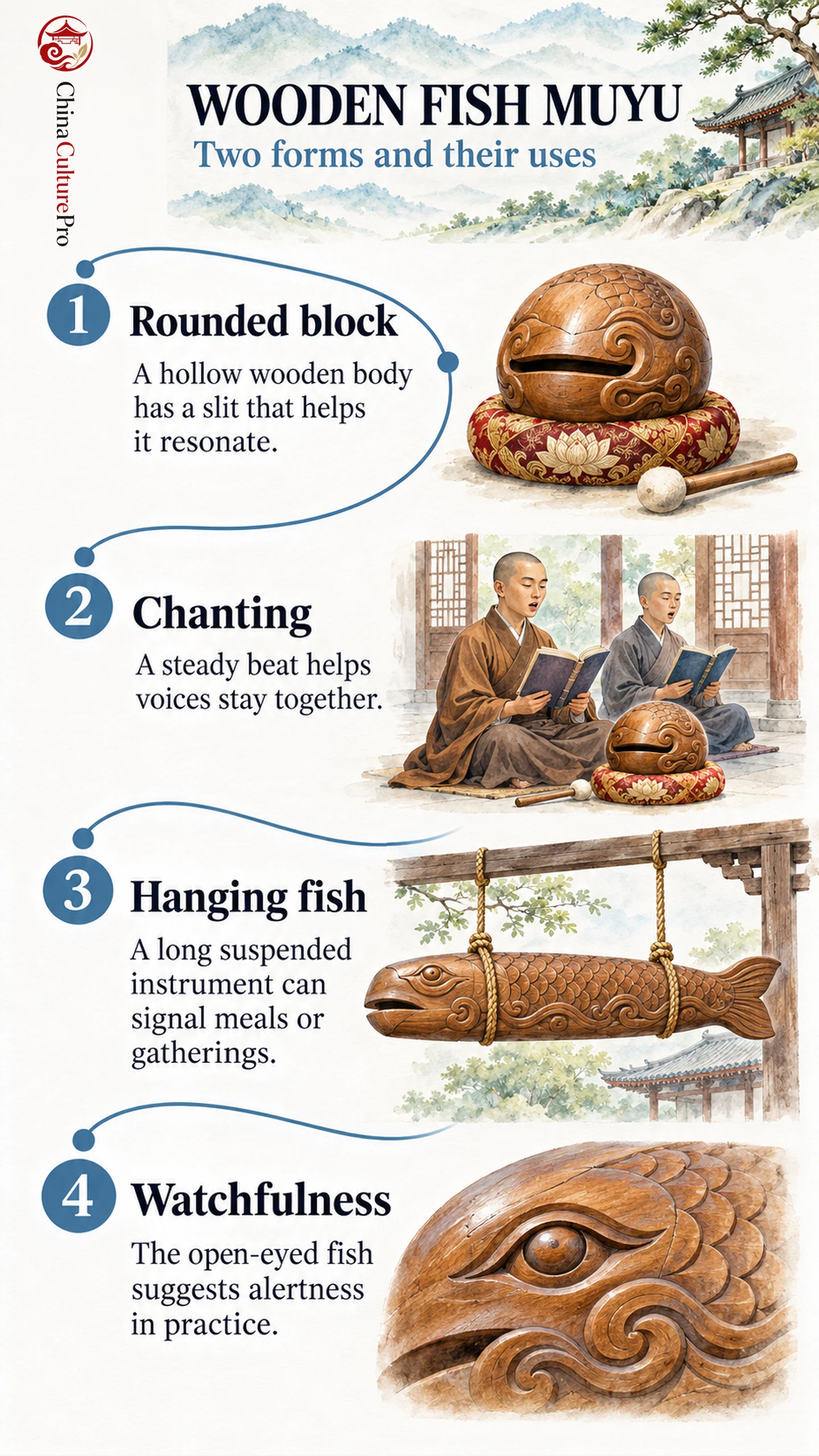
The wooden fish (木鱼, mùyú) can appear on a cushion near readers or suspended from a beam. The two settings help explain why the same name can refer to instruments used for different tasks.
How the Wooden Fish Supports Chanting
A rounded wooden fish is a hollow slit instrument struck with a mallet. The beat gives several voices a shared pace. In a service, a bowl gong may mark a particular moment while the wooden fish gives the recitation a beat. The distinction helps explain how sound can organize communal practices that include reciting a text such as the Heart Sutra.[1][2]
A Yunnan example at the Met resembles an actual fish. It was laid flat and struck on a marked area. The strike mark and the way it rests help identify its use.[1]
What the Hanging Fish Signals
A long wooden fish can hang near a dining hall or corridor. The monastic regulations associated with Baizhang describe sounding a wooden fish in connection with the start of a meal. A signal carries information to people in different parts of the compound. The position of the instrument can therefore make sense within the wider layout of Chinese Buddhist temples.[3][4]
Why the Instrument Is Shaped Like a Fish
Buddhist explanations associate the fish’s open eyes with watchfulness. The carved eye can remind practitioners to remain attentive. The eye gives that ideal a visible form beside the instrument’s audible beat. Ritual settings differ, and an extended ceremony such as the Water and Land Ritual brings together many other objects and sounds.[1][5]
FAQs About the Wooden Fish
Is the wooden fish a drum?
It is often called a slit drum or wooden gong. It sounds when the hollow wooden body is struck.
Are all wooden fish round?
No. The rounded block is common in chanting, and long fish-shaped forms also exist.
What does the open eye symbolize?
It evokes watchfulness and attentiveness in Buddhist practice.
Fuentes
[1] The Metropolitan Museum of Art. Mu Yu
[2] Buddhist eLibrary. Understanding the Chinese Buddhist Temple
[3] Bukkyō Dendō Kyōkai. The Baizhang Zen Monastic Regulations
[4] Fo Guang Shan Nan Tien Temple. Symbolism
[5] Museum der Kulturen Basel. Slit Gong, exhibition handout