

Quick Answer: What Were Ever-Normal Granaries?
Ever-normal granaries (常平仓, chángpíngcāng) were public grain reserves used in imperial China. Officials bought and stored grain when supplies were plentiful and could sell from reserves when prices rose. In emergencies the grain could also support relief. Ordinary sales and famine relief served different needs.[1][2]
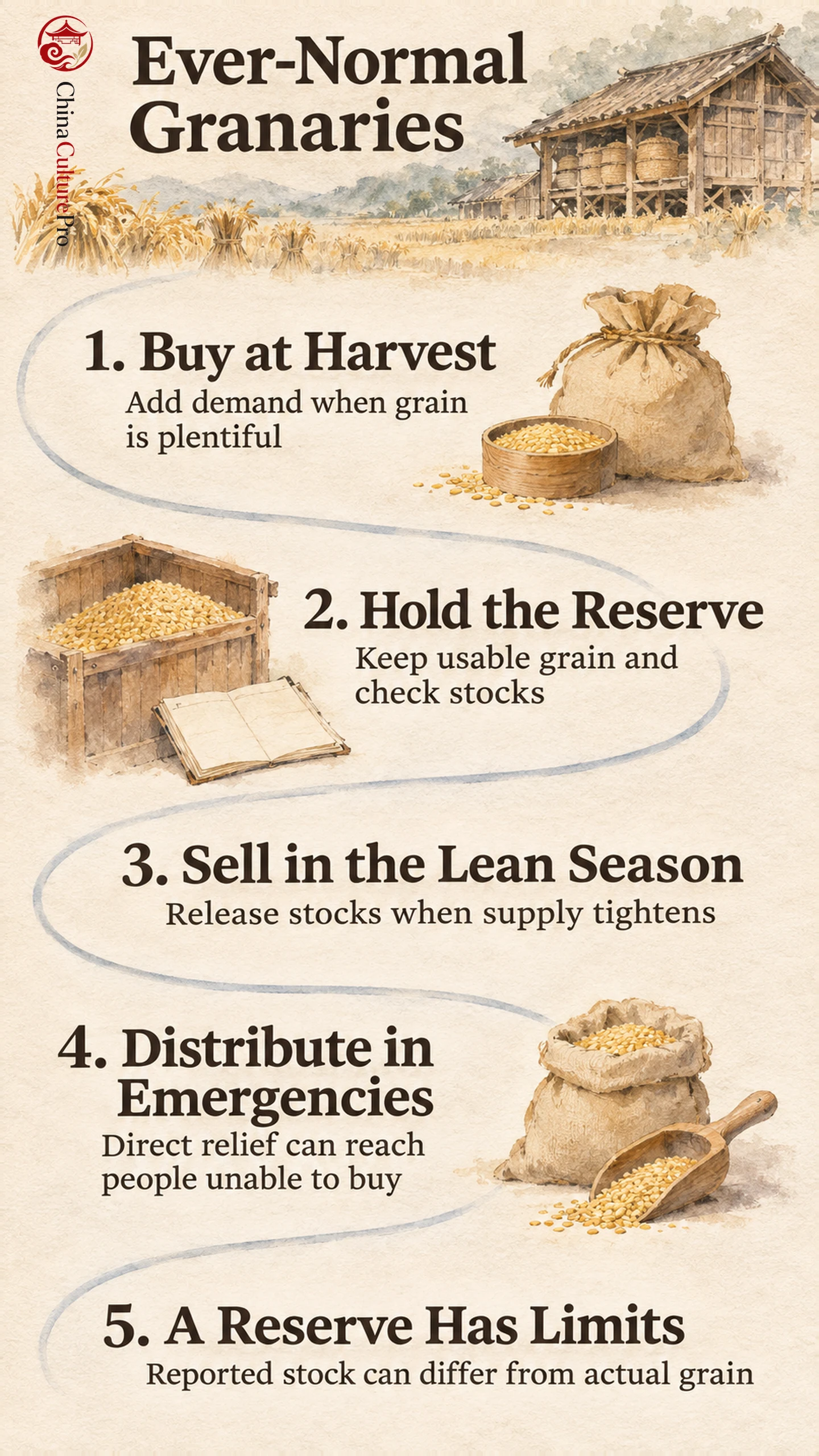
- Purchase: Buy when grain is plentiful to help replenish stocks and support the market at harvest.
- Release: Sell grain when supplies tighten, adding to the amount available to buyers.
- Relief: Use reserve grain or organize transfers when people or places faced severe shortages.
The name refers to an administrative arrangement for managing reserves and prices. A storehouse was only one part of the system.
Imagine a harvest that sends grain prices down, followed months later by a lean season that sends them up. A public reserve can buy during the first phase and sell during the second. Whether this helps depends on having grain available where people need it.
Buying Grain When Supplies Were Plentiful
A historical precedent appears in the account of Geng Shouchang, an official under the Western Han emperor Xuan. The later institutional compendium Tongdian records his proposal for granaries in frontier commanderies. They would buy at a relatively favourable price for growers when grain was cheap and sell at a lower rate when grain was dear.[1]
The two transactions mattered because the market shifted with the seasons. Purchasing at harvest brought buyers into a period of surplus. Releasing grain later added supply when households might otherwise face higher prices. The logic is easier to understand alongside the seasonal production cycles covered in Chinese agricultural history.
Holding and Releasing a Usable Reserve
In the Qing system, county-seat ever-normal granaries belonged to a wider network. Charity granaries in towns and community granaries in the countryside could operate alongside them. The distinctions involved who administered the store and which communities it was intended to serve.[2]
Actual stocks had to be kept edible, accounted for and replenished after a release. A listed quota could differ from what officials could put on sale. Understanding the reserve starts with those obligations. The physical problems of storage, including the buildings that kept the grain usable, belong to Chinese granary architecture.
Price Relief and Famine Relief
A sale at a reduced rate still required the buyer to have money. In a severe shortage, direct distribution could reach households that had lost that ability. The Qing relief effort during the drought in Zhili and northern Shandong in 1743–44 illustrates how officials could organize food relief across more than one locality.[2][3]
Local reserves had limits. A large regional crop failure could affect neighbouring markets at the same time, making it harder to restock. An empty reserve, a delayed transfer or a gap between the recorded and physical stock could all weaken the response. The granary was one part of a wider relief administration.[2][3]
FAQs About Ever-Normal Granaries
Did Ever-Normal Granaries Fix the Price of Grain?
They sought to moderate changes by timing purchases and sales. Local prices could still rise or fall with supply, demand and the amount of grain officials could release.
How Did Granary Sales Differ From Famine Relief?
Granary sales added grain to the market, often on favourable terms. Relief could distribute food directly to people who could no longer afford to buy enough.
Fuentes
[1] Du You. Tongdian: Officials and Positions, Taifu Qing
[2] Pierre-Étienne Will and R. Bin Wong. Nourish the People: The State Civilian Granary System in China, 1650–1850
[3] Kathryn Edgerton-Tarpley. Tears from Iron: Shanxi, Greater China, and the Famine