

Quick Answer: What Does Doupi Mean?
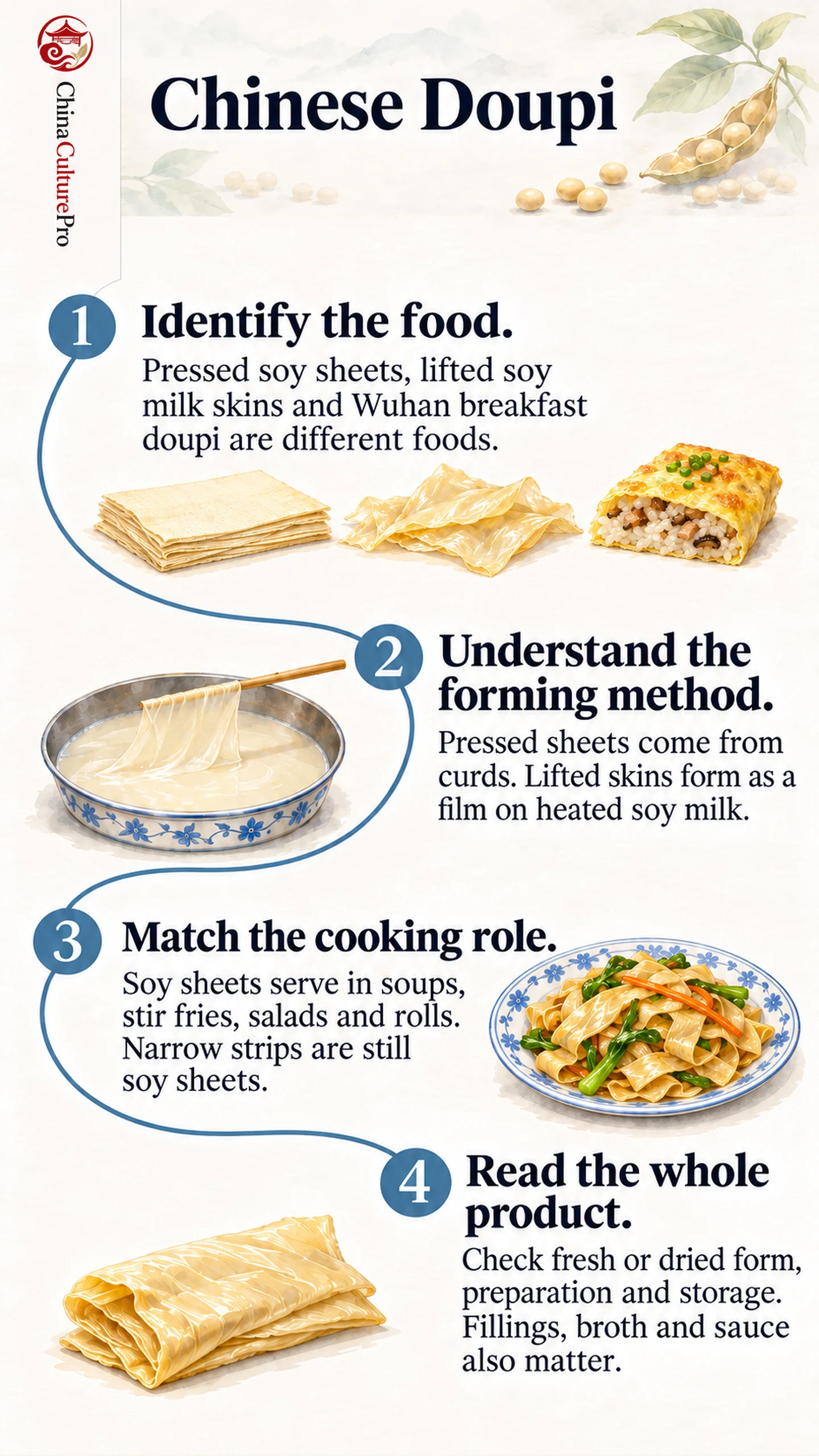
Doupi (豆皮, dòupí) can name different soy sheets or a filled Wuhan breakfast crepe. In an ingredient context, identify how the soy sheet was made.[1][2][4][5]
- Pressed sheets: Thin sheets formed from soybean curds.
- Lifted skins: Films collected from the surface of heated soy milk.
- Wuhan dish: A savory crepe containing sticky rice and other fillings.
This guide focuses on the soy ingredients. Similar packaging names can hide different products.
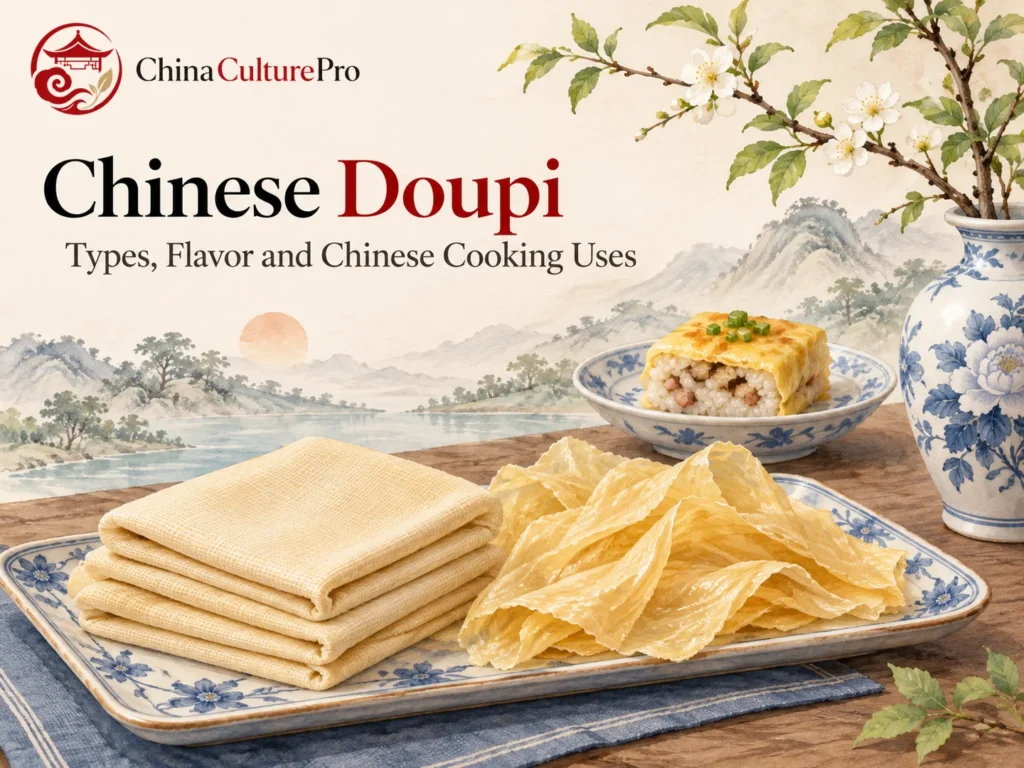
A folded soy sheet, a delicate dried skin and a square of Wuhan breakfast may all be described as doupi. The useful distinction is how each food is formed. That tells you more about its handling and eating texture than the English word skin.
One Name, Different Foods
Doufu pi (豆腐皮, dòufupí), or tofu skin, has two dictionary senses: lifted soy-milk film and pressed thin curds. Both meanings matter when reading product names.[1]
| Name or context | What to identify |
|---|---|
| Qianzhang (千张, qiānzhāng), also baiye (百叶, bǎiyè) | Thin pressed tofu sheets. |
| Fupi (腐皮, fǔpí), also doufu yi (豆腐衣, dòufuyī) | Lifted soy-milk skins, encountered fresh or dried. |
| Wuhan doupi | A cooked crepe filled with sticky rice, diced meat and mushrooms in a documented version. |
Wuhan doupi is a finished breakfast dish, rather than plain soy sheets.[4]
Pressed Curds and Lifted Soy-Milk Skins
Pressed sheets are thin, firm sheets of soybean curd with moisture pressed out. They belong to the tofu family.[1][2]
Lifted skins are collected from a film on heated soy milk. A Sanming making account identifies film-lifting as the point where its process differs from tofu making.[1][5][6]
Fuzhu (腐竹, fǔzhú), the folded or rolled bean-curd sticks, belongs to the film-based family. Sheets and sticks differ in form and handling.[5]
Flavor, Texture and Chinese Cooking Uses
Pressed sheets serve in stir-fries, salads, soups and hot pot, or enclose fillings. Narrow ribbons remain soy sheets rather than grain noodles.[2]
One producer describes its fresh lifted skins as creamy and nutty with a firm, slightly chewy bite. Dried sheets need rehydration for the uses discussed here.[3][5]
Film-based sheets enter soups, stews and dim sum rolls. Meat-filled rolls and layered vegetarian preparations give this same ingredient different roles.[5]
Choosing Sheets and Reading the Whole Dish
Check the product’s form and preparation directions. One fresh lifted-skin product, sold as yuba, lists water and soybeans and declares soy. Other products can have different formulas.[3]
The documented pressed sheets are refrigerated; dried bean-curd sheets are stored cool and dry. Follow the actual packaging and use-by information.[2][5]
For vegetarian eating, check fillings, sauces and broth as well as the soy sheet.[4][5]
FAQs About Chinese Doupi
Are all products called doupi made the same way?
No. Pressed curd sheets and lifted soy-milk skins are different preparations that can share overlapping names.
Is doupi a type of noodle?
No. Soy sheets can be cut into noodle-like strips, but that does not make them wheat or rice noodles.
Is Wuhan doupi the same as tofu sheets?
No. Wuhan doupi is a filled breakfast crepe, commonly made with sticky rice and savory additions.
Is a dish made with doupi always vegetarian?
No. Plain soy sheets and a finished dish are separate questions. Check fillings, sauces and broth.
Fuentes
[1] Taiwan Ministry of Education. Doufu Pi: Two Dictionary Senses
[2] The Woks of Life. Pressed Tofu Sheets: Uses and Storage
[3] Hodo Foods. Yuba Sheets: Fresh Soy-Milk Film and Ingredient Statement
[4] Wuhan Municipal Government. Doupi: A Filled Wuhan Breakfast Crepe
[5] The Woks of Life. Lifted Bean Curd Sheets: Forms and Uses
[6] Sanyuan District Culture and Tourism Bureau. Zhuzhou Tofu-Skin Making: Lifting Soy-Milk Film