


Quick Answer: What Is Doujiang?
Doujiang (豆浆, dòujiāng) is Chinese soy milk, a soybean-based drink familiar in breakfast settings. It can be plain, sweetened or prepared as a savory bowl, with hot and chilled options depending on the shop and style.
- Ingredient: Soybeans and water form the base; seasoning and additions vary.
- Style: A sweet cup and a savory, lightly set bowl offer different experiences.
- Pairing: Fried dough and other breakfast staples often accompany it.
Doujiang is not the same as Beijing’s fermented mung-bean drink or a bowl of set tofu pudding. Read the actual preparation rather than grouping every pale bean-based food together.
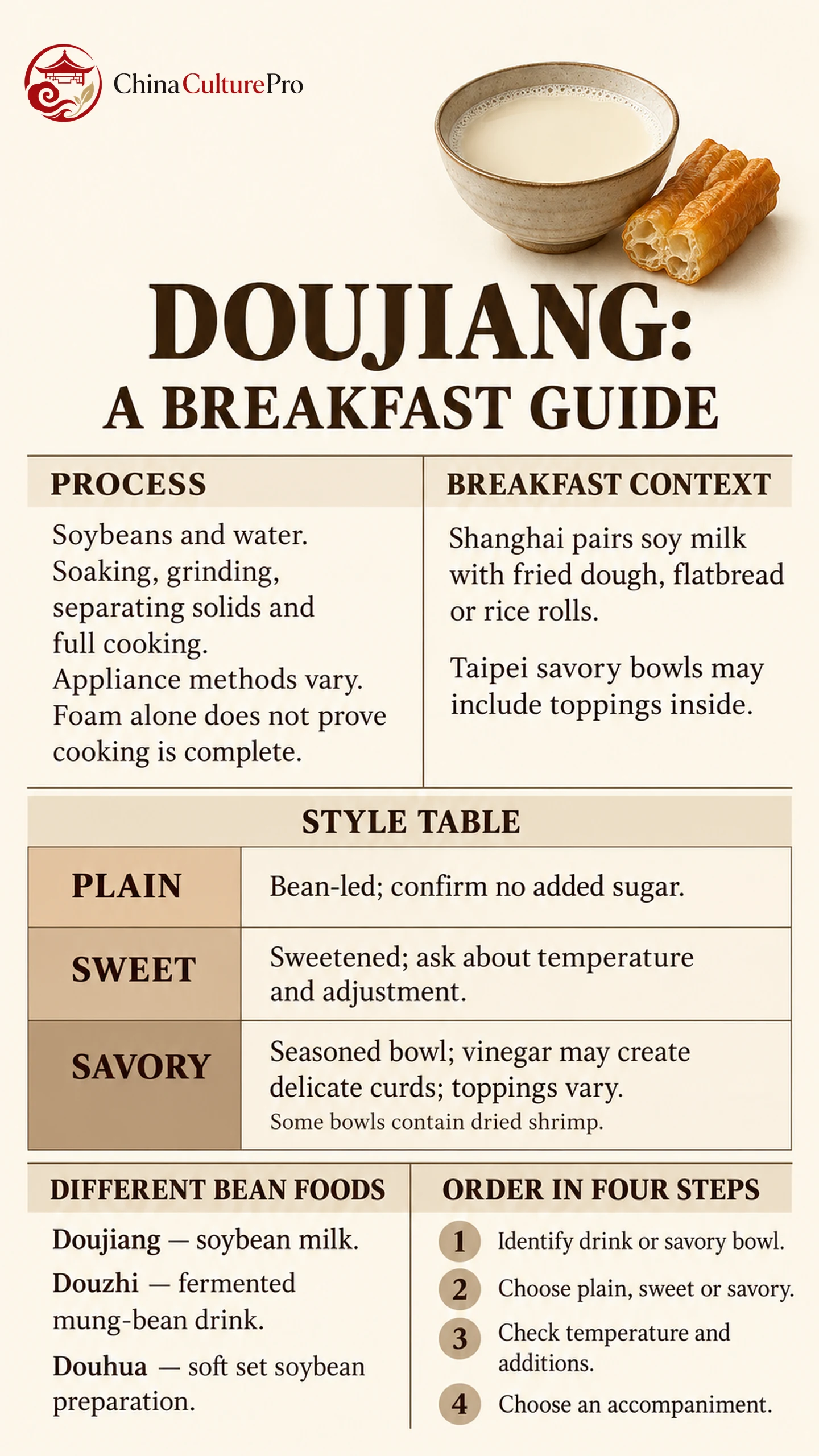
A soy-milk breakfast can be as simple as a warm drink beside something crisp, or as substantial as a seasoned bowl with toppings. That range makes doujiang a useful way into Chinese breakfast traditions: the drink belongs to a meal and a morning routine, rather than one compulsory recipe.
From Soybeans to a Breakfast Drink
A common preparation route begins with selecting and soaking soybeans, grinding them with water, separating out solids and cooking the resulting liquid thoroughly. Modern machines can combine stages or use a different sequence, so a process overview should not be mistaken for the instructions for every appliance.[1]
The result can vary in concentration, texture and bean flavor. Freshly prepared and packaged products can differ in formulation and texture. Ask about the actual preparation when you want a particular taste rather than assuming the word fresh supplies a complete recipe.
Cooking is part of making the drink, not simply warming it for service. Food-control guidance specifically distinguishes fully cooked soy milk from apparent boiling caused by foam.[6] If preparing it at home, use a tested method or the appliance’s full cooking instructions; a foamy surface alone does not establish completion. Follow the specific method’s complete heating stage before treating the liquid as ready to drink.
Soybeans also lead to many other foods. Changing whether the liquid is coagulated, pressed or served with solids creates different textures and uses, which the Chinese tofu types guide explores more fully.
Plain, Sweet or Savory
Shanghai’s breakfast accounts explicitly include plain, sweet and savory versions. A Taipei description of a savory bowl shows how vinegar, seasonings and toppings can turn soy milk into something eaten with a spoon.[2][3]
| Estilo | What to expect and what to ask |
|---|---|
| Plain doujiang | A soybean-led drink without added sweetness in the basic version; confirm whether the shop’s preparation is unsweetened. |
| Sweet doujiang | Soy milk with sweetening; ask how much can be adjusted and which temperatures are available. |
| Savory doujiang (咸豆浆, xián dòujiāng) | A seasoned preparation that may include vinegar and toppings; some versions form delicate curds rather than staying completely smooth. |
The savory category is more than a sweet drink with salt added. A documented Taipei preparation puts pickled vegetables and dried shrimp in the bowl, adds seasonings including vinegar, then pours in hot soy milk and finishes with scallions and fried dough. Proportions differ between eateries.[3]
That example also shows why the soybean base does not establish the ingredients of the whole bowl. Ask about shrimp, other animal ingredients and seasonings if those matter to your choice. A savory bowl can be adapted in some shops, but availability needs checking rather than assuming one universal formula.
Breakfast Pairings and Regional Habits
Youtiao (油条, yóutiáo), a long fried dough stick, is a familiar accompaniment. Its crisp, airy structure contrasts with the liquid, and dipping a piece into soy milk changes that contrast as it softens. The separate youtiao guide follows the food itself.
Shanghai’s familiar breakfast grouping brings together soy milk, fried dough, flatbread and sticky-rice rolls. It describes a local set of well-known staples, not four things every person must order together.[2] One drink and one food can make a simpler introduction than trying to reproduce an entire named set.
Taipei’s savory-bowl example puts some of the accompaniment inside the soy milk instead of keeping it all beside the cup.[3] This illustrates a useful regional contrast without implying that Shanghai only drinks it one way or that every Taiwanese shop serves the same bowl.
Across settings, choose the combination by texture and appetite. A plain drink beside a seasoned food offers a different balance from a savory bowl already containing toppings. Choose sweetness, serving style and accompaniments separately within that breakfast setting.
Doujiang Is Different from Douzhi and Douhua
Similar names and pale colors can hide different ingredients and processes.
- Douzhi (豆汁, dòuzhī): A fermented mung-bean drink associated with Beijing, rather than ordinary soybean milk. Its fermented character belongs to that preparation and should not be transferred to every cup of doujiang.[4]
- Douhua (豆花, dòuhuā): A soft set soybean preparation, often translated as tofu pudding. It involves coagulation rather than simply serving soy milk as a liquid; local toppings and savory or sweet presentations vary.[5]
A lightly set savory soy-milk bowl can resemble soft bean curd, but the menu names still help identify the intended dish. Do not assume that sourness or curds mean a shop has served Beijing-style fermented bean drink. Ask what the preparation is called and how it is seasoned.
The douhua tofu pudding guide is the next step if you want a spoonable set dish. For a smooth breakfast drink, ask specifically for the soy-milk style you want.
How to Order a Cup or Bowl
A short order can cover the choices that most change the experience.
- Identify the preparation. Ask whether the item is drinkable soy milk or a seasoned savory bowl with toppings.
- Choose plain, sweet or savory. If choosing plain, confirm whether that means no added sugar in this shop’s version.
- Ask about temperature and additions. Check the available hot or chilled options, and ask what is already in a savory preparation before requesting changes.
- Choose an accompaniment. Decide whether you want fried dough or another breakfast food beside the drink, rather than assuming it is included.
A clear request such as unsweetened hot soy milk with fried dough keeps the base, seasoning, temperature and food separate. If you prefer a savory bowl, ask about its toppings rather than expecting it to arrive like a carton drink.
Doujiang belongs within a much wider range of Chinese drinks. Its distinctive cultural role is the connection between a bean-based preparation, flexible seasoning and the foods of the breakfast table.
FAQs About Chinese Soy Milk
Is doujiang the same as cow’s milk?
No. Doujiang is soybean-based. The word milk describes the drink’s form in English; it does not make the ingredients or formulation identical to dairy milk.
Why can savory soy milk look curdled?
Vinegar in some savory preparations can create a lightly set texture. That is part of the intended recipe and is different from describing all doujiang as fermented.
Is every bowl of savory doujiang vegetarian?
No. Some preparations include dried shrimp or other animal ingredients. Ask about the complete topping and seasoning list rather than inferring it from the soybean base.
Fuentes
[1] Hami Municipal Government. Three Points for Cooking Soy Milk
[2] Shanghai Municipal Government. Classic Local Breakfast Staples
[3] Taipei City Department of Information and Tourism. Finding Forgotten Memories in the City
[4] Beijing Tourism. Douzhi
[5] Zhoukou Health Commission. Soy Products and Their Preparation
[6] State Administration for Market Regulation. Guangdong Rules for Freshly Prepared Food from Automated Equipment