
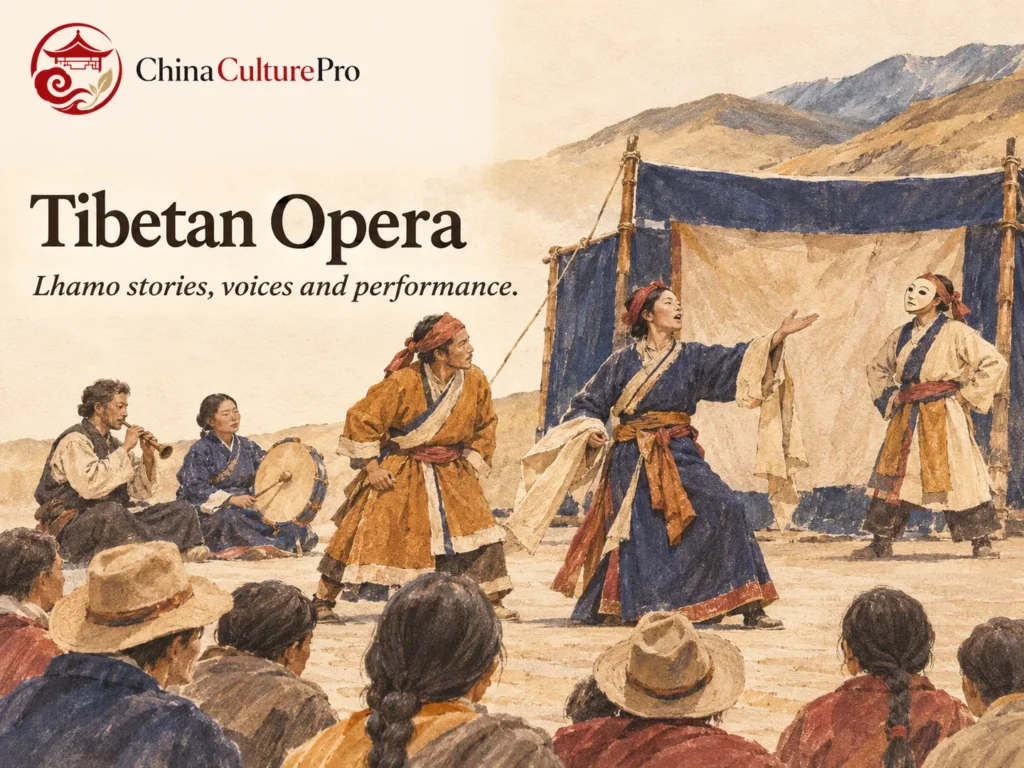

Quick Answer: What Is Tibetan Opera?
Tibetan opera is a theatre tradition that combines storytelling, singing, dance and acting. Lhamo(拉姆,lāmǔ) is a Tibetan name used for the form. The pronunciation in parentheses is the Mandarin reading of the Chinese transcription. In a common structure, an opening introduces the performance, the main drama tells a story and a closing offers good wishes.
A narrator, singers and actors can share the telling. Masks help characterize some roles, while drum and cymbal accents can mark the movement. Local traditions differ in repertoire, music and the way a performance is staged.
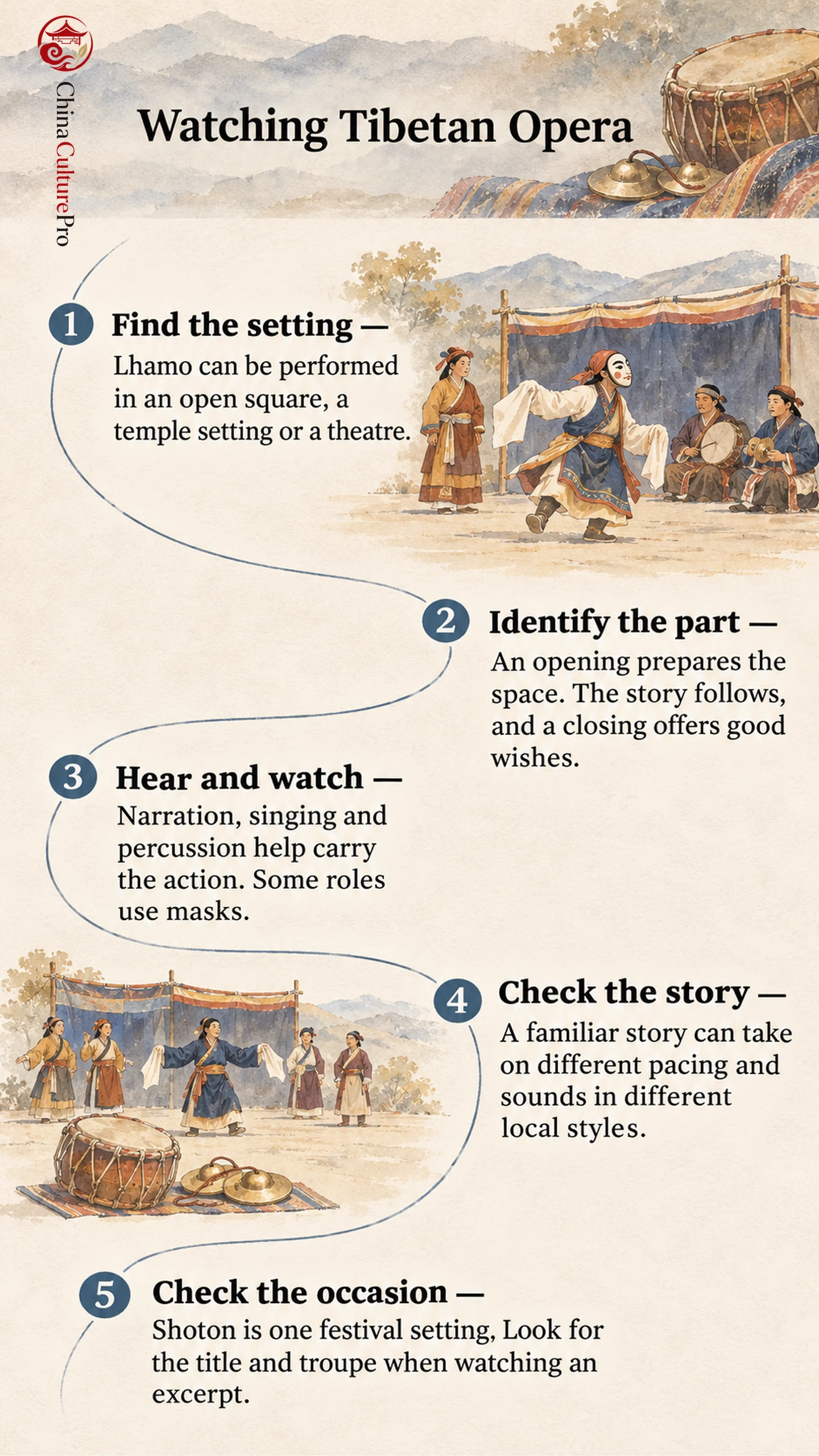
An opening procession can tell you that a play is about to begin before the first scene appears. Later, a narrator or singer can help carry the story. Knowing which part of the performance you are watching gives the movements and sounds a context.
Lhamo and Its Performance Settings
The fuller name ache lhamo(阿吉拉姆,ājí lāmǔ) is associated with Tibetan opera in Tibet. Communities elsewhere on the plateau also maintain traditions with local names and repertoires. The tradition includes several local styles with distinctive ways of singing and performing. [1]
A performance can take place in a public square, a temple setting or a theatre. That range matters because a local celebration and a staged production can present different portions of the repertoire. Tibetan opera belongs to a wider field of Chinese theatre while retaining its own language, stories and conventions. [2]
Opening, Story and Closing
A documented traditional structure divides a performance into three parts. A short excerpt may show one part without the others. [1]
| 項目 | 主な役割 | What to notice |
|---|---|---|
| Opening | Prepare and bless the performance space | A procession, prayer or choreographed movement can mark the start. |
| Main story | Narrate and enact the drama | Listen for the narrator and watch how singers and actors take up the story. |
| Closing | Offer a blessing or good wishes | Notice the shift from the characters’ story to a conclusion addressed to the occasion or audience. |
The UNESCO account describes hunters and an elder taking part in an opening ceremony. These figures help show why an opening can have its own performers and actions before the main plot begins. The programme or the troupe’s description can help you place an excerpt. [2]
Voices, Masks and Accompaniment
A narrator can give the audience the order of events, while performers enact or sing a scene. Supporting voices can respond to a line. Drum and cymbal accompaniment is documented in some traditions, including the Shangba project description from Shigatse. The accents can separate one sung line or movement from the next. [3]
Some characters wear masks. The mask’s outline, color and other details give information within a troupe’s repertoire. A convention can differ by region or role. The Shangba record places it among traditions described as blue-mask opera. The name identifies a performance grouping. Individual characters can have their own masks or use other visual cues. [3]
Stories and Local Performance Traditions
Traditional repertoires include plays about Princess Wencheng, Nangsa and Drime Kunden. Religious themes and stories of virtue or difficult choices can appear alongside courtly and family concerns. A performance title can therefore help you understand what kind of story is being staged before you interpret a character’s mask or action. [3]
An actor’s delivery and the local style affect how a story comes across. A title identifies the story, while a style name such as Shangba identifies a performance tradition. Two productions of a familiar story may share the plot while using different voices, pacing or stage arrangements. [3]
Shoton and How to Watch a Performance
The Shoton Festival in Lhasa is one documented setting for Tibetan opera. Photographs from the August 2026 festival show artists performing there. The tradition is also associated with other festivals and religious occasions, so the festival name tells you the occasion, and the troupe credit identifies the performance. [4]
Start with the title and the troupe. See whether you are watching the opening, a scene from the story or the closing. Then listen for a shift between narration, singing and percussion. China listed Tibetan opera nationally in 2006, and UNESCO inscribed it on the Representative List in 2009. The recognition covers a living performance tradition with local practices. [1]
FAQs About Tibetan Opera
Is lhamo the same as all Tibetan theatre?
Lhamo names a Tibetan opera tradition. Local names and ways of staging differ, so identify a production by its troupe or repertoire when possible.
Do all Tibetan opera characters wear masks?
Masks are associated with particular roles and traditions. Check the character and local practice before interpreting a design.
Is Tibetan opera only performed at Shoton?
Shoton is a well-known setting. Tibetan opera can also appear at other festivals, ceremonies and theatres.
出典
[1] China Intangible Cultural Heritage Digital Museum. Tibetan Opera
[2] UNESCO. Decision 4.COM 13.23, Tibetan Opera
[3] China Intangible Cultural Heritage Digital Museum. Tibetan Opera, Shangba Tradition of Shigatse
[4] Xinhua. Tibetan Opera at the Shoton Festival in Lhasa, August 2026