

Quick Answer: What Is Png Kueh?
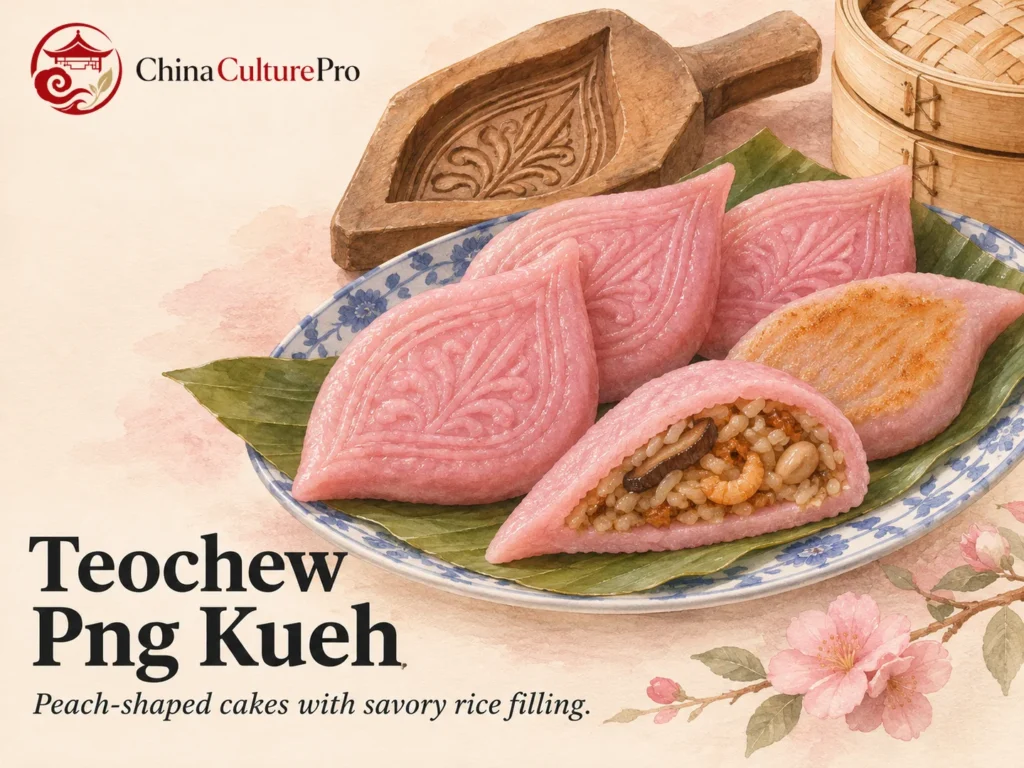
Png kueh (饭粿, fàn guǒ in Mandarin) is a savory Teochew rice-filled kueh, commonly pressed into a pink peach shape.
- Center: Glutinous rice with ingredients such as mushrooms, dried shrimp and peanuts.[1]
- Outside: A soft flour-based skin; the flour blend varies between recipes.[2][3]
- Meaning: The peach shape symbolizes longevity and appears in festive offerings.[1]
The pink appearance does not make this a sweet peach dessert.

Among Teochew foods, png kueh is particularly easy to recognize by its molded outline. Its interest lies in the contrast between a smooth wrapper and a seasoned rice filling, as well as the symbolism carried by its shape.
Rice Inside, a Flour Skin Outside
The filling uses whole glutinous rice grains, usually combined with savory ingredients. Mushrooms, dried shrimp and peanuts are familiar additions, while particular recipes also include pork, shallots and seasonings.[1][4] It belongs alongside other Chinese rice dishes, even though it looks like a small molded cake.
Keep the filling separate from the skin when reading a recipe. One preparation combines rice flour, glutinous rice flour and tapioca flour for the wrapper; another uses a rice-flour-based skin with tapioca starch.[2][3] “Glutinous rice filling” therefore does not tell you the complete flour formula outside.
How the Peach Mold Shapes the Kueh
Rested hot-water dough is wrapped around the prepared rice filling, sealed, pressed in a peach mold and steamed.[2] The mold impresses the outline and surface design.
Flour and water balance affects handling: too much flour can produce a tough skin, while excess water makes it difficult to hold together.[4] For home cooking, follow a complete recipe for the chosen blend instead of replacing flours one for one.
Steamed or Pan-Fried: Choosing the Texture
Both finishes are documented, so the choice concerns the surface texture rather than whether the snack is “authentic”.[2][3]
- Steamed: Choose this for a soft, chewy skin around the rice filling.
- Pan-fried after steaming: Light browning adds a crisp surface while the interior remains soft.[3]
Sweet soy sauce and chili sauce are common accompaniments.[2] Add them gradually so the filling remains noticeable.
For a different filling and wrapper relationship, compare gu chai kueh or Teochew crystal dumplings.
Peach Symbolism and Teochew Food Traditions
The alternative name hong tao guo (红桃粿, hóng táo guǒ) means red peach kueh. The peach is a longevity symbol, helping explain the food’s role in festivals and celebratory offerings.[1] This expresses an auspicious wish rather than a health effect from eating it.
Pink and white versions both exist; family and community practice matters when interpreting color.[3] A family cooking account describes relatives gathering to make the kueh for festivals, showing how preparation itself can carry tradition.[2] See Teochew culture for the wider community setting.
FAQs About Teochew Png Kueh
Does png kueh contain peach?
The name and shape refer to the fruit symbolically. The rice-filled versions described here use savory ingredients, not peach filling.[1][2]
Is the pink kueh vegetarian?
Not automatically. Dried shrimp, pork, fish sauce or other animal-based seasonings can appear, so check the maker’s ingredients.[4]
Is the wrapper always made with glutinous rice flour?
No. Documented recipes use different flour blends, including rice-flour-based skins and blends that also contain glutinous rice flour.[2][3]
出典
[1] Singapore Government, SG101. Kueh 101
[2] Angie Liew. Traditional Teochew Peach Shaped Dumpling
[3] Thokohmakan. Teochew Png Kueh Recipe
[4] The Meatmen. Teochew Png Kueh