

Quick Answer: What Is Sachima?
Sachima(沙琪玛,shāqímǎ)is a Chinese sweet made by binding fried strips of wheat-and-egg dough with sugar syrup, then shaping the mixture into a slab and cutting it into portions.
- Base: Puffy dough ribbons create the body; they are not rice grains or breakfast cereal.
- Texture: Many versions are tender and airy, with a sticky chew; others have crisper edges or a firmer bite.
- Tradition: The snack has Manchu roots and later became familiar in Chinese bakeries, packaged snacks and overseas Chinese food culture.
Sesame, raisins and other additions vary. Its square shape alone does not tell you the recipe or texture. [1]

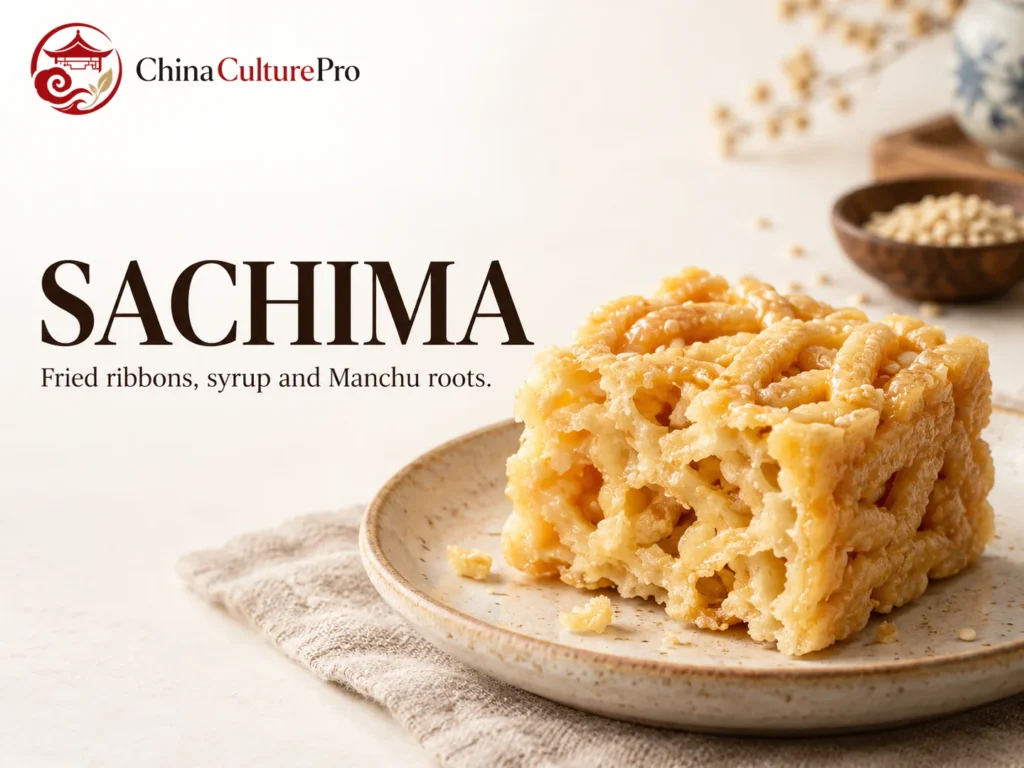
Pull apart a square of sachima and the surface breaks into a tangle of golden ribbons. The spaces between those ribbons help explain its surprising lightness. Among traditional Chinese desserts, it has a distinctive structure: a fried-dough sweet held together with syrup, rather than a baked cake with a uniform crumb.
Fried Strips, Syrup and the Soft Square
Despite names such as “soft flour cake,” sachima is not made by pouring cake batter into a baking tin. Wheat flour and egg form a workable dough that can be rolled and sliced. The resulting strips provide the structure, while egg contributes richness and the characteristic pale golden appearance.
The binder is a separate component. Sugar and maltose appear in many versions; some recipes also use honey, another syrup or butter. These choices affect the sweetness, aroma and chew. Maltose is useful for binding, but it is not a secret filling hidden inside the square. The syrup coats the strips throughout the bar. [1]
The finished cross-section should still reveal individual strands and gaps. A soft square can yield as you bite, then separate into lightly sticky pieces. More syrup, a different syrup consistency or denser shaping can change that impression. A shiny surface does not mean the interior is a solid block of candy. [2]
How Sachima Gets Its Airy Structure
The process has two distinct transformations. First, the dough is rolled into a sheet and cut into narrow, noodle-like strips. Frying makes those strips expand and develops their light structure. They are pastry components, even though they resemble short noodles.
Second, syrup is prepared separately and mixed through the fried strips. This coating binds them into a mass that can be shaped in a tray and portioned. The final square is assembled from small pieces; it is not cut from a single risen loaf. The interior remains a network of ribbons rather than a continuous sponge.
Both stages matter to texture. Heavily browned, hard strips cannot simply become a tender pastry because syrup is added. Equally, a syrup that sets differently changes how firmly the pieces hold together and whether the bite feels soft, sticky or brittle. The desired result depends on the style being made. [2]
This explains the craft without turning it into a home recipe. Flour choice, strip size, frying and sugar handling interact, so one visual cue cannot replace a complete, tested method. The finished snack is usually eaten as sold; it does not need another round of baking to become a “cake.”
Manchu Roots and Later Snack Traditions
Sachima is associated with Manchu food culture. Cultural records describe its association with Manchu pastries and its subsequent place among Beijing sweets. Its wider popularity reflects movement between communities and changing bakery traditions, rather than a single unchanged formula preserved everywhere. [3]
That association is more secure than the colorful stories sometimes used to explain the name. Tales involving a general, a horseman or an accidental invention should not be treated as a verified birth certificate. They do not establish one inventor or an exact creation year.
Later Cantonese and overseas versions show how a snack can acquire new local identities. A 2021 Singapore maker interview records a family connection to Guangdong tea-house culture and a handcraft process based on fried ribbons coated with sugar-and-maltose syrup. The reported version omitted the seeds and raisins often associated with Cantonese-style bars. It is evidence of one maker’s practice, rather than a rule for every Singaporean or Cantonese version. [4]
Sachima can appear on holiday sweet tables and in gift boxes, yet it also belongs to everyday snacking. A festive association does not restrict it to one annual celebration.
Styles, Mix-ins and Similar Sweets
Sesame seeds add a toasted note; raisins bring a contrasting fruity chew. Other versions include nuts, seeds or different dried fruit. A plain bar is still sachima if the fried-dough-and-syrup structure remains. Look at the ingredient list rather than expecting one compulsory garnish. [5]
These comparisons help separate similar-looking sweets:
| Sweet | Structural base | Typical eating distinction |
|---|---|---|
| Sachima | Fried wheat-and-egg strips bound with syrup | Airy ribbons with a soft, chewy or partly crisp bite |
| Peanut or sesame candy | Nuts or seeds held in a sugar binder | Nut or seed texture dominates; many versions are brittle |
| Cereal treat | Ready-made cereal bound into a bar | Cereal forms the body, rather than fried egg dough |
The comparison with a cereal treat is useful for understanding assembly, but it does not make sachima a rice product. For a different kind of syrup-bound sweet, explore Chinese peanut and sesame candies. [2]
Serving, Buying and Dietary Checks
Sachima is easy to portion for a shared sweet plate or a tea break. Plain tea offers a simple contrast to its sweetness. When buying, choose the texture and additions you enjoy: a pale, tender bar and a firmer, more deeply colored one need not promise the same eating experience. [5]
Read the complete label for wheat and egg, and check sesame, peanuts, tree nuts, milk ingredients and the frying fat separately. A plain-looking square can contain more than flour and sugar. Shared production equipment also matters to people avoiding particular allergens; removing visible seeds does not remove ingredients already mixed through the bar. [6]
For vegetarian or vegan food choices, traditional egg dough is a crucial distinction. Follow the product’s storage directions and reseal opened packaging as instructed. Neither an attractive golden color nor a familiar bakery name establishes a universal storage period.
FAQs About Sachima
Is sachima made from rice?
Usually no. Its familiar ribbon structure comes from fried wheat-and-egg dough. The resemblance to a cereal bar describes its shape and assembly, not its ingredients.
Is sachima always crunchy?
No. Many versions are soft and airy with a sticky chew, while others have firmer or crisper elements. Texture depends on both the fried strips and syrup.
Are raisins and sesame essential?
No. Both are familiar additions, but plain bars and versions with other mix-ins also exist. Check the particular product rather than relying on a regional label alone.
Is sachima vegan or gluten-free?
Conventional sachima contains wheat and egg, so it suits neither requirement. Any specially adapted version needs its own ingredient and cross-contact checks.
出典
[1] The Hong Kong Cookery. Chinese Sachima Soft Flour Pastry Cake
[2] China Sichuan Food. Sachima
[3] China Ethnic News, via China Ethnic Culture Resource Library. From Manchu pastry to familiar sweet
[4] CNN Travel. Singapore’s handmade sachima tradition
[5] Catherine Zhang. Sachima
[6] U.S. Food and Drug Administration. Food Allergies: What You Need to Know