


Quick Answer: What Is the Difference Between Oyster Sauce and Hoisin Sauce?
Oyster sauce(蚝油,háoyóu)is an oyster-based savory seasoning with sweetness and a glossy body. Hoisin sauce(海鲜酱,hǎixiānjiàng)is usually a sweet, savory bean-based sauce with garlic and other seasonings. They can look similar, but the main flavor they bring to a dish differs. [1][2]
- Choose oyster sauce: When you want an oyster-led savory seasoning for vegetables, meat, noodles or a sauce.
- Choose hoisin: When a sweeter, more aromatic condiment, marinade or glaze suits the dish.
- Check the formula: Ingredients and thickness vary between products; color is a poor identification test.
- Substitute carefully: A swap changes sweetness, saltiness, aroma and sometimes dietary suitability.
Hoisin’s Chinese name means seafood sauce, but ordinary bean-based versions do not require seafood. Traditional oyster sauce contains oysters; vegetarian alternatives are different formulations.
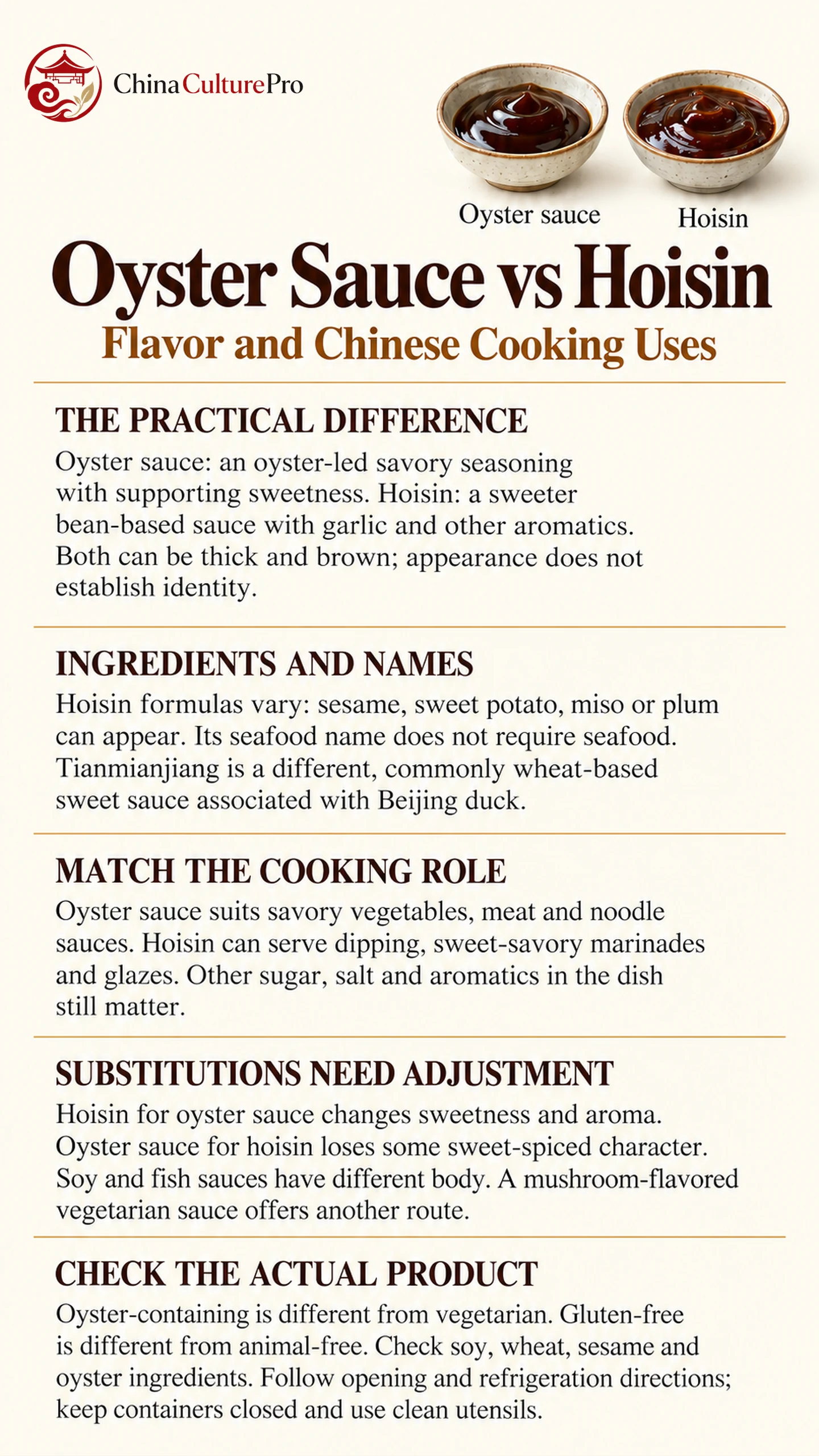
Two dark, glossy sauces sit beside the stove, and either can coat noodles or meat. The useful choice is the flavor you need: savory depth with restrained sweetness, or a more prominent sweet and aromatic layer. Their similar appearance hides different ingredient foundations.
The Main Differences at a Glance
These are typical roles rather than fixed chemical specifications for every bottle. Neither sauce is simply a thicker version of the other. [1][2][3]
| たれ | Ingredient foundation | Typical flavor emphasis | Useful roles |
|---|---|---|---|
| Oyster sauce | Oyster extract or juice, with water, sugar, salt and ingredients that adjust texture. [1][5] | Savory and rounded, with sweetness supporting the oyster flavor. | Seasoning, sauce building, marinades and finishing vegetables. |
| Hoisin sauce | A soybean-based component with sugar, garlic and varying spices or other additions. [2][3] | More prominently sweet, aromatic and savory. | Dipping, spreading, glazes and sweet-savory marinades. |
Ingredients, Flavor and Confusing Names
Modern oyster sauces can contain oyster extract alongside starch, wheat flour or coloring. An oyster-based ingredient remains central to a conventional version, but the rest of the formulation affects how it pours, coats and tastes. Read the ingredient list rather than inferring composition from a premium claim or the darkness of the sauce. [1][5]
Hoisin is not one fixed spice recipe. One commercial formula combines fermented soybean paste, sweet potato powder, sesame paste, garlic and chili. Another uses miso, plum puree, soy sauce, garlic and spices. These examples show why two hoisin jars need not taste identical. Neither list makes every addition compulsory. [2][3]
The seafood wording in the Chinese name is a naming trap, not an instruction to look for oyster extract. Ordinary hoisin can be plant-based. Another common confusion is tianmianjiang(甜面酱,tiánmiànjiàng), a sweet bean or sweet flour sauce, commonly wheat-based, with its own identity. It is the familiar accompaniment in Beijing roast-duck traditions; hoisin and tianmianjiang should not be treated as the same ingredient merely because both can accompany wrapped meat. [2][6][8]
Which Sauce to Use in Chinese Cooking
Choose the sauce for its role in the whole dish, including the other sources of sugar, salt and aromatics. A recipe can use both sauces without making them interchangeable. [1][2][7]
- Vegetables and savory stir-fries: oyster sauce can season Chinese vegetables or form part of a meat-and-noodle sauce. It can also be a finishing seasoning, so using it does not always require prolonged cooking. [1][7]
- Barbecue-style marinades and glazes: hoisin can contribute sweetness and spice to dishes such as char siu or ribs. A blend’s warm aroma may resemble Chinese five spice, but a separate five-spice addition is not compulsory in every hoisin-based preparation. [3][6]
- Pancakes and dipping: check what is actually served with 北京ダック or other wrapped dishes. A sweet bean sauce and hoisin offer related sweet-savory roles while retaining different flavor profiles. [6][8]
Can You Substitute One for the Other?
You can adapt a dish, but changing the bottle changes the balance. Replacing oyster sauce with hoisin generally brings a sweeter, more assertively seasoned result. Reconsider any additional sugar and taste before adding other salty ingredients. It will not recreate the oyster component. [7]
Replacing hoisin with oyster sauce moves in the other direction: less of the intended sweet-spiced character and a different savory base. The sauce may need other adjustments depending on the dish. There is no reliable universal equal-volume rule across all products and recipes. [3][7]
Soy sauce supplies a thinner seasoning, while fish sauce has a different fermented flavor and consistency. Neither automatically provides the body and balance of these thick sauces. For a plant-based oyster-sauce role, a purpose-made mushroom-flavored vegetarian stir-fry sauce is often a more direct starting point than making hoisin do every job. [4][7]
In wok cooking, work out that adjustment before the fast finishing stage. A sauce chosen for dipping may need a different amount or consistency when it becomes part of a mixed dish.
Dietary Checks, Buying and Storage
For vegetarian cooking, distinguish oyster-containing sauce from a labeled plant-based alternative. A vegetarian mushroom-flavored sauce can still contain soy and wheat. Gluten-free variants of both sauces are available, but a gluten-free oyster sauce can still contain oysters: gluten-free and animal-free answer different questions. [4][5][9]
Read the complete ingredient and allergen information. Hoisin may contain soy, wheat and sesame; oyster sauce may contain wheat as well as oyster ingredients. Do not infer that an oyster-containing product is suitable for a shellfish restriction from a short allergen statement alone. [1][2][5]
Follow each product’s directions before and after opening. Refrigeration after opening is commonly specified; keep containers closed and use clean utensils. A manufacturer’s best-quality period is not a universal deadline for every brand or sauce formulation. [3][6][7]
FAQs About Oyster Sauce and Hoisin Sauce
Does Hoisin Sauce Contain Seafood?
The name does not mean that it must. Familiar commercial hoisin sauces are bean-based, and some are labeled vegan. Check the actual formulation and the complete dish when a seafood restriction matters.
Is Oyster Sauce the Same as Fish Sauce?
No. Oyster sauce is thick and oyster-based; fish sauce is generally a thinner fermented-fish seasoning. Their saltiness, aroma and coating behavior differ, so swapping them changes more than the color.
Can Hoisin Replace Oyster Sauce in a Stir-Fry?
It can create an adapted sauce, but usually adds a different sweet and aromatic emphasis. Reassess the dish’s sugar and salt, and expect a flavor change rather than an identical substitute.
Can Either Sauce Be Gluten-Free?
Specially formulated products can be. Many ordinary versions contain wheat, so use the actual gluten-free label and ingredient information. An oyster-based gluten-free sauce still needs a separate shellfish check.
出典
[1] Lee Kum Kee. Premium Oyster Sauce: Ingredients and Uses
[2] Lee Kum Kee. Hoisin Sauce: Ingredients and Uses
[3] Kikkoman. Hoisin Sauce: Ingredients and Storage FAQ
[4] Lee Kum Kee. Vegetarian Stir-Fry Sauce: Ingredients
[5] Kikkoman. Gluten-Free Oyster-Flavored Sauce: Product Ingredients
[6] The Woks of Life. Hoisin Sauce: Names and Cooking Roles
[7] Maggie Zhu. Oyster Sauce: Uses and Substitutions
[8] Beijing Tourism. Guide to Beijing Duck: Sweet Bean Sauce
[9] Kikkoman. Gluten-Free Hoisin Sauce