
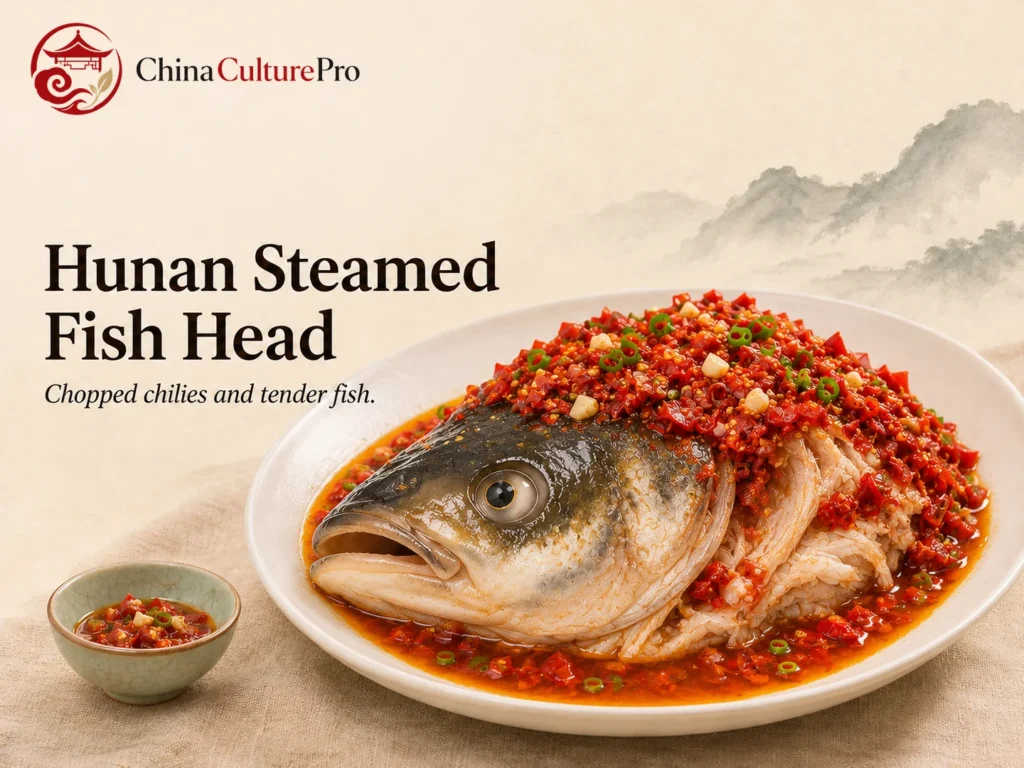

Quick Answer: What Is Steamed Fish Head with Chopped Chilies?
Hunan steamed fish head with chopped chilies (剁椒鱼头, duòjiāo yútóu) pairs a large fish head with a prepared, salty chili topping. Steaming cooks the fish beneath the seasoning, producing tender flesh and flavorful juices rather than a fried crust. [2][5]
- Fish: A substantial head, often opened out for cooking.
- Topping: Duojiao (剁椒, duòjiāo), a prepared chopped-chili condiment.
- Method: Steam the seasoned fish; finishing oil is a separate stage.
- Serving: Share the flesh carefully around the bones.
The topping is not simply a layer of freshly chopped raw peppers.
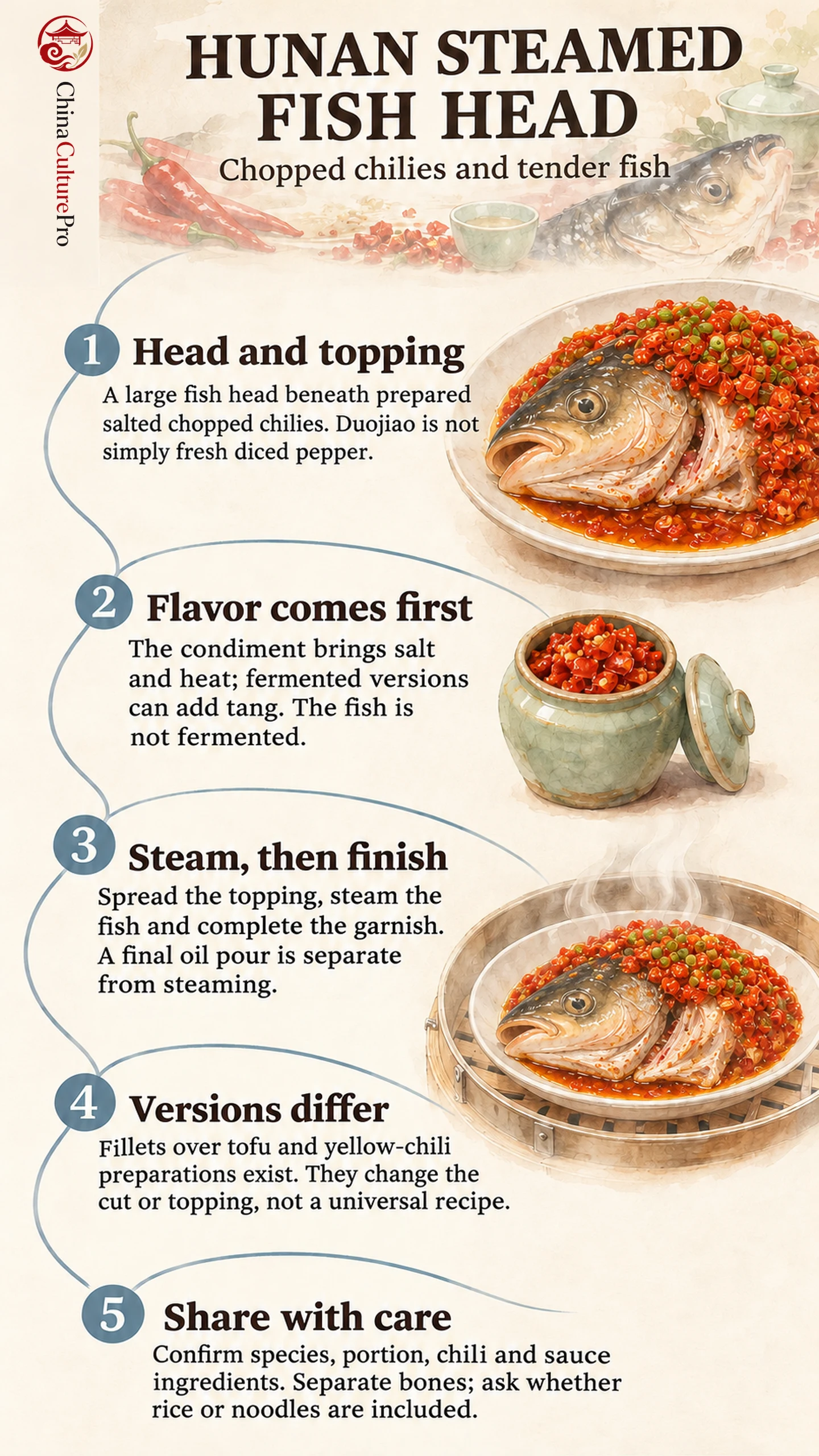
The red topping can dominate the first impression, but this Chinese fish dish is equally about the fish cut and its tender texture. Separating condiment preparation from steaming makes its variations easier to understand.
The Fish Head and the Prepared Chili Topping
Bighead carp is a documented choice in local Hunan reporting. The large head supplies flesh around its substantial bone structure, so this is a different eating experience from a boneless fillet. The white fish and bright chili topping also create the dish’s recognizable contrast. [5]
Duojiao starts with chopped chilies and salt, with additions such as garlic and ginger varying by preparation. It is a finished condiment before it reaches the fish. That distinction matters: replacing it with freshly diced pepper changes both the seasoning and the flavor. [1]
Fermented versions can bring an acidic note as well as heat and salt. Fermentation research identifies changes in organic acids during the process, but that does not establish one flavor or maturation period for every jar. The connection with Chinese fermented foods concerns the topping’s preparation, not fermentation of the fish. [6]
How the Fish Is Steamed and Finished
The fish cooks on a plate in steam, with the chili mixture spread over it. A documented preparation first cooks the chopped chili with ginger and other seasonings, then steams it with the fish and finishes with scallions and oil. Cooking the topping, steaming the fish and adding finishing oil are distinct stages. [2]
- Prepare the cleaned fish head and arrange it on a suitable steaming plate.
- Prepare the chosen chopped-chili mixture and spread it over the fish.
- Steam until the fish is cooked, keeping the plate positioned to collect the cooking juices.
- Complete the kitchen’s chosen garnish and oil finish, then serve. [2][4]
Not every kitchen handles the collected liquid or final oil in exactly the same way. One published version drains excess liquid before finishing. The defining cooking method remains steaming: pouring oil over the cooked dish does not make it a deep-fried fish head. [2]
This distinction is useful when comparing Chinese cooking methods. The visible red surface is seasoning, rather than evidence of a battered or fried coating.
Hunan Context and Common Adaptations
The dish is strongly associated with Hunan shared meals and celebratory tables. Origin accounts also circulate, including a story about a scholar and a household meal. Such stories belong to local food lore; they do not, by themselves, date the present recipe or establish a single inventor. [5]
The fish cut and chili mixture can change independently. These documented preparations illustrate that distinction. [2][3][4]
| Preparation | What changes | How to read the menu |
|---|---|---|
| 剁椒魚頭 | A head beneath the prepared chili topping. | Expect bones and flesh to pick from the head. |
| Fish fillet over tofu | An adaptation uses fillets, tofu and fermented black beans. | The seasoning family remains, but the fish cut and texture change. |
| Yellow-chili preparation | A published fish-head recipe combines Hainan yellow chili paste with Hunan chili. | Color and condiment choices need checking rather than assuming every topping is identical. |
Ordering, Serving and Ingredient Checks
Ask about the fish species and whether the order is a whole head, a portion or a different cut. Then confirm the chili mixture and how flexible the kitchen is about reducing it. A prepared salty topping cannot be judged by color alone.
Check ingredients beyond fish and peppers. A published preparation includes oyster sauce and rice wine; another uses soy sauce, tofu and fermented black beans. These additions matter when checking shellfish, soy, wheat-containing seasonings or cooking alcohol. [2][3]
Take small portions of flesh from the shared dish and separate bones as you eat. Ask separately about rice or noodles and whether they are included or ordered in addition. The fish name does not specify a fixed side dish or portion size.
FAQs About Steamed Fish Head with Chopped Chilies
Which Fish Is Usually Used?
Bighead carp is a well-documented Hunan choice. Confirm the actual species with the restaurant; “fish head” alone is not a complete species description.
Is It Always Extremely Spicy?
Heat depends on the chili product and quantity. The topping also brings salt and, in fermented versions, tanginess, so ask about the mixture rather than judging only its red color.
Can the Dish Be Made with Fish Fillets?
Yes. Fillet adaptations exist, including one steamed over tofu. They offer a different fish cut rather than reproducing the head’s structure.
Are Noodles Always Included?
Ask the restaurant. The name identifies the fish head and chili topping, but it does not promise a noodle portion or a fixed set meal.
出典
[1] Hunan provincial government. 地方名小吃:湖南剁椒
[2] Toshiba Lifestyle. Steamed Fish Head with Chopped Chili Pepper
[3] Bill / The Woks of Life. Hunan Steamed Fish with Salted Chilies – Duo Jiao Yu
[4] Alto-Shaam Asia. Steam Fish Head
[5] Rao Mi / New Hunan. 湘味里的非遗②|剁椒鱼头:传承湖南人的喜气
[6] Ye Ling and colleagues. 剁辣椒发酵过程中菌群与有机酸变化规律分析