


Quick Answer: What Is Fujian Youshen?
Youshen (游神, yóushén) is a deity procession in which a community brings images of gods out of a temple and through the surrounding area. Many Fujian examples take place during the first lunar month. Around Fuzhou, the procession may include tall bamboo-framed figures called tagu (塔骨, tǎgǔ). [1][2][3]
- Purpose: Participants ask the deities for protection and blessings in the coming year. [1][2]
- People: Temple groups, residents, musicians and bearers have different roles. [1][2][4]
- Date: The schedule is local. Houfu is one village with two documented first-month dates. [2][3]
Use the village name to find the date and route of a particular procession.
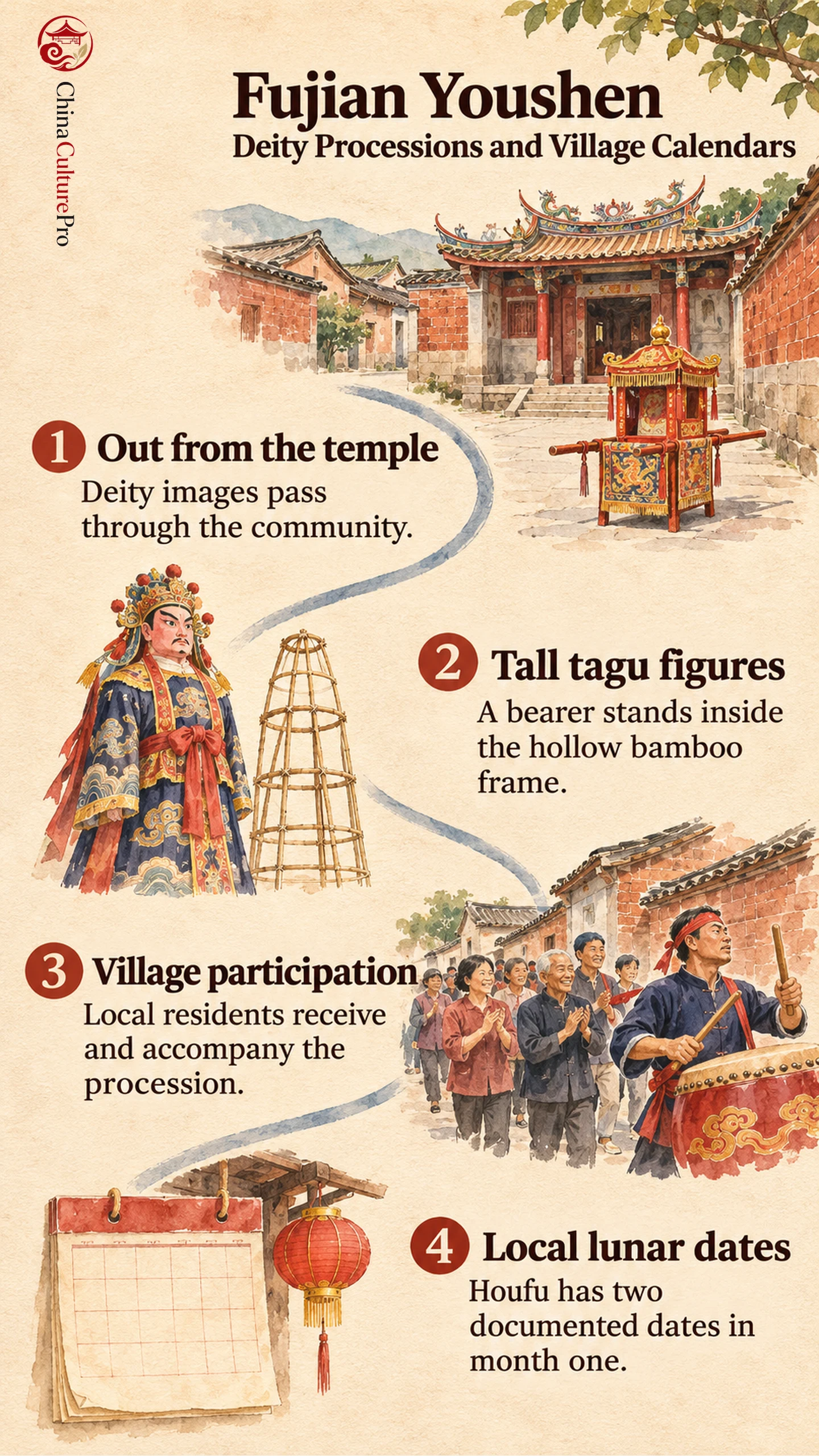
In Houfu, the procession leaves Yingwu Temple and passes through nearby settlements in Fuzhou’s Changle district. Along the route, residents set out tables and wait to receive the temple images. [2][4]
Why Deities Leave the Temple
A procession can make a circuit of the local territory (绕境, ràojìng), visiting places connected to the temple. Residents receive the images along the route and ask the deities for peace, favorable weather or a good harvest. [1][3][4]
A Fuzhou report describes the jobs residents take on. Some prepare the event and carry sedan chairs. Others hold incense burners or lanterns, or take turns bearing the tall figures. This work brings neighbors together around the local temple and gives each village a role in Fujian temple traditions. [1][2][3]
What the Tall Figures Represent
The figures seen in Fuzhou-area processions can include divine generals (神将, shénjiàng) alongside the main temple deities. A tagu has a hollow bamboo frame and is carried by a person inside. The painted face, headdress and clothing identify the character. Fuzhou reporting also describes younger makers working with artisans on carved faces and embroidered garments. [1][3][4]
A temple image can also travel in a sedan chair. Drum groups and lion and dragon dancers can accompany the chair and the larger figures. At Houfu, groups from the settlements along the route join in the procession. [1][2][3][4]
When Youshen Takes Place
Fuzhou Daily reports two traditional dates in Houfu, days ten and twenty-six of the first lunar month. The first of these fell on February 19 in 2024, the day of the documented procession. Those dates belong to Houfu’s ritual calendar. Other Fuzhou-area villages hold their processions at different times during the month. [2][3][6]
A district can also stage a wider cultural parade. Fuzhou’s tourism bureau describes a Changle New Year parade on day five of the first lunar month in 2024, with groups representing several towns and subdistricts. The district event brought several traditions into one program, including a contingent of tagu figures from Tantou. [5]
FAQs About Fujian Youshen
Is Fujian Youshen always held on Lantern Festival day?
Many events take place in the first lunar month. Houfu’s documented days are ten and twenty-six. Check the date for the individual community. [2][3]
Is every figure a large tagu?
The hollow bamboo figures are one visible part of some processions. A temple deity may also be represented by an image borne in a sedan chair. [1][3][4]
出典
[1] Xinhua Daily Telegraph. Young Participants in Fujian Youshen
[2] Fuzhou Daily. Houfu Village Holds Its Traditional Procession
[3] Fuzhou News. Young Bearers and Designers in Fuzhou Youshen
[4] Fuzhou News. The Houfu Deity Procession in Changle
[5] Fuzhou Municipal Bureau of Culture and Tourism. Spring Festival Holiday Activities in Fuzhou
[6] Hong Kong Observatory. 2024 Gregorian–Lunar Calendar Conversion Table