


Quick Answer: What Is Beijing Zhizi Kaorou?
Zhizi kaorou (炙子烤肉; zhìzi kǎoròu) is Beijing-style barbecue made by grilling marinated slices of beef or lamb on a special round iron cooking surface. The seasoning is applied before grilling, with scallion and other aromatics accompanying the meat.[1][5]
- Equipment: The traditional surface is assembled from closely spaced iron bars, with heat beneath it.
- Ingredients: Thin beef or lamb slices are combined with a savory marinade and aromatics such as scallion or cilantro.
- Method: Spread and turn the slices over the heated surface rather than treating them as a large roast.
- Service: Diners may grill for themselves, or the kitchen may cook the meat and bring it to the table.[2][5][6]
The name identifies a Beijing grilling tradition. It does not guarantee one marinade, a particular level of chili, or the same service arrangement at every restaurant.
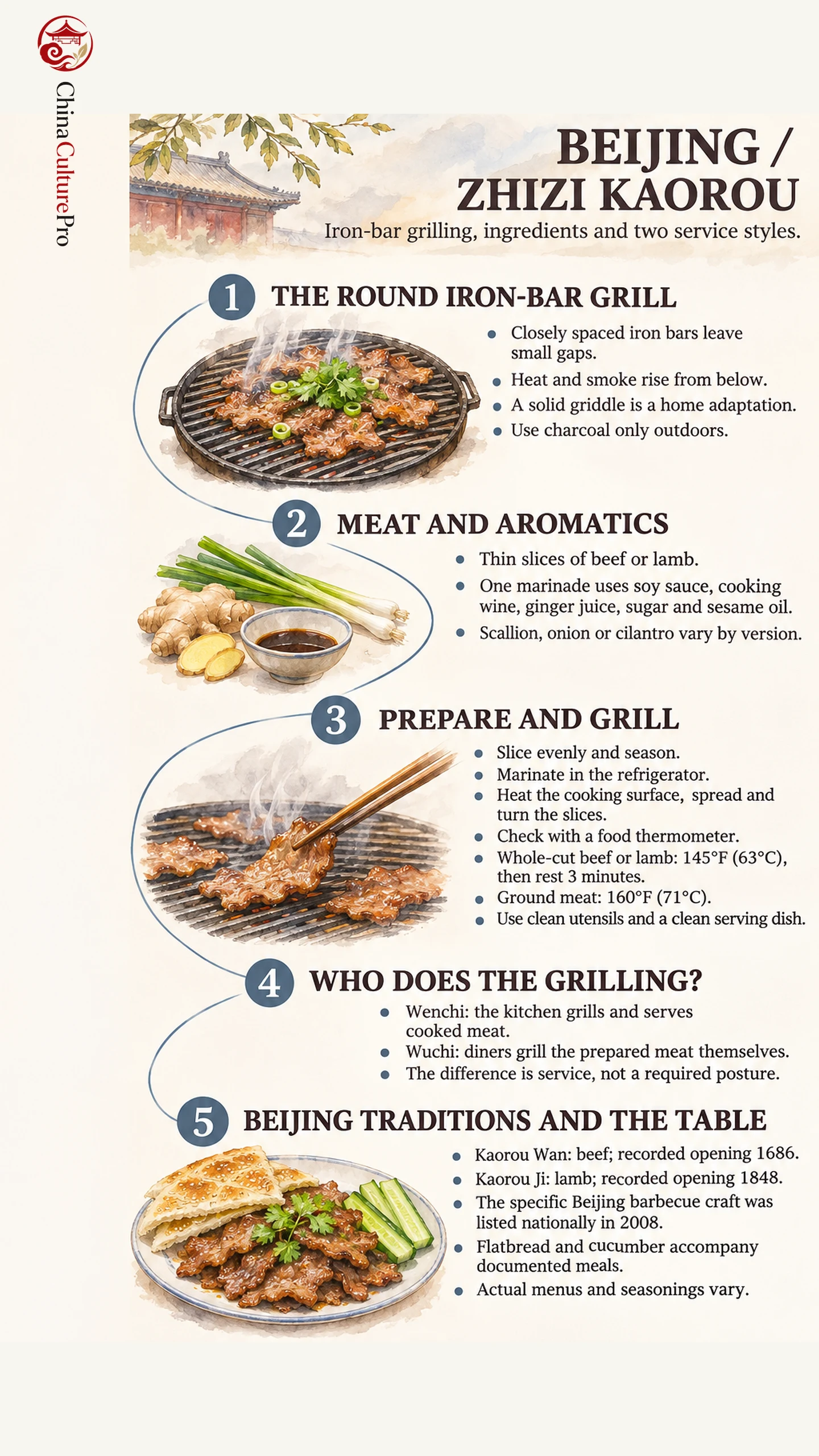
Within Beijing cuisine, this barbecue brings together a distinctive cooking surface, seasoned slices and a shared dining arrangement. The equipment, ingredients and service style each explain a different part of the meal.
What the Zhizi Does
A zhizi (炙子; zhìzi) is the round iron grill that gives the preparation its name. In a traditional description, closely spaced iron bars form the surface, leaving small gaps through which heat and smoke can pass. Meat cooks across the bars while the fire sits below.[5][6]
Older accounts describe wood fires beneath the grill; a later Beijing guide describes charcoal-fired versions. The important distinction is the bar-built cooking surface, rather than a solid frying pan with a similar round outline. A home griddle can imitate some of the meat-and-aromatic cooking, but it does not reproduce the same equipment or exposure to the fire.[5][6]
Use equipment intended for its cooking setting. Charcoal belongs outdoors, not inside a home kitchen or another enclosed space.[8]
For other equipment and regional forms, see Chinese barbecue traditions. The broader category also includes preparations with different cuts and cooking arrangements.
Meat, Aromatics and Marinade
Beef and lamb both have established places in this tradition. Selection and even slicing precede the marinade and grilling; a tender-looking pile of meat is not a substitute for preparing the pieces consistently.[1][3]
A documented seasoning combination includes soy sauce, cooking wine, ginger juice, sugar and sesame oil. Scallion and onion go onto the cooking surface before the marinated meat in that particular version. Other accounts emphasize generous cilantro with the seasoned slices.[4][6]
| 構成要素 | Role in the preparation |
|---|---|
| Thin beef or lamb slices | Cook over the hot iron surface and carry the marinade |
| 醤油 | Supplies savory, salty seasoning |
| Cooking wine and ginger juice | Contribute aroma to the marinade |
| Sugar and sesame oil | Adjust the flavor of the documented seasoning mixture |
| Scallion, onion or cilantro | Add the aromatic vegetable element, with use varying by version |
This is a set of ingredient roles, not a compulsory sauce ratio. Ask about the actual seasonings if you avoid alcohol or a particular ingredient. Cumin and chili should not be assumed to define every Beijing-style preparation.
How the Meat Is Prepared and Grilled
The order is straightforward, while the slicing, seasoning and control of heat supply much of the craft.[3][4]
- Slice and prepare the meat: Use evenly thin slices of beef or lamb, removing tough connective tissue as the chosen preparation requires.
- Season before cooking: Combine the meat with its marinade and aromatics, keeping it refrigerated while it marinates.
- Prepare the hot cooking surface: Heat the grill appropriately; in one documented version, scallion and onion go onto the surface before the marinated meat.
- Spread and turn the slices: Spread the meat over the hot surface and turn it so the pieces cook evenly, keeping the slices from remaining in a thick pile.
- Check doneness and serve cleanly: Use a food thermometer and the appropriate guidance for the meat, then transfer the cooked slices with clean utensils to a clean serving dish.[4][6][7][8]
For whole-cut beef or lamb, US grilling guidance specifies 145°F (63°C) with a three-minute rest. Ground meat has a different minimum of 160°F (71°C). Browned edges or grill marks alone do not establish doneness; use guidance appropriate to the product you are cooking.[7]
If you want some marinade as a finishing sauce, reserve a clean portion before it touches raw meat. Do not pour the used raw-meat marinade over the finished serving.[8]
Wenchi and Wuchi: Who Does the Grilling?
The two names describe the arrangement of the meal, rather than two mandatory ingredient lists.
- Wenchi (文吃; wén chī): The kitchen grills the meat and serves it cooked at the table.
- Wuchi (武吃; wǔ chī): Diners grill the prepared meat themselves and manage the cooking at the grill.[2]
Older descriptions of self-grilling include people standing around a high grill, using long wooden cooking sticks and sometimes resting one foot on a bench. Those details describe an older dining scene. The useful distinction for a diner today is who cooks the meat, not a required posture or a test of toughness.[2][6]
Confirm the arrangement when ordering. If the kitchen cooks it, the meal arrives ready to eat; if self-grilling is offered, follow the venue’s equipment instructions and keep raw-meat utensils separate from those used for cooked food.[7]
Beef, Lamb and the Beijing Table
Two well-documented craft traditions illustrate the range: Kaorou Wan is associated with grilled beef, while Kaorou Ji is known for grilled lamb. Their recorded opening years are 1686 and 1848 respectively; neither date establishes the invention of the entire dish.[1][3]
Beijing barbecue preparation entered the national intangible cultural heritage list in 2008. The designation concerns the listed craft, rather than every contemporary barbecue restaurant.[1]
The meat is commonly accompanied by baked flatbread and cucumber in documented meal descriptions. Sesame flatbreads offer a useful way to understand that starch pairing without turning the barbecue into a different cooking method.[4][6]
Local menus can extend beyond the older beef-and-lamb emphasis to other meats, vegetables or seafood. Check the actual menu and preparation rather than treating the regional name as a complete ingredient or dietary statement.[5]
FAQs About Beijing Zhizi Kaorou
Is zhizi kaorou always made with lamb?
No. Beef and lamb both belong to the tradition, with distinct craft lineages associated with each.[1]
Do diners have to grill the meat themselves?
No. Self-grilling and kitchen-grilled service are both documented. Ask which arrangement the venue offers.[2]
Is zhizi kaorou always spicy?
No. One documented marinade uses soy sauce, cooking wine, ginger juice, sugar and sesame oil without requiring chili. Check the particular seasoning rather than assuming a fixed heat level.[4]
出典
[1] China Intangible Cultural Heritage Digital Museum. Beijing Barbecue Preparation: Beef and Mutton Cooking Techniques
[2] Ministry of Commerce Time-Honored Brands Digital Museum. Kaorou Ji: Self-Grilling and Kitchen-Grilled Service
[3] Ministry of Commerce Time-Honored Brands Digital Museum. Kaorou Wan: Beijing Grilled Beef Tradition
[4] Beijing Tourism official English portal. Beijing Barbecue
[5] Beijing Tourism official portal. Beijing Zhizi Barbecue: Grill and Service Styles
[6] Wang Zengqi, People’s Daily Overseas Edition. Autumn Appetites and Beijing Barbecue
[7] US FoodSafety.gov. How to Grill Safely This Summer
[8] North Dakota State University Extension, hosted by USDA NIFA. Keep Food Safe During Grilling Season