

Quick Answer: What Does a Deer Symbolize in Chinese Culture?
In Chinese art, deer (鹿, lù) can suggest official income (禄, lù) because the two words sound alike. A deer can also join a wish for long life when it appears beside the personification of longevity, a pine or a fungus associated with immortals.[1][2][3][4]
- Rank and income: A deer can supply the sound for the benefits of official service.[1][2]
- Long life: Look for a longevity figure or companion plants that support the reading.[1][3][4]
- Season or setting: Deer in snow or in an imperial hunt can help describe a place and occasion.[1][5]
The other motifs and the kind of object help determine what the animal is doing in the scene.

A porcelain vase can hold a whole herd across its curved surface. A carving can put a single deer beside an old man. Notice whether the deer form a group or accompany one prominent figure.[2][4]
How the Sound of Deer Suggests Official Income
The deer and official income share the same pronunciation in Mandarin. In a decorative pun, the animal can express a wish for the standing and material benefits that came with office. The image may be part of a phrase assembled from several creatures, or it can carry the suggestion on a surface filled with deer.[1][2]
On a Qing plate with a monkey, bees, magpie and deer, the insects and monkey contribute the idea of bestowing a title. The deer helps express the wish for income. The bee and monkey motif explains how the other creatures supply sounds for the title. Together the figures wish the recipient a title and its benefits.[6]
Reading a Hundred Deer Vase
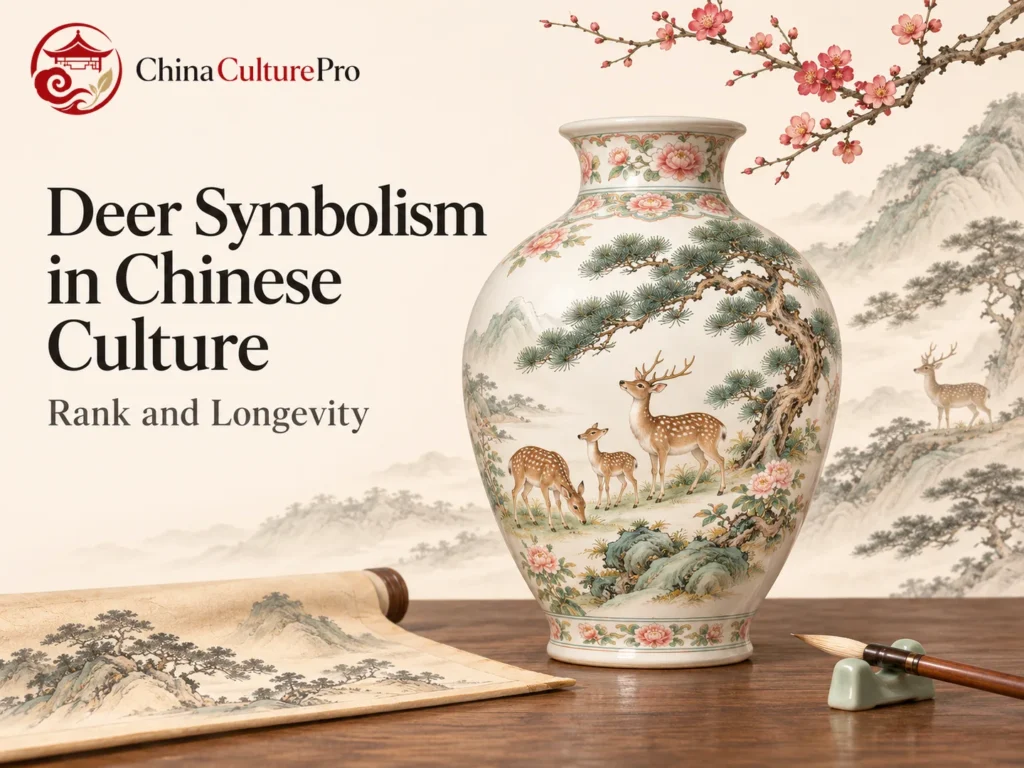
A late eighteenth-century porcelain vase, about 46 centimeters high, covers its body with deer and towering pines. It was made at Jingdezhen and painted with colored enamels over the glaze. A viewer can follow the herd around the curved surface. The Hundred Deer design (百鹿图, bǎilù tú) can multiply the association with the benefits of office across a whole landscape.[2]
On a Qianlong vase in Hong Kong, deer appear on both sides. Some rest in a rocky landscape, while others gather under pines. The pine, peach and fungus motifs bring a separate wish for long life into the scene. The plants make the longevity theme visible alongside the pun about income. A longevity landscape often carries its meaning through more than one feature.[2][3]
Deer Beside the God of Longevity
A Qing nephrite carving from the eighteenth or nineteenth century places a deer beside the God of Longevity (寿老, Shòulǎo). The figure and animal belong to a single group less than 16 centimeters high. Here the named figure tells the viewer that long life is a central theme of the composition.[4]
A deer can also appear with lingzhi. In traditional imagery, the animal was linked with the fungus of immortality. Other pictures place the deer with a crane or a pine. The deer can sit within the wider set of wishes represented by the Three Stars, where good fortune, official income and long life are distinguishable ideas.[1][3]
Deer in Winter Paintings and Imperial Hunts
In a painting dated 1367, Zhou Yuan depicts a stag and doe with red camellias in snow. The animals share a winter setting with the flowers. The title identifies the pair and the setting, leaving open whether a more specific blessing was intended.[5]
Deer were also part of Qing court life at the Mulan hunting grounds. The imperial autumn hunt became an important court occasion. Accounts place it in late summer or early autumn, around White Dew. A reference to deer in that setting can tell the reader about a seasonal event or a court practice.[1]
FAQs About Deer Symbolism
Do you have to count a hundred deer on a Hundred Deer vase?
Hundred Deer is a name for a design centered on a large herd. Look for the pattern across the entire vessel when identifying the motif.[2][3]
Does a deer always mean longevity?
A figure such as Shoulao or plants such as pine and lingzhi can support that reading. A different design can use the animal’s name for a wish about official income.[1][2][4]
Sumber
[1] The Palace Museum. Eternal Abundance From Heaven: Auspicious Deer Artifacts
[2] The Metropolitan Museum of Art. Vase With the One Hundred Deer Motif
[3] Hong Kong Museum of Art. Our Picks: Vase With a Hundred Deer Design in Fencai Enamels
[4] The Metropolitan Museum of Art. God of Longevity and a Deer
[5] Smithsonian Institution, National Museum of Asian Art. A Stag, a Doe, and Red Camellias in Snow
[6] The Metropolitan Museum of Art. Plate With Monkey, Bees, Magpie, and Deer