


Quick Answer: How Long Did Chinese Mourning Last?
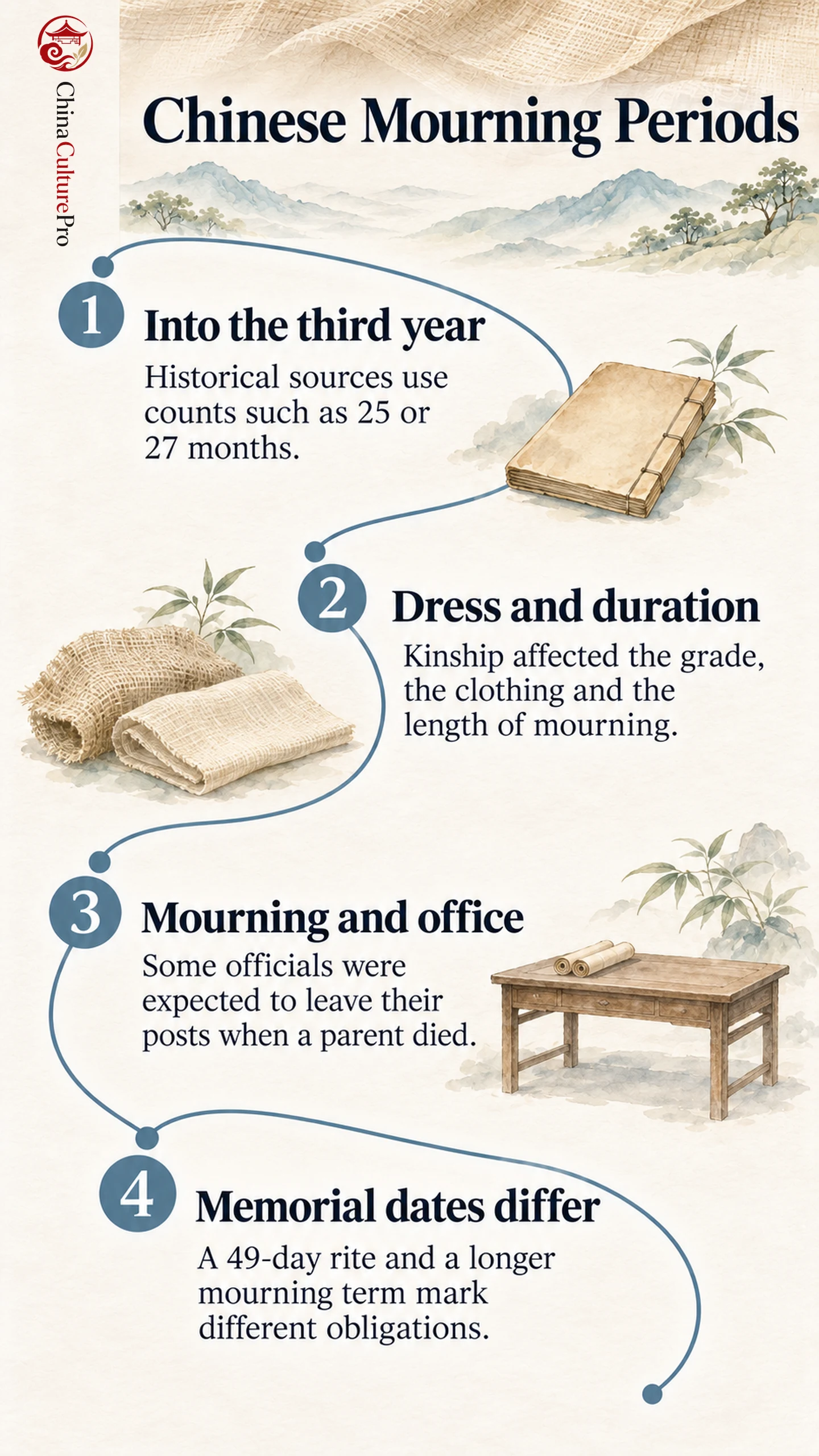
In traditional Chinese ritual, three-year mourning (三年喪, sānnián sāng) meant an observance extending into the third year. Historical texts and rules use counts such as twenty-five or twenty-seven months. Other family relationships could call for shorter terms.[1][2][3]
- For a parent. The longest term expressed an especially weighty filial duty.[1][2]
- For other relatives. A relationship could determine a shorter term and different mourning clothes.[4]
- For an official. Parental mourning could require leaving a government post for a time.[2][3]
A memorial service and a period of wearing mourning follow different schedules.
In Qing government, news of a parent’s death could change an official’s career as well as his household. The term of mourning could determine whether he stayed at his post or returned home. The same event could lead to a different term for an official serving under a different rule.[3]
Why Three Years Could Mean 25 or 27 Months
The Book of Rites gives a ritual explanation for a parent’s term. One yearly cycle runs through the four seasons. For a parent, the period is made weightier by doubling that cycle. The observance therefore runs into a third year.[1]
The exact transition out of mourning was debated. Han-era scholars discussed twenty-five and twenty-seven months, and twenty-seven months became a standard in later practice. The label could survive even when sources differed on the month in which the rites ended.[2][3]
Mourning Grades and Family Relationships
The five mourning grades (五服, wǔfú) expressed relationships through clothing and duration. A heavier grade could involve coarser garments and a longer term. The lengths could range from three months through five or nine months and one year to the longest period. The grade applied to the mourner in relation to the deceased.[4]
A visitor could therefore encounter different mourning dress within the same household. Colour is a separate clue with its own local variation, as discussed in Chinese funeral colours.[4]
When Mourning Meant Leaving Office
During the Northern Song, parental mourning became a formal obligation for civil officials. Qing evidence shows the effect of the rule on a career. Han officials could be expected to leave their posts and return home for a twenty-seven-month term, while Manchu bannermen commonly observed a much shorter period of one hundred days. Some officials sought exemptions to stay in office.[2][3]
The one hundred days in this case concern official obligations. A hundredth-day memorial is a family rite. The matching number can refer to a different institution or event.[3][5]
FAQs About Chinese Mourning Periods
Is 49 days the same as the historical three-year period?
Forty-nine days marks seven weeks of memorial observances in many Buddhist-influenced customs. The longer term historically governed duties such as wearing mourning and, in some cases, leaving office.[3][5]
Did every Qing official observe the same term?
The records distinguish Han officials and Manchu bannermen and include exemptions. The governing rules, the official’s status and the circumstances could affect the period.[3]
Sumber
[1] Chinese Text Project. Book of Rites: Questions on Three-Year Mourning
[2] Academia Sinica, Institute of History and Philology. Sima Guang’s Thoughts on Death Rituals
[3] Monumenta Serica. Mourning During the Tongzhi Regency
[4] Durham University. Historical Study of Chinese Kinship and Mourning Grades
[5] National Taiwan University. Seven Sevenths in Han Buddhist Funeral