
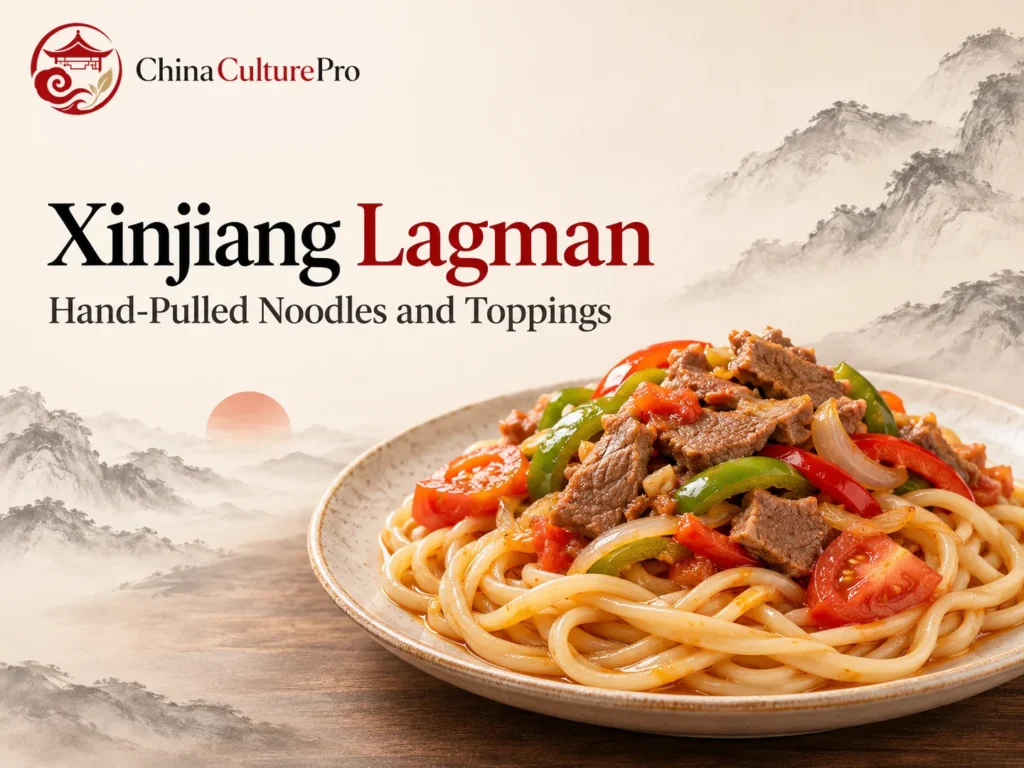

Quick Answer: What Is Xinjiang Lagman?
Xinjiang lagman is a hand-pulled wheat noodle dish closely associated with Uyghur cooking. Long, chewy noodles, called latiaozi (拉条子, lātiáozi) in Mandarin, are served with a cooked topping such as lamb, onions and peppers. On a menu, the mixed-noodle dish may appear as banmian (拌面, bànmiàn).[1][2][3]
- Noodles: Rested wheat dough is stretched into long strands and boiled separately.[1]
- Topping: Meat and vegetables are cooked with enough juice to dress the noodles.[2][3][4]
- Local styles: Different shops offer different toppings, even within a single town.[2]
The topping may come on the noodles or on a separate plate for mixing at the table.[4]

Ordering lagman usually means choosing what goes on the noodles. A serving of lamb with peppers tastes different from tomato, chile and egg, even when both sit over the same stretched wheat dough. The springy noodle holds the plate together across those variations.[1][2]
How the Wheat Noodles Get Their Chew
- Mix and rest the dough: A Xinjiang home method uses wheat flour and lightly salted water. Rest the kneaded dough so it can stretch without pulling back too strongly.[1]
- Oil and stretch the pieces: Oil keeps the dough surface from drying or sticking. A shop cook may stretch, fold and stretch the dough again to make several strands at once.[1]
- Boil the strands separately: Cook the pulled noodles in boiling water and lift them out when ready. Keeping them separate from the topping until serving lets the long strands retain their texture.[1][4]
The strands can be substantial and rounded. For other shapes and stretching traditions, see Chinese hand-pulled noodles. The same general type of long wheat noodle can be cut into short pieces for a wok-finished plate of Xinjiang ding ding noodles.[1][4]
What Goes on Top in Xinjiang
Toksun, on the western side of the Turpan Basin, is known for its mixed noodles and range of toppings. The menu name often tells you what the cook will put on the noodles.[2]
| Example topping | What changes |
|---|---|
| Guoyourou (过油肉, guòyóuròu) | Lamb or beef is cooked in oil and then combined with vegetables. A Xinjiang example uses tomato, green pepper and onion.[2][4] |
| Tomato, chile and egg | Egg replaces the strips of meat and tomato gives the topping acidity.[2] |
| Mushroom and meat | Mushrooms and meat make up the topping, with the same long noodle base.[2][4] |
The juice from the topping carries its flavor across the noodles when mixed. That serving method also explains why a cook can bring the two parts out on separate plates.[4]
Lagman Across Xinjiang and Central Asia
English spellings include lagman, laghman and leghman. Related noodle dishes across Central Asia can be served with generous broth. For the Xinjiang mixed-noodle order described here, expect long strands and a cooked topping with enough sauce to toss through them. Outside Xinjiang, check the menu description for how much broth comes with the noodles.[3][4][5]
For other staples in Xinjiang cuisine, compare the stamped flatbread baked against an oven wall in Xinjiang nang and the carrot-and-meat rice cooked together in Xinjiang polo.
FAQs About Xinjiang Lagman
What names should I look for on a Xinjiang menu?
Look for banmian on a Mandarin menu. Latiaozi refers to the pulled strands and is also used informally for the finished dish.[1][2]
Is Xinjiang lagman a noodle soup?
The Xinjiang mixed-noodle style is usually served with a separate cooked topping or with the topping spooned over the noodles. Central Asian versions can be brothier.[4][5]
How is lagman different from ding ding noodles?
Lagman keeps its long strands and adds the cooked topping at serving. Ding ding uses small cut pieces tossed with the meat and vegetables in the wok.[1][4]
Sources
[1] Kashgar prefectural government. Xinjiang pulled noodles and their preparation
[2] Xinjiang culture and tourism department. Xinjiang flavors: Toksun mixed noodles and topping styles
[3] University of Kansas research repository. Urban Uyghur language and food naming
[4] The Paper. Xinjiang wheat dishes and mixed noodle toppings
[5] Brill. Contemporary Food in Central Asia