

Quick Answer: What Is a Dragon Boat Festival Sachet?
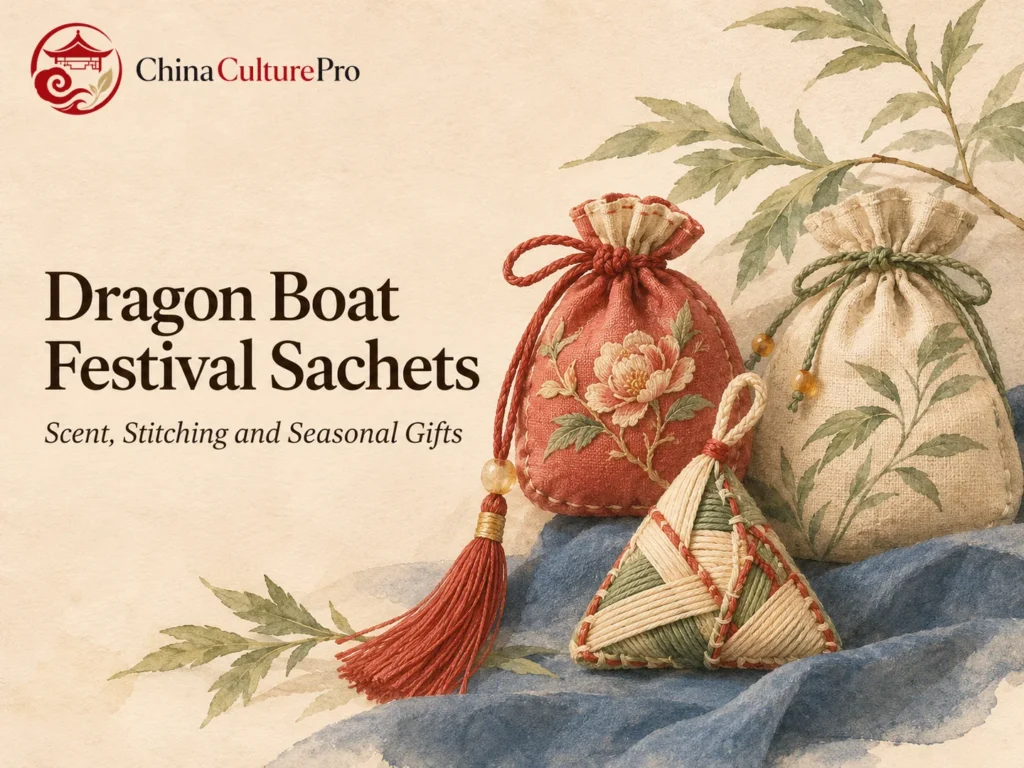
A fragrant sachet (香囊, xiāngnáng) is a small pouch that can hold aromatic material and be worn or hung. It is also called a scent pouch (香包, xiāngbāo). At the Dragon Boat Festival (端午节, Duānwǔ Jié), on day five of lunar month five, such pouches have expressed wishes for protection and well-being. [1][2][3][4]
- What to look for: A stitched or embroidered pouch with a loop, cord or tassel. [2][3]
- Who wears it: Festival accounts describe adults giving them to children. [2][5]
- Local variation: Qingyang and Xuzhou have distinct listed sachet crafts. [2][3]
The craft traditions differ in how makers shape and decorate the pouches.
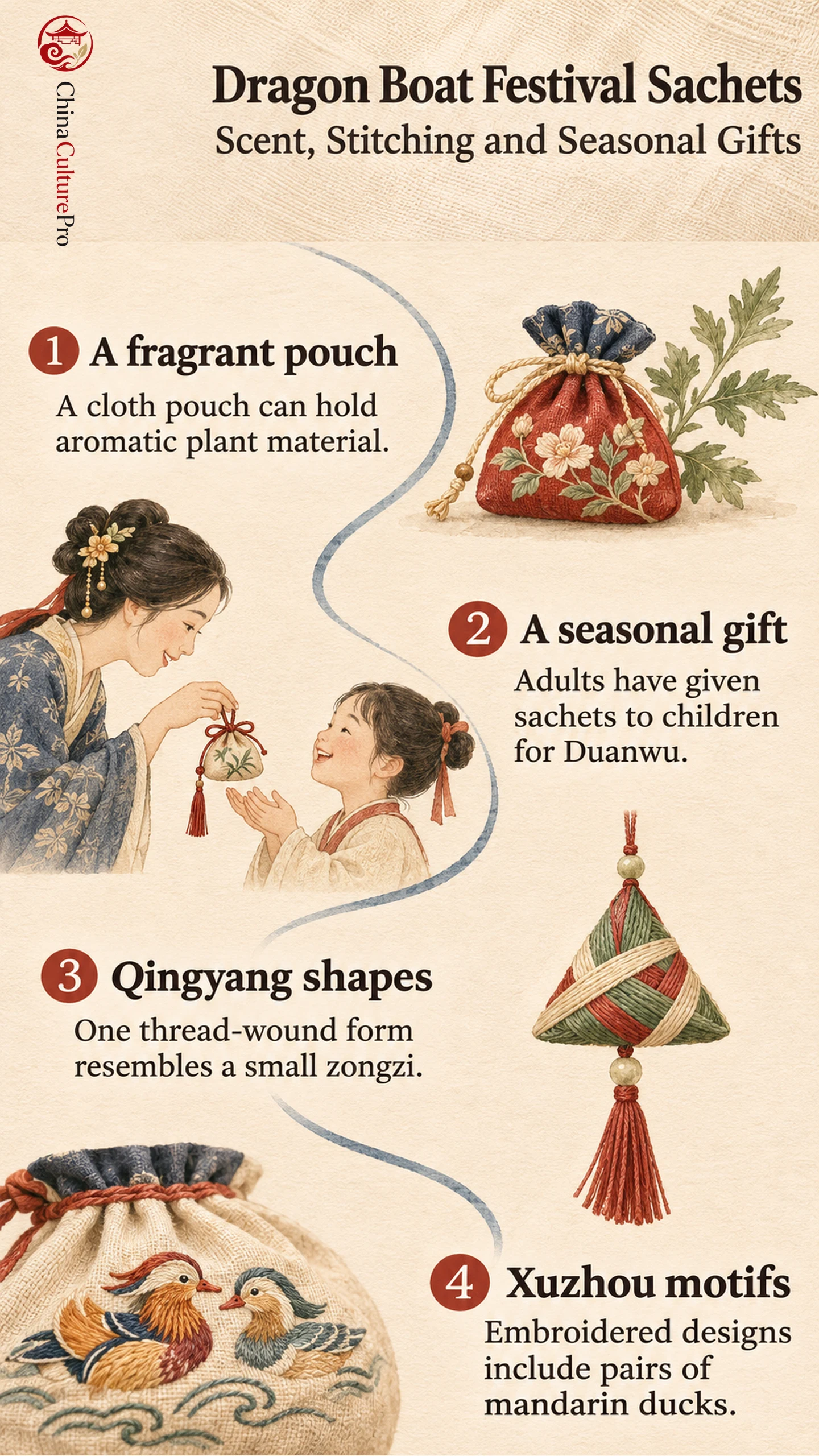
In a Qingyang account, a grandmother gives her grandchildren embroidered ornaments when their mother comes home to visit for the Dragon Boat Festival. The gift is part of a visit between generations and expresses a wish that the child stay well through summer. [2][5]
What Makes a Duanwu Pouch a Sachet
A pouch can be made from sewn fabric with aromatic plant material inside. Its outside may carry embroidery or take the shape of an animal, flower or other recognizable figure. A cord makes it possible to wear or hang the pouch. Some makers finish it with a tassel. The aromatic filling is what gives the pouch its scent. [2][3]
Older festival accounts describe the pouches among practices intended to ward off misfortune around the fifth lunar month. The same Duanwu customs can include colored threads worn on the body and plants hung at the door. [1][4][6]
How Qingyang and Xuzhou Sachets Differ
In Qingyang, Gansu, one local name for the sachet is chuchu (绌绌, chùchù). China’s heritage inventory describes a style in which the stitching is concealed so the shape stands out. It also lists a thread-wound form shaped like a small zongzi (粽子, zòngzi), with a tassel attached. This form recalls the outline of the festival’s wrapped rice dumpling. [2]
The heritage inventory for Xuzhou, Jiangsu, lists embroidered sachets shaped like ingots, butterflies and vases. It lists designs such as paired mandarin ducks and cranes with pine trees. These motifs express familiar wishes for affection, good fortune or long life. [3]
How the Qing Court Used Scent Pouches
At the Qing court, the imperial workshops made scent pouches and other small scented articles ahead of Duanwu. A Palace Museum study cites an order from 1737 for assorted pouches, pouches with pepper and plain pouches in red, yellow and white. These articles were made for use in the palace and as seasonal gifts for members of the imperial family and officials. [4]
FAQs About Dragon Boat Festival Sachets
Do all Duanwu sachets contain the same herbs?
The heritage accounts describe aromatic contents and several different pouch forms. The mixture depends on the maker and local practice. [2][3][4]
Are the sachets always worn around the neck?
The Qingyang inventory describes sachets worn on the body as well as pieces hung at home or given as gifts. Pouches, pendants and hanging ornaments vary in form. [2][5]
Sources
[1] UNESCO Intangible Cultural Heritage. Dragon Boat Festival
[2] China Intangible Cultural Heritage Digital Museum. Qingyang Sachet Embroidery
[3] China Intangible Cultural Heritage Digital Museum. Xuzhou Sachets
[4] Palace Museum. Duanwu Workshop Orders Under Yongzheng and Qianlong
[5] Silk Road Dunhuang Cultural Expo. Transmission of Qingyang Sachet Embroidery
[6] China Intangible Cultural Heritage Digital Museum. Traditional Festivals and Ideas of Harmony