
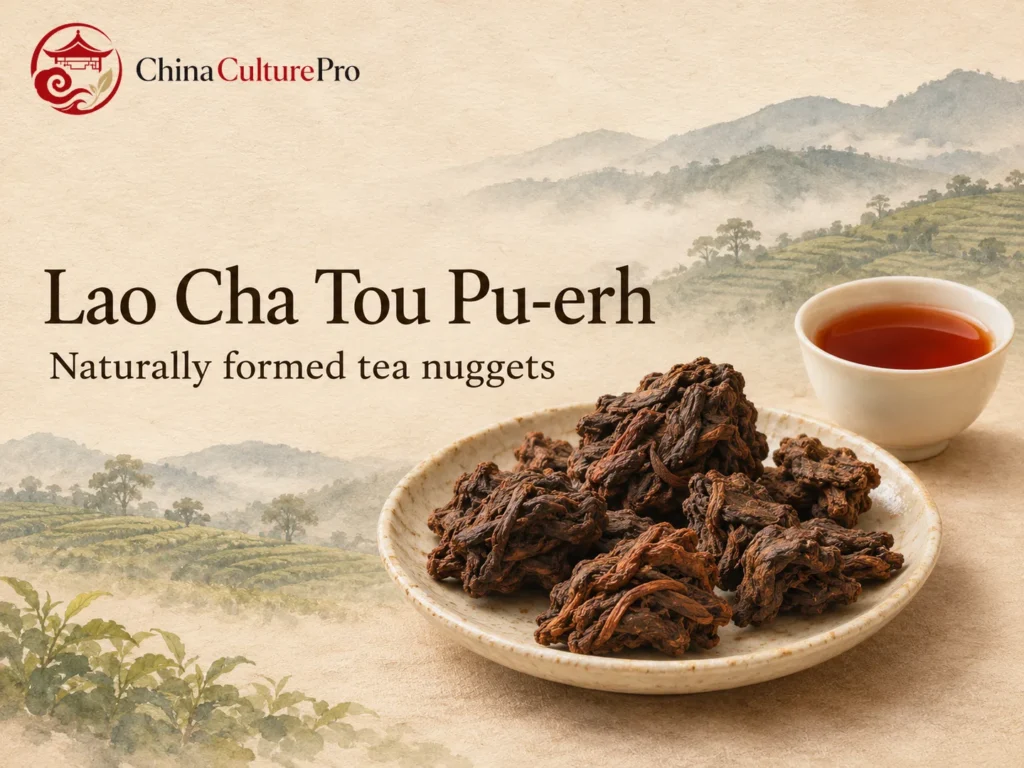

Quick Answer: What Is Lao Cha Tou Pu-erh?
Lao Cha Tou(老茶头,lǎo chá tóu), often translated as “old tea heads,” are compact tea nuggets formed during the pile fermentation of shou Pu-erh(熟普洱,shú pǔ’ěr), or ripe Pu-erh.[1][4]
- Formation: Leaves bind together inside the fermentation pile.
- Shape: The natural lumps differ from pieces broken off a pressed cake.
- Cup: They can give a mellow, substantial infusion, with flavors varying by lot.
- Format: Nuggets may be sold loose or subsequently pressed into bricks.
“Old” is part of the name, not a reliable age statement. Check the actual batch and processing dates.[1][2]

Dark, irregular nuggets look more like stones than leaves. Separate how they form from their later packaging and brewing.
How Tea Nuggets Form During Ripe Pu-erh Processing
During wodui(渥堆,wòduī), wet-pile fermentation, damp tea is managed in a heap and turned to redistribute its conditions. Some leaves ball up and remain bound together instead of separating into loose strands.[2]
Pectin-rich material and other substances in the leaf contribute to this binding. The resulting lumps can resist breaking apart. Their form comes from processing, not a tea-plant cultivar.[1][4]
Natural Nuggets and Pressed Tea Are Different Stages
A nugget acquires its compact form during fermentation. A cake or brick acquires its outline during later pressing. Both can appear in the same product: one current 250 g brick is made with tea nuggets from Meng Song and Xin Banzhang in Yunnan.[2]
A separate brick produced in 2022 used nuggets selected from fermentation batches spanning 2013–2018. The finished brick’s date and its material’s history therefore answer different questions.[1]
Our comparison of cakes, tuocha and bricks explains the outer forms. A small broken cake fragment should not be identified as a natural tea head merely because it is compact.
Flavor, Texture and Slow Extraction
In a comparison of CT-21 tea heads with PE-21 ordinary ripe tea, the tea-head sample tasted smoother and mellower, with slight bitterness and astringency. The result describes those samples, not a rule that every nugget is better or impossible to overbrew.[4]
Individual products illustrate the range: one brick has date, glutinous-rice and caramel-like notes; another is described as both bitter and sweet, with dark chocolate. These are tasting impressions, rather than proof that dates, rice or chocolate were added.[1][2]
Dense pieces may soften gradually. A documented loose-nugget lot opens slowly across successive infusions, so a pale opening cup need not describe the whole session. Follow the taste as it develops rather than waiting for every lump to disintegrate.[5]
How to Brew Lao Cha Tou
These two product-specific starting points use different extraction methods. Keep each set of quantities and timings together.
| Approach and scope | Leaf and water | Preparation |
|---|---|---|
| Short infusions for one Bulang lot | 1 g per 20 ml; 100°C water | Wake with a rinse of at least 10 seconds. Infuse for 15 seconds, adding 5 seconds each round.[3] |
| Simmering for one aged-nugget range | 8–12 g per 500–800 ml | Rinse, add to cold or warm water, bring to a boil, then simmer gently for 5–10 minutes.[5] |
- Select a complete method suited to your actual product and heat-safe vessel.
- Measure leaf and water, then follow that method’s rinse and extraction instructions.
- Pour the liquor and taste it before deciding whether the next extraction needs more time.
For the role of the preliminary rinse, see tea rinsing in Chinese brewing.
Checking Age, Origin and Storage
Ask separately where the tea was produced, when it was fermented and when it was pressed or repacked. Origin labels and Pu-erh packaging papers help identify what each statement refers to; a familiar name does not supply a missing date.
One aged range identifies Yunnan-grown tea stored in Xi’an: the storage city differs from the leaf’s origin. Keep it away from strong odors and follow the product’s storage guidance.[5]
FAQs About Lao Cha Tou Pu-erh
Does Lao Cha Tou Have to Be Old?
The name alone does not establish a minimum age. Look for dated fermentation material and distinguish it from the final pressing date.
Are Tea Nuggets Held Together with Added Glue?
Natural tea heads bind during fermentation; added glue is not required for that formation. Check a specific product’s ingredients and production information.
Must Every Nugget Fall Apart When Brewed?
No. Tightly bound pieces may remain partly intact. Judge the extracted tea’s flavor rather than using complete breakup as a quality test.
Fuentes
[1] Lancang Ancient Tea. 古韵金砖老茶头
[2] Yunnan Sourcing. 2026 Yunnan Sourcing “Horse Lao Cha Tou Brick” Ripe Pu-erh Tea
[3] Path of Cha. “Old Tea Heads” Lao Cha Tou Ripe Pu-erh Tea Nuggets
[4] Shiqiang He and colleagues. Metabolites and metagenomic analysis reveals the quality of Pu-erh “tea head”
[5] Orientaleaf. Dry-Stored Aged Lao Cha Tou Ripe Pu-erh Tea Nuggets