

Quick Answer
The Kyrgyz komuz (库姆孜, kùmǔzī) is a three-string plucked wooden lute played by Kyrgyz musicians in western Xinjiang. China’s national intangible heritage inventory traces the practice to communities in Wuqia, Aheqi and Akto counties in Kizilsu Kyrgyz Autonomous Prefecture.[1]
- Shape: Look for a narrow neck and a shallow, pear-shaped body.[1]
- Sound: Players use the instrument for solos, ensemble pieces and accompaniment.[1]
- Continuity: Musicians pass on repertoire and playing techniques.[1]
In the traditional solo form of the Manas (玛纳斯, Mǎnàsī) epic, the voice carries the story without accompaniment.[3][6]

A komuz player can carry an entire tune with three strings. A singer can use the same instrument to support a vocal line. Those two settings give the listener different things to follow, and they help explain why a display case tells only part of the story. In the wider Kyrgyz culture of China, the distinction also matters when a musical demonstration appears alongside a performance of the community’s oral literature.
How to Recognize a Komuz
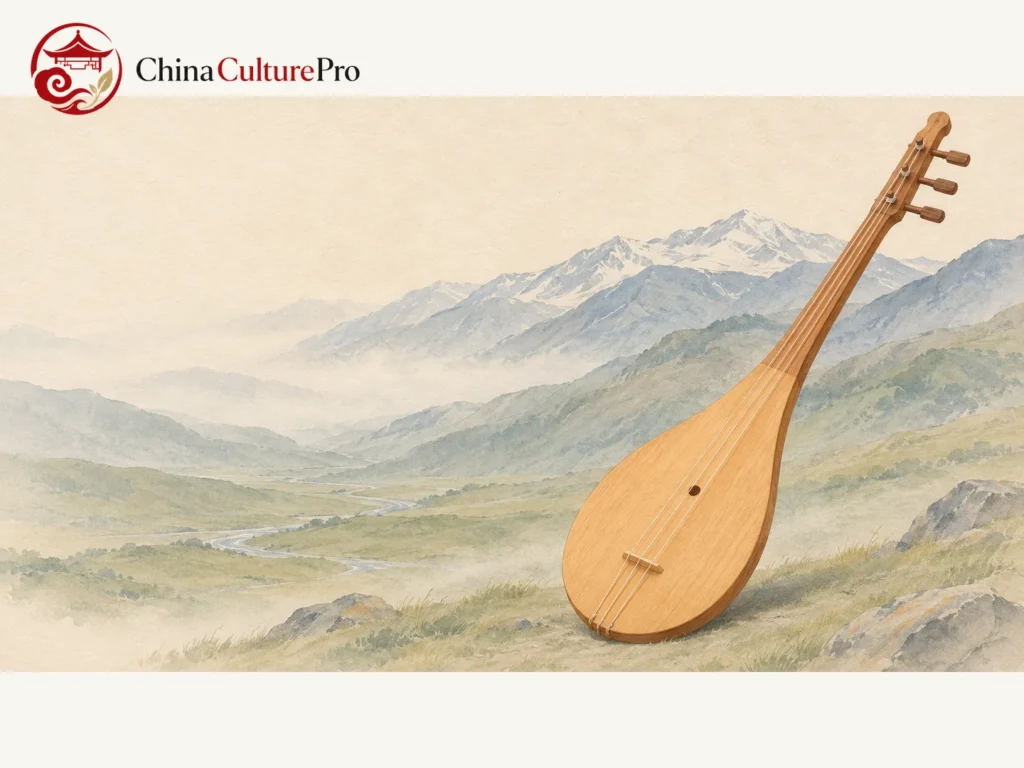
Start with the silhouette. The body is shallow and rounded toward the base, narrowing into a long neck. The Chinese heritage record describes an all-wood instrument about a meter long, with three tuning pegs set along one side. It records animal-gut strings in older examples and silk in later practice. These are documented materials, and a label on a particular object should take precedence when identifying its strings.[1]
A mid-20th-century instrument from Kyrgyzstan in the Hartenberger collection offers a useful point of comparison. It has a fretless neck, a flat back and three nylon strings that pass over a small bridge. The instrument comes from the other side of the border, so its wood and fittings illustrate one maker’s decisions. The shared form helps explain how the instrument works. A fretted neck gives the fingers fixed places for notes, while a fretless neck puts pitch placement in the player’s hands.[2]
Among other musical instruments in China, the komuz belongs with plucked lutes. The bowed Mongolian horsehead fiddle offers a useful contrast. Both have strings running along a neck, but a bow can sustain a note continuously while a plucked note starts with a distinct attack.
How the Komuz Is Played in Xinjiang
The national record gives the instrument more than one role. A soloist carries the tune alone. Players may also answer each other, perform together or accompany a voice. The same record describes playing an established tune and improvising as separate possibilities. A recording labeled simply “komuz” may therefore present anything from a self-contained instrumental piece to a small part of a sung performance.[1]
For a concrete entry point, the inventory names pieces whose Chinese titles translate as “Nightingale Tune” and “Woodpecker in the Pine.” It also lists a piece about a bay foal. These titles are useful search cues even if the available recording has a different English title. Listen for a short figure that repeats with changes in spacing or emphasis. In a performance with singing, hear what happens when a sung phrase ends. A new instrumental figure may answer it, while a repeated figure can keep the rhythm going. A title gives the listener an image to start from. The recording supplies the details of how the musician evokes it.[1]
In a regional comparison with Uyghur dutar traditions, begin by identifying whose repertoire and instrument are on the recording. A long neck and plucked strings are a useful starting description, while the identity of the musicians and the setting explain which tradition you are hearing.
Where the Komuz Fits Beside Manas
Manas is the Kyrgyz heroic epic. UNESCO describes the traditional delivery in China as an unaccompanied performance by a manaschi (玛纳斯奇, Mǎnàsīqí), a specialist epic singer. A listener can follow the voice itself as it changes melody or phrasing with the story. The Chinese Manas heritage dossier records solo unaccompanied singing as the main form and also documents versions with a komuz or with several singers. These variants explain why two recordings of the epic may sound quite different.[3][6]
Evidence from Kyrgyzstan gives the distinction another useful example. UNESCO’s account of Kyrgyz epic tellers distinguishes solo narration of Manas from shorter epics that generally use komuz accompaniment. That evidence applies to the practice documented in Kyrgyzstan. When identifying a performance from Xinjiang, the name of the work and the role of the singer tell you more than the instrument alone.[5]
How the Tradition Is Passed On
Kizilsu’s komuz art entered China’s national heritage inventory in 2008, in the traditional music category. The listing names the Manas research center in Aheqi County as its safeguarding organization. It identifies Wuqia and Akto as further centers of the practice.[1]
The inventory profiles a representative komuz bearer from Wuqia who began learning at twelve. It credits him with seventeen playing techniques and documents his work teaching younger musicians. A written catalogue can preserve a name or a tune title. Lessons give a student access to timing and touch, including when to let a plucked note fade or how to vary a figure while keeping it recognizable. The inventory’s concern about losing particular playing variants explains why a broad label such as “traditional music” tells so little about what people work to pass on.[1][4]
FAQs About the Kyrgyz Komuz in China
Is the Komuz Played Outside China?
Yes. The komuz is also a Kyrgyz instrument in Kyrgyzstan, where it has a solo and vocal repertoire and can accompany shorter epics. The listing for komuz art in Kizilsu is specific to practice in China.[1][2][5]
What Do Kyrgyz and Kirgiz Mean Here?
Kyrgyz and Kirgiz are English spelling variants for the community in this context. UNESCO uses Kirgiz in its description of the Manas epic in China. The spelling by itself does not indicate a person’s citizenship.[3]
Fuentes
[1] China Intangible Cultural Heritage Network. Kyrgyz komuz art national inventory record
[2] Hartenberger World Musical Instrument Collection. Kyrgyzstan komuz catalogue record
[3] UNESCO Multimedia Archives. Manas in Xinjiang
[4] China Intangible Cultural Heritage Network. Representative bearer of komuz art in Wuqia
[5] UNESCO Intangible Cultural Heritage. Art of Akyns Kyrgyz epic tellers
[6] China Intangible Cultural Heritage Network (Red del Patrimonio Cultural Inmaterial de China). Manas singing practices and bearers