
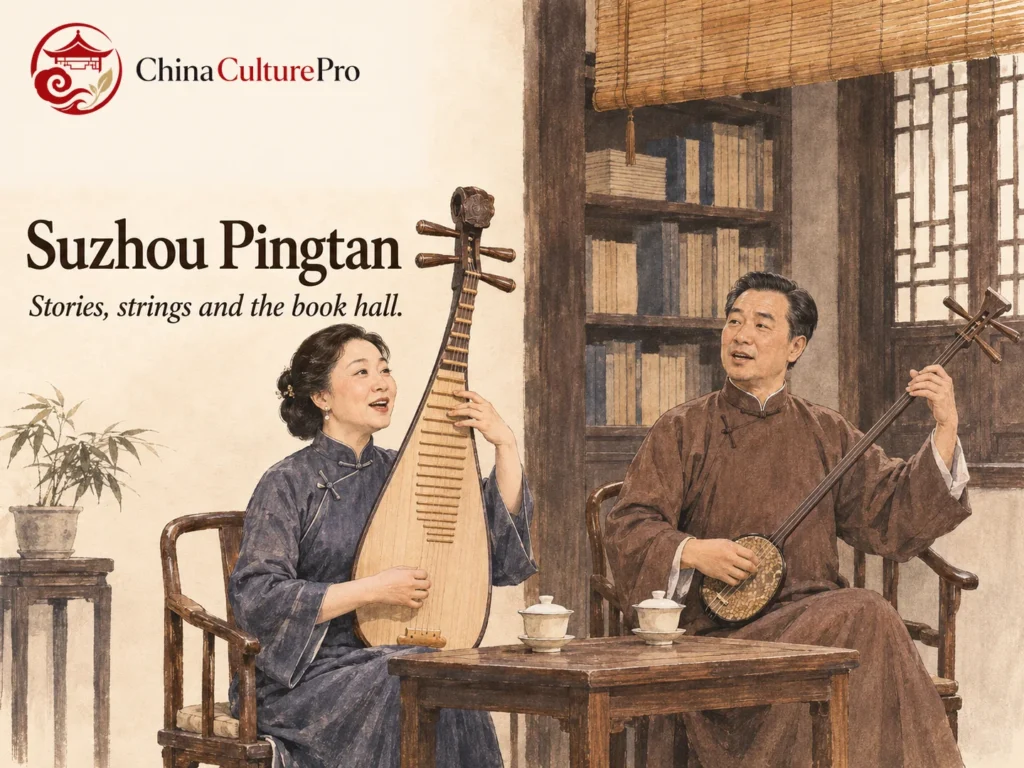

Quick Answer: What Is Suzhou Pingtan?
Suzhou pingtan(苏州评弹,Sūzhōu píngtán) is a name for two narrative performance traditions from the Suzhou area. Pinghua(评话,pínghuà) relies on spoken storytelling. Tanci(弹词,táncí) can combine narration, singing and plucked instruments. Both use regional speech to move between the storyteller’s voice and the voices of characters.
Pingtan has been heard in teahouses, dedicated storytelling halls and broadcasts. Some programmes feature short selections, while others present part of a story that continues over several sessions. Check the form and title before choosing what to hear.
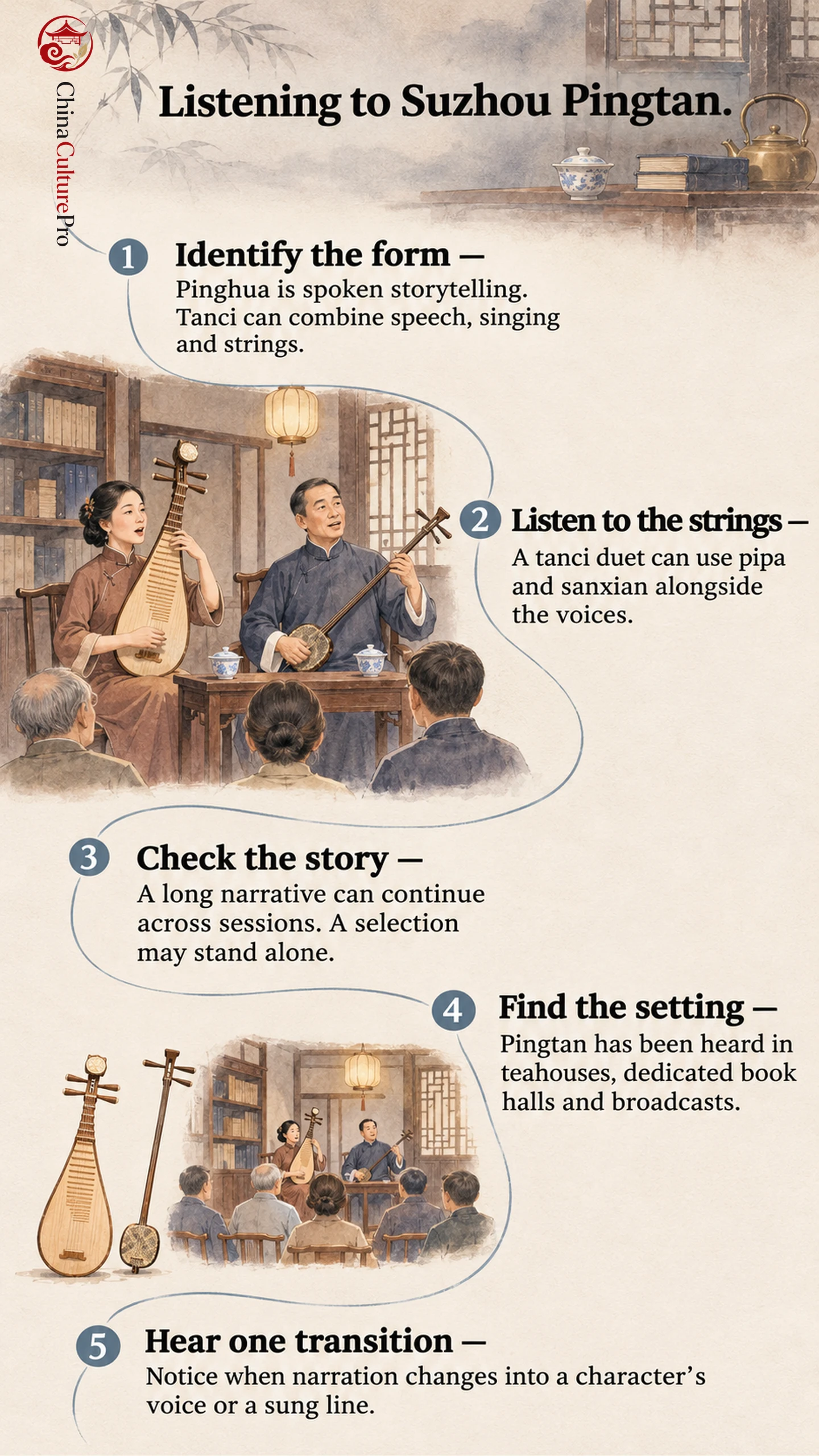
Two performers can trade lines, then one can move into song while the instruments continue the phrase. A spoken programme under the same broad name can sound quite different. That is why the first question to ask about a Suzhou pingtan performance is which form it presents.
Two Forms Under One Name
Suzhou pingtan belongs to the wider practice of Chinese storytelling. Both component forms use speech associated with the Suzhou area. The main contrast is the way the story is performed. Pinghua uses spoken narration and character voices. Tanci can move between speech and song. [1]
| Forma | Main way of telling the story | What to listen for |
|---|---|---|
| Suzhou pinghua | Spoken narration, often by one performer | Shifts between a narrator’s description and a character’s words. |
| Suzhou tanci | Speech and song, often with plucked accompaniment | The transition from narration into a sung line and back to the story. |
A recording labelled only “pingtan” may contain either form or selections from both. Names such as pinghua also occur in other regions, so the Suzhou label identifies which local speech and repertoire you are hearing. [1]
Suzhou Speech, Pipa and Sanxian
A storyteller’s delivery can mark a switch into someone else’s voice without scenery or a change of costume. Listen for shifts in pace, intonation and register. In tanci, a change to singing gives the audience another cue that a different part of the story is being presented. [1]
A tanci duet can use the pipa(琵琶,pípá), a pear-shaped lute, and the sanxian(三弦,sānxián), a three-stringed lute. The instruments can accompany the singers and provide sound between lines. The performers may also work in other groupings. You can hear the pipa as part of an exchange rather than as a solo instrument in this context. [2]
Stories and Installments
Suzhou pinghua includes long narratives based on history and adventure. The national project entry records performers known for telling stories from Water Margin. The tanci repertoire includes *The Pearl Pagoda*, *The Jade Dragonfly* and versions of the White Snake story. Knowing the title gives you a way to place a short passage in a larger narrative. [1]
A long story may be presented in installments. One performance can give the audience an episode and leave a question or development for a later session. A short independent selection gives a different listening experience. Compare what a programme calls the selection with the title of the longer story. [1]
From Teahouse Book Halls to Recordings
A shuchang(书场,shūchǎng) is a venue for storytelling performances. Suzhou’s local gazetteer documents book halls in teahouses as well as dedicated halls and other venues. The setting supported audiences who returned for a continuing story. Dedicated book halls gave the story its own venue. [3]
Radio gave the form a different audience and a different way to follow performers. The gazetteer records Suzhou pingtan on Shanghai radio from the 1920s. Broadcasts could bring a performance into homes beyond a venue’s audience. [3] The city’s museum also preserves material related to the practice and its performers. [4]
How to Listen to a Pingtan Programme
Check the form, performer and work title. If it is pinghua, listen for the point where the narrator begins to speak in a character’s voice. If it is tanci, hear what the instruments do when the voice moves into song. A synopsis can help you keep track of names and events.
If you want historical context as well as a performance, look at the Suzhou museum’s description of the form and its collecting work. Compare that context with the credit on an actual recording. Use the credits to place the excerpt within one performer’s work or a longer story. [4]
FAQs About Suzhou Pingtan
Is Suzhou pingtan always a duet?
No. Spoken pinghua is often performed by one person. Tanci can use a duet or another grouping.
Is pingtan just music in a teahouse?
It is a storytelling tradition with spoken and sung forms. Teahouses were one setting, alongside storytelling halls and broadcasts.
Can I follow a performance without understanding Suzhou speech?
A synopsis can help with the plot. Listen for shifts of voice, pace and accompaniment even when the words are unfamiliar.
Fuentes
[1] China Intangible Cultural Heritage Digital Museum. Suzhou Pingtan
[2] Suzhou Municipal Government. Suzhou Pingtan, Intangible Cultural Relics
[3] Suzhou Local Gazetteer Office. Pingtan in Suzhou’s Cultural History
[4] Suzhou Municipal Government. Suzhou Pingtan Museum of China