
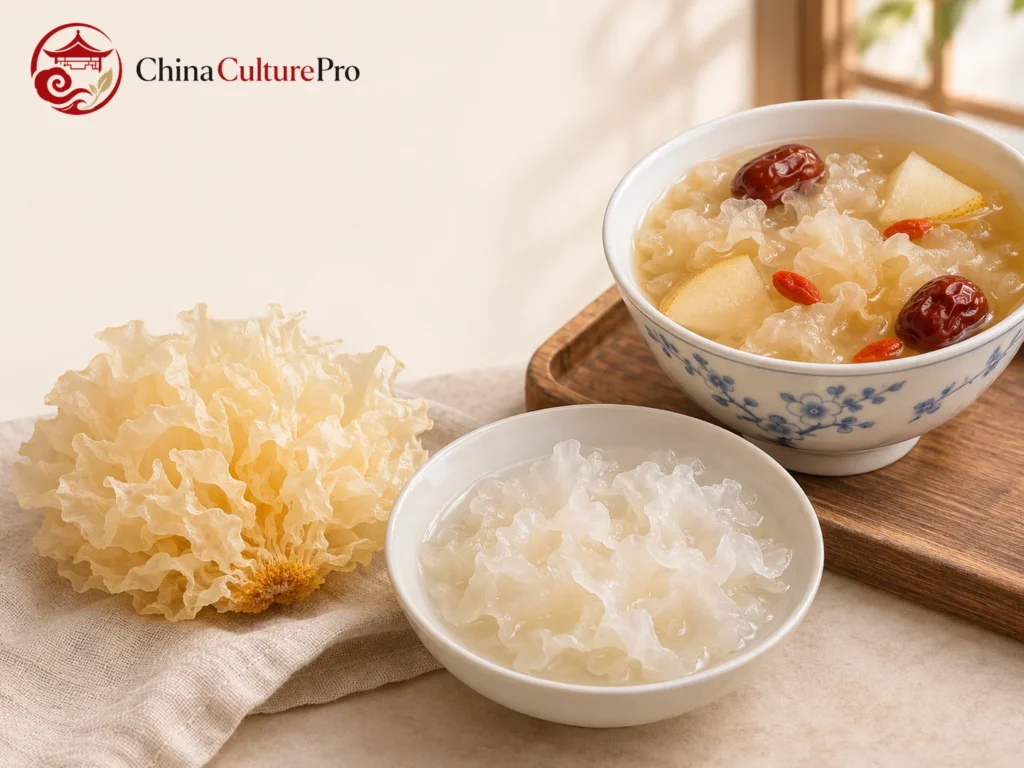

Quick Answer: What Is Snow Fungus?
Snow fungus is the edible jelly fungus Tremella fuciformis, known as Yin Er (银耳, yín ěr), or silver ear, in Chinese. Its frilly lobes are valued more for texture than strong mushroom flavor.[2][3]
- Names: Snow ear and white wood ear are other names for this ingredient.[2]
- Texture: It can provide a delicate crunch or become soft and gelatinous, depending on preparation.[1][3]
- Uses: Chinese cooks use it in sweet dessert soups, savory poultry soups and vegetarian dishes.[1][4]
- Preparation: Rinse, rehydrate dried clusters, remove the tough base and cook for the intended texture.
Soaking overnight belongs in the refrigerator, not on the kitchen counter.[5]

A pale dried rosette expands into a much larger, flexible cluster in water. Decide what dish you want before preparing it: a clear savory soup and a silky pear dessert need not have the same texture.
Names and Forms of Snow Fungus
| Nombre | Significado | Shopping implication |
|---|---|---|
| Yin Er | Silver ear | A Chinese name for Tremella fuciformis.[2] |
| Xue Er (雪耳, xuě ěr) | Snow ear | Another name for the same culinary fungus.[2] |
| Bai Mu Er (白木耳, bái mù ěr) | White wood ear | An alternative name, not a reason to treat it as identical to black wood ear.[2] |
These are names, not three cooking grades. Dried clusters have thin, ruffled tissues and may be white or tan. Already-cooked jarred tremella desserts also exist; these are finished foods, not dried fungus needing the same soaking routine.[3][7]
Mild Flavor and a Changing Texture
Snow fungus has little flavor of its own; it adds a delicate, slippery crunch in a short-cooked soup.[3]
A pear dessert may need two to three hours of simmering for soft fungus and syrupy liquid. Other preparations have different targets.[1]
The thick liquid is not proof of collagen. Soluble fiber released during cooking helps produce that consistency; snow fungus is not a major dietary collagen source. Its food-culture reputation for beauty should not be mistaken for a demonstrated treatment.[6]
Three Chinese Cooking Uses
- Sweet pear soup: Simmer snow fungus with pear, rock sugar, red dates and goji berries for a dessert rather than a savory broth. It can be served warm or chilled and appears among foods enjoyed for Año Nuevo chino.[1]
- Savory poultry soup: Chicken or pigeon preparations show another side of the ingredient. In Cantonese cuisine, double-boiled poultry soup can use it for a delicate textural addition; adding it later retains more chew.[4]
- Vegetarian dishes: Snow fungus can join mixed vegetarian preparations, including vegetable stews with fermented bean curd. Choose it for texture, rather than expecting the strong savoriness of a dark dried mushroom.[4]
How to Prepare Dried Snow Fungus
Follow the package and selected recipe, while controlling soaking time and temperature.
- Rinse: Wash dried fungus under clean running water, then place a modest quantity in a clean bowl with enough water for expansion.[5]
- Rehydrate: Soak until the lobes have expanded and softened. One cold-water preparation takes about an hour; tightly packed clusters and other recipes differ. At room temperature, generally keep soaking to no more than two hours; refrigerate longer soaks.[2][5]
- Trim and tear: Remove the firm base and tear the softened lobes into pieces. Rehydration prepares the ingredient for cooking; it does not replace the recipe’s cooking stage.[2]
- Cook to the dish: Simmer for a soft dessert texture or follow the shorter/later addition specified by a savory recipe. Check the fungus and liquid rather than assuming every soup should turn thick.[1][4]
Use soaked fungus promptly; discard it if an abnormal smell or unusual slime develops.[5]
Buying and Storing It
Buy culinary fungus from a reputable seller. Keep dried stock in an airtight container in a cool, dry place away from sunlight; prevent moisture and mold. [6]
Refrigerate cooked leftovers at 4°C or below within two hours. Discard leftovers kept refrigerated for more than three days. Follow the label for a commercially prepared dessert, whose unopened storage requirements may differ.[6]
FAQs About Snow Fungus
Is snow fungus the same as black wood ear?
No. Snow fungus is Tremella fuciformis; the common black wood-ear fungi belong to a different group. Similar names do not establish identical texture or recipe behavior.[3]
Must I soak snow fungus overnight?
No. Some preparations use a shorter soak. If a recipe requires overnight soaking, refrigerate it throughout rather than leaving it at room temperature.[2][5]
Why does my soup stay crunchy instead of silky?
Brief cooking can retain crunch; a silky dessert requires a different, longer cooking method.[1][3]
Is the slippery texture collagen?
No. Thickened snow-fungus soup owes its consistency to soluble fiber in the cooking liquid, not a large supply of collagen.[6]
Fuentes
[1] The Woks of Life. Snow Fungus Soup with Pears
[2] My Chinese Home Kitchen. Snow Fungus Soup
[3] Mycological Society of San Francisco. Snow Mushroom
[4] MICHELIN Guide, interview and recipe with chef Mango Tsang. Double-Boiled Silkie Chicken with Jujube and Silver Ear Fungus
[5] Hong Kong Centre for Food Safety. Soaking Mushrooms and Food Safety
[6] Hong Kong Consumer Council. Dried Edible Fungi and Preparation Advice
[7] SIAL Paris, Zhejiang Sheng’er Food exhibitor listing. Fresh Stewed Tremella Dessert