

Quick Answer: What Is La Rou?
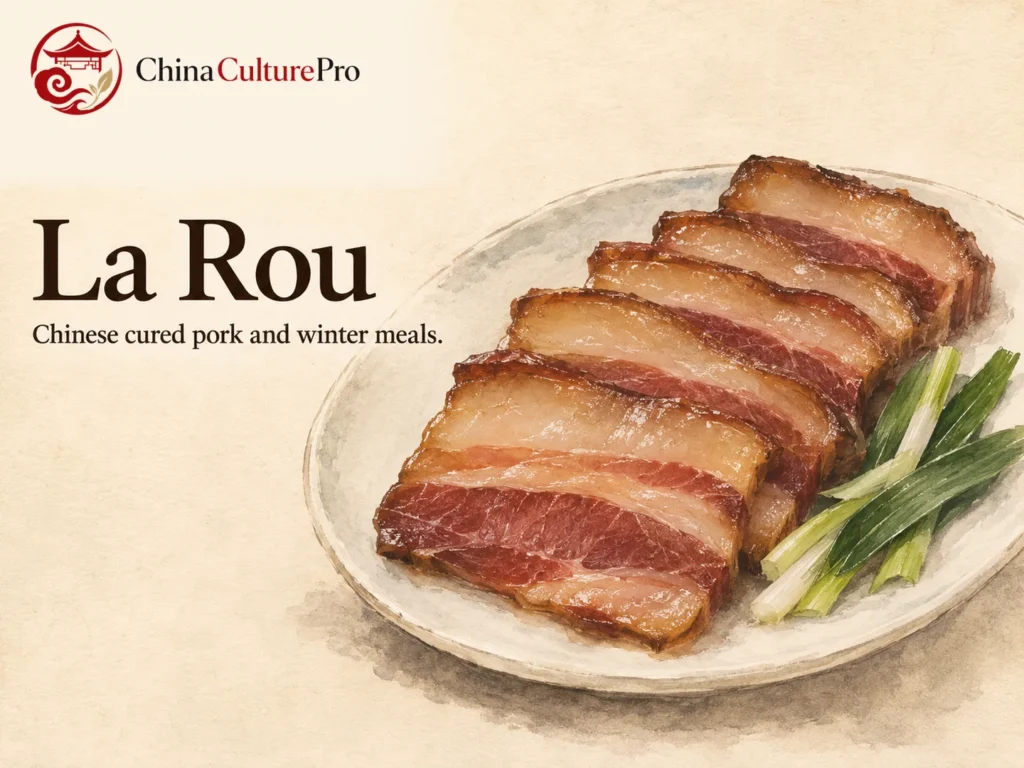
La rou(腊肉,làròu)is Chinese cured pork, commonly made from strips of pork belly. Salt curing and drying distinguish it from fresh pork; smoking is an additional process used in some styles.[1]
- Form: A whole piece of meat, often showing separate layers of lean and fat.
- Flavor: Concentrated savory pork flavor, with smoke, soy sauce or other seasonings depending on the product.
- Use: Usually an ingredient to cook, rather than a ready-to-eat slice of cold meat.
“Chinese bacon” is a useful menu translation, but it does not specify one recipe or guarantee that the pork is already cooked.

Thin slices of cured pork bring firm red-brown lean meat and glistening fat to a plate of vegetables or rice. Some smell distinctly smoky; others carry a sweeter soy-seasoned aroma. This guide separates the meat’s texture, preservation methods and regional examples, then explains its place in winter meals and what to check before cooking.
Cured Pork, Fat and the Finished Texture
Pork belly makes the contrast especially visible: lean meat lies between bands of pale or amber fat, sometimes beneath a strip of skin. Drying makes the uncooked piece firm. Cooking can soften the fat and make it more translucent, while the lean retains a concentrated, firmer bite. Cuts with different proportions of lean and fat give different mouthfuls.[2]
It is not necessarily crisp like pan-fried breakfast bacon. A steamed slice can be supple; a slice cooked with vegetables can retain a firmer edge. Saltiness, smoke and sweetness also vary independently: a dark piece is not automatically smokier or spicier. Color alone cannot establish either its seasoning or its safety.
Salting, Drying and Optional Smoking
The processes have separate jobs. Salting seasons the meat and contributes to preservation. Drying removes moisture and changes its firmness. Smoking adds another aroma in styles that use it. China’s meat-production rules recognize several drying or smoking processes within the cured-meat category, rather than defining every product as smoked.[1]
This is one branch of Chinese food preservation, distinct from simply cooking fresh pork. Regional accounts describe meat hung above a household hearth as well as pork dried without smoking.[3] Commercial production may use controlled equipment instead of a domestic fireplace.
These descriptions explain how the ingredient differs from fresh meat. They are not a home-curing procedure: salt, moisture, temperature and hygiene must work together, and a piece that looks dry has not thereby been proved safe to eat.
Regional Styles: Hunan, Sichuan and Cantonese Pork
Three regional examples help explain the range. They are useful starting points when reading a menu, rather than compulsory recipes for every producer.[3][4]
| Ejemplo regional | A recognizable tendency | What to ask |
|---|---|---|
| Hunan cured pork | Smoke is prominent in many household traditions | How smoky is it, and are chilies added in the finished dish? |
| Sichuan cured pork | Salt-cured meat appears in smoked and unsmoked versions | Is this particular product smoked or seasoned with pepper? |
| Cantonés cured pork | Soy-seasoned, sweet-savory pork belly is a familiar example | Does the seasoning include soy sauce, sugar or alcohol? |
A documented Cantonese household version uses soy sauce, sugar and wine, illustrating how much flavor can come from the curing seasonings rather than smoke.[4] That example should not erase salt-cured versions or differences between Hong Kong and Guangdong households.
La wei(腊味,làwèi)is a broader cured-meat category: pork strips are one member, not the whole collection. Lap cheong is sausage, made from chopped or ground ingredients stuffed into a casing. Visible belly layers help distinguish a whole-cut product from sausage, although other pork cuts are also used.[1][3]
Winter Preparation and New Year Meals
La yue(腊月,làyuè)means the twelfth lunar month, connecting the name with a traditional season for preparing preserved meat.[3] The calendar association does not mean every modern product must be made in that month.
Local reporting from western Hunan still describes winter households curing pork and hanging it above a hearth, with the resulting food accompanying New Year gatherings.[5] In that setting, the ingredient carries memories of seasonal work and shared family meals. It is one of many Chinese New Year foods, with a stronger presence in some households and regions than others.
Today it is also sold packaged and used outside the festival period. A seasonal tradition can continue through everyday dishes, even when shoppers buy the cured pork rather than prepare it themselves.
Cooking, Buying and Dietary Checks
Cooking brings the preserved ingredient into a meal. Depending on the product and dish, it may be steamed, simmered or cooked with other ingredients. Vegetables such as bamboo shoots or garlic greens provide contrast, while cured pork can also flavor claypot rice.[3][4] Its seasoning and fat flavor the surrounding rice or vegetables.
Choose a traceable seller and inspect packaging, ingredients, dates and instructions.[6] Conventional cured pork requires cooking; follow the actual label if a manufacturer sells a separately cooked, ready-to-eat product. Drying and smoking do not by themselves establish ready-to-eat status.[1]
Storage also depends on the product and whether it has been opened. Follow its refrigeration or freezing directions instead of assuming all preserved meat can hang indefinitely at room temperature.[7]
Pork remains the main ingredient after curing. Soy-seasoned versions may contain soy and wheat, and alcohol may be used. Check the complete seasoning and shared preparation equipment when these matter to your diet. Removing visible slices from a rice or vegetable dish does not remove the pork flavor or fat already distributed through it.
FAQs About La Rou
Is la rou always smoked?
No. Both smoked and unsmoked styles exist; check the producer’s description rather than relying on the English word “bacon.”
Can you eat la rou without cooking it?
Treat conventional cured pork as an ingredient requiring cooking. Only use a product without further cooking when its label explicitly identifies it as ready to eat.
Is la rou the same as lap cheong?
No. It is generally a whole cut of cured pork; lap cheong is a stuffed sausage. Both belong to a wider preserved-meat tradition.
Does la rou have to be spicy?
No. Chili may be added to a recipe or finished dish, but curing, smoking and chili heat are separate characteristics.
Fuentes
[1] State Administration for Market Regulation, China. Meat Products Production Licensing Review Rules
[2] Hunan Administration for Market Regulation. Cured-Meat Consumer Information
[3] 80C. Regional Cured-Pork Interviews
[4] Judy, The Woks of Life. Chinese Cured Pork Belly
[5] Hunan Provincial Government. Western Hunan Cured-Pork Reporting
[6] Nansha Market Regulation. Buying Cured Meat
[7] Xuanzhou Government. Cured-Meat Storage Guidance