


Quick Answer: What Is Guihua Jiu?
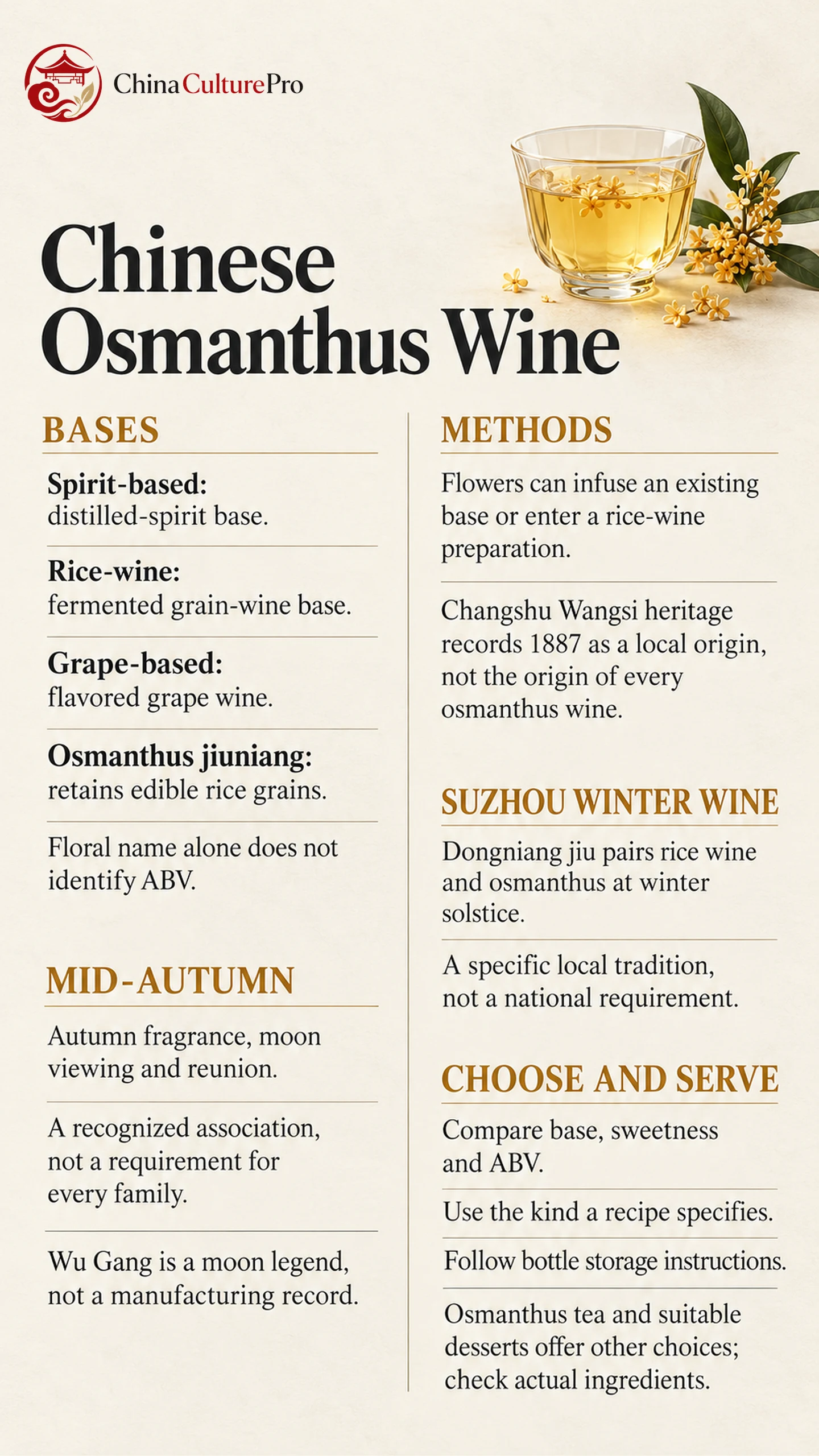
Guihua jiu (桂花酒, guìhuā jiǔ) is an alcoholic drink flavored with sweet osmanthus (桂花, guìhuā), the fragrant flowering plant Osmanthus fragrans. The name identifies the floral association, but does not establish one alcohol base or strength. [1][2]
- Different bases: Documented versions use grain wine, distilled spirits or grape wine.
- Seasonal meaning: Osmanthus wine is associated with autumn fragrance, moon viewing and family reunion.
- Product distinction: A bottle of floral wine is not automatically the same ingredient as a sweet rice ferment containing grains.
Read the product description before treating two drinks labeled osmanthus wine as interchangeable.
Tiny osmanthus flowers can scent a courtyard before they are easy to see. In a drink, the same aroma may meet a sweet rice base, a spirit or a grape wine. Understanding that base is the first step toward understanding the bottle. Within Chinese drinks, the flower connects several preparations rather than defining a single recipe.
The Flower Does Not Identify the Alcohol Base
Baijiu (白酒, báijiǔ) is a distilled spirit; huangjiu (黄酒, huángjiǔ) is a fermented grain-wine category. Both appear in accounts of osmanthus drinks, alongside grape-based preparations. Jiuniang (酒酿, jiǔniàng), by contrast, is a sweet fermented-rice food that retains grains. Adding osmanthus to it does not make its texture or use identical to bottled floral wine. [1][2][6]
| Product description | What the name can mean | Qué comprobar |
|---|---|---|
| Spirit-based osmanthus drink | A distilled-spirit base carries the floral flavor | Actual ABV and any other added ingredients |
| Rice-wine osmanthus drink | A fermented grain-wine base with osmanthus | Whether it is clear, cloudy, sweet or dry |
| Grape-based osmanthus wine | A flavored grape-wine preparation | Grape wine in the ingredient list |
| Osmanthus jiuniang | A sweet rice ferment retaining edible grains | Whether the dish needs the grains and their texture |
Beijing’s osmanthus aged wine provides a documented grape-wine example. It prevents a common translation mistake: English “wine” here does not always mean rice wine, and Chinese wine terminology does not map neatly onto one Western category. [2]
If the grain-wine distinction is your main question, the broader rice wine guide provides context. For a dessert recipe, compare the jar with jiuniang before making a substitution.
How Floral Aroma Enters the Drink
Osmanthus can flavor an existing alcoholic base through infusion, while other traditions integrate flowers into a rice-wine preparation. These are different production choices, not two names for one universal method. Sweetness can also come from the underlying ferment or from added sugar. [1][3][6]
The Changshu Wangsi tradition offers a named regional case. Its heritage account traces the wine to 1887 and describes local glutinous rice, water and selected flowers, with controlled brewing and storage stages. This is evidence for that local practice; it should not become a claim that every osmanthus wine began in the same year or requires the same storage period. [3]
In tasting, notice the relationship between floral aroma and the base. A sweet fragrance does not prove that the liquid itself is very sugary or low in alcohol. Nor does a clear appearance tell you whether the base was grapes, grain wine or a spirit. Product information answers those questions more reliably than color.
Mid-Autumn Moon Viewing and Reunion
Osmanthus wine belongs to the cultural setting of the Festival del Medio Otoño: autumn flowers, a full moon and relatives gathering at a table. Accounts of the festival include enjoying osmanthus flowers and floral wine alongside other seasonal foods. The association is recognizable without requiring every family to serve the drink. [4]
Moon legends also connect the osmanthus tree with Wu Gang, the figure condemned to cut a self-healing tree in the lunar palace. That is a mythic setting for the flower, not evidence about when a specific bottled wine was invented. The broader meaning of osmanthus helps separate the plant’s cultural associations from a product’s manufacturing history. [4]
For a family gathering, a floral drink can contribute aroma and a seasonal reference. Tea or another nonalcoholic choice can serve the same social occasion. The reunion does not depend on drinking alcohol or completing a prescribed list of foods.
Suzhou Winter Wine Is a Different Seasonal Setting
Dongniang jiu (冬酿酒, dōngniàng jiǔ), associated with Suzhou, brings rice wine and osmanthus into the winter-solstice meal. Local cultural accounts describe a sweet, fragrant wine traditionally bought for the occasion. Its place in Dongzhi customs shows why “osmanthus wine is only a Mid-Autumn drink” is too narrow. [5]
The useful distinction is the occasion and local preparation. Suzhou winter wine is not simply a generic bottle renamed for any winter dinner, and one city’s custom should not be presented as a national requirement. A flower associated with autumn can remain important in a later seasonal food tradition.
Serving and Choosing the Right Product
Choose by base, sweetness and intended use. A small serving alongside food lets you judge whether the floral note complements the dish. A very sweet drink beside a rich sweet pastry may create a different balance from a less sweet version. This is a pairing choice, not a fixed ceremonial rule.
- For drinking: Check the ABV, ingredients and producer’s serving instructions.
- For cooking: Use the kind specified by the recipe; clear floral wine cannot supply rice grains.
- For storage: Follow the bottle’s instructions after opening rather than applying one rule to every osmanthus drink.
- For a nonalcoholic table: Osmanthus tea or a suitable floral dessert offers another way to share the aroma.
The flower also appears in cakes, jellies and sweet sauces. Exploring osmanthus desserts is useful when the aroma interests you more than the alcohol. Check the actual ingredients of a dessert too; a floral name alone does not establish whether wine was used. [1]
FAQs About Chinese Osmanthus Wine
Is all osmanthus wine made from rice?
No. Documented preparations include grain-wine, distilled-spirit and grape-wine bases. The ingredient list identifies the particular product.
Is osmanthus wine the same as jiuniang?
No. Jiuniang retains softened rice grains and is often eaten or cooked into desserts. A clear floral wine has a different texture and may have a different alcohol base.
Must osmanthus wine be served at Mid-Autumn?
No. It is a recognized seasonal association, not a requirement for every family. Suzhou’s winter-solstice wine also shows a different local seasonal context.
Fuentes
[1] Shanghai International Services information platform. Autumn fragrance osmanthus oozes depth
[2] Beijing Culture and Tourism information platform. 北京桂花陈酒
[3] Suzhou Intangible Cultural Heritage Office. 酿造酒酿造技艺 (王四桂花酒酿造技艺)扩展
[4] China.org.cn. Customs around the Mid-Autumn Festival
[5] Suzhou Intangible Cultural Heritage Office. 苏州冬至习俗
[6] Food Science research article. Acidity, sugar, and alcohol contents during the fermentation of Osmanthus-flavored sweet rice wine and microbial community dynamics