
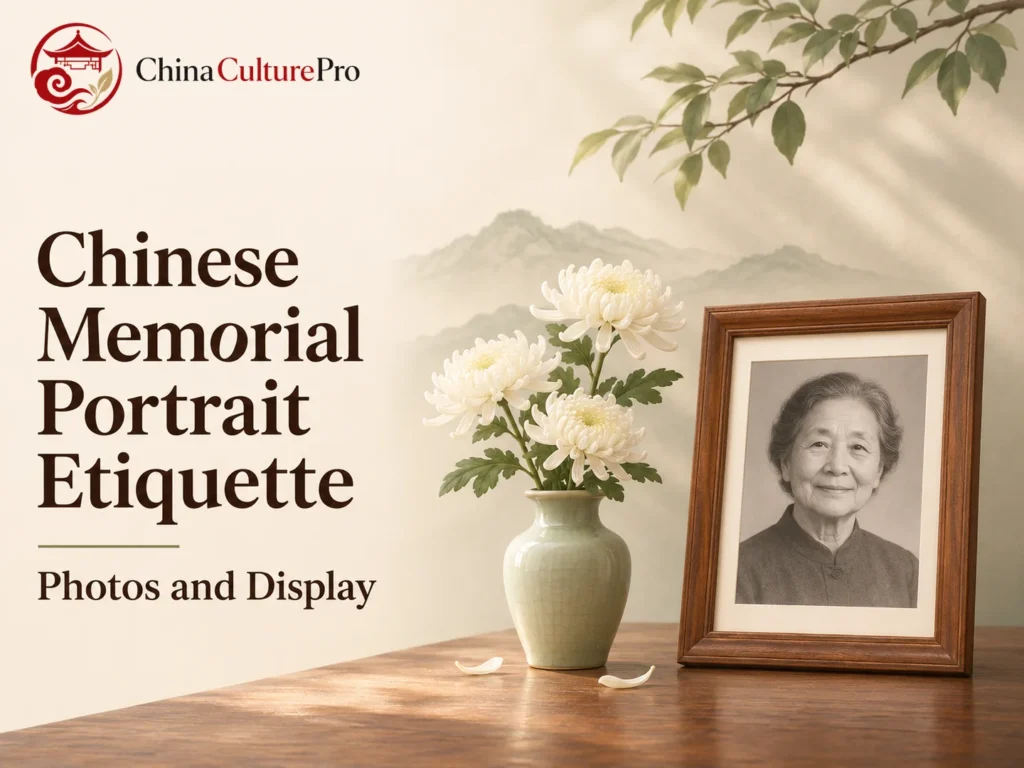

Quick Answer: What Is a Chinese Memorial Portrait?
A Chinese memorial portrait (遺像, yíxiàng) is an image of the deceased used as a focus for remembrance. At a wake it may be a framed photograph near flowers, offerings or other objects appropriate to the family’s service.[1][2][3]
- Choose a likeness. Use a clear photograph in which relatives can recognize the person’s expression.[4]
- Place it for the gathering. It may stand at the center of the wake altar or in a remembrance area.[1][2]
- Follow the family. Take your cue from the host before photographing the display or participating in a gesture.
The surrounding objects and form of tribute can vary by household and religion.
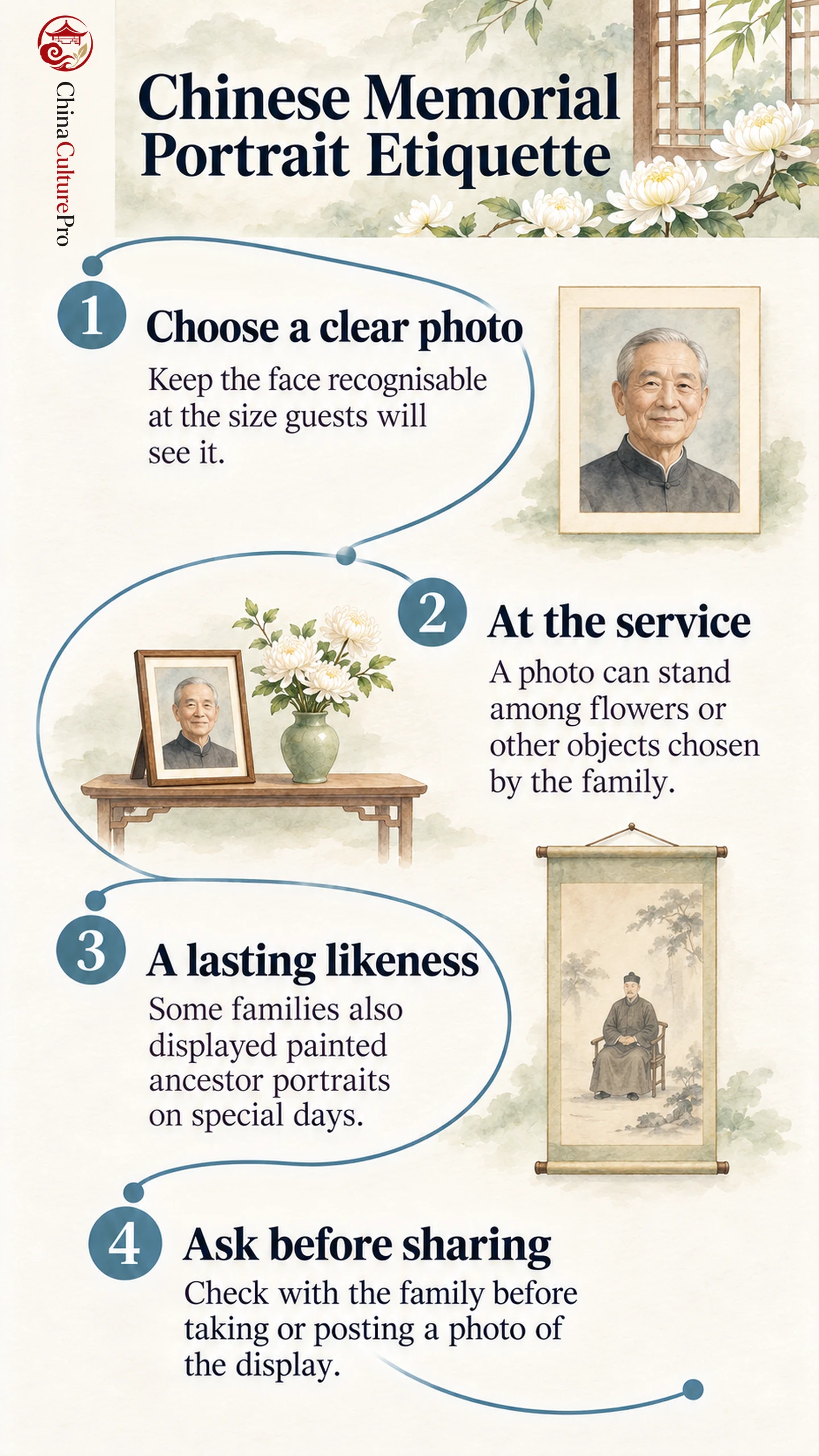
The same photograph can appear in a funeral hall and later return to a family home. At a service, its placement helps keep the person’s likeness visible. [1][3]
Choosing the Photograph
Start with a sharp image the family feels captures the person. A solo photograph gives the printer more room to crop and enlarge it. Review the enlarged crop at the intended display size. A face that looks sharp on a phone may lose detail in a large print.[4]
A natural smile can suit a person remembered for it. A group picture can work if a clean crop leaves enough detail. Check the crop and print size before committing to major retouching, so the finished portrait still looks familiar to relatives.[4]
What the Portrait Does at the Service
In a traditional example described by Chinese clan associations in Singapore, the portrait stands at the center of the wake altar. This puts the deceased’s likeness in view when people come to express sympathy. Chinese funeral flowers can have a separate purpose as tributes sent by others.[1]
In a Taiwanese Christian example, a remembrance area can include a photograph, flowers, a Bible and a cross. The portrait gives the gathering a personal focus within that setting.[2]
Painted Ancestor Portraits and Later Remembrance
A Taiwanese museum record distinguishes a portrait made during life (壽像, shòuxiàng) from a posthumous likeness (追容, zhuīróng). A Qing-period painted portrait of a seated woman in a red winter robe records details of formal dress that an ordinary memorial photograph may never be intended to show.[5]
Some families have displayed ancestor portraits on special days, including Lunar New Year. An image can bring the relative to mind, while ancestral tablets preserve names for commemoration. Memorial days after death concern the occasions when families gather, whichever form of likeness they use.[3][5]
FAQs About Chinese Memorial Portrait Etiquette
Does the photograph have to be black and white?
Family and venue preferences matter. The useful starting point is a clear image that represents the person. A family can confirm whether it prefers a colour or monochrome print.[4]
Can a guest photograph or share the display?
Ask the family before taking a photograph. Ask separately before sharing it outside the gathering, especially if it shows grieving relatives as well as the portrait.
Fuentes
[1] Singapore Federation of Chinese Clan Associations. Culture and Rituals: Setting Up an Altar
[2] Yilan County Mortuary Administration. Funeral Customs by Religious Tradition
[3] Smithsonian National Museum of Asian Art. Ancestor Portraits: Family Legacy Through Art
[4] Sohel Funeral Service. Selecting and Preparing a Memorial Photograph
[5] National Museum of Taiwan History. Painted Portrait of a Seated Female Ancestor