


Quick Answer: What Is Chinese Lemon Tea?
Chinese lemon tea(檸檬茶,níngméngchá)combines brewed tea with lemon, often with sweetener. Hong Kong cafe versions commonly use black tea; other contemporary versions use different tea bases.[1][4]
- Tea: Supplies aroma, color and a brisk underlying taste.
- Lemon: Adds citrus fragrance and acidity.
- Sweetener: Adjusts the balance rather than defining one fixed recipe.
- Serving: Hot cafe tea and iced drinks both exist.
Lemon tea is not simply lemon water. Tea remains a core ingredient, even when fruit or sweetness is prominent.
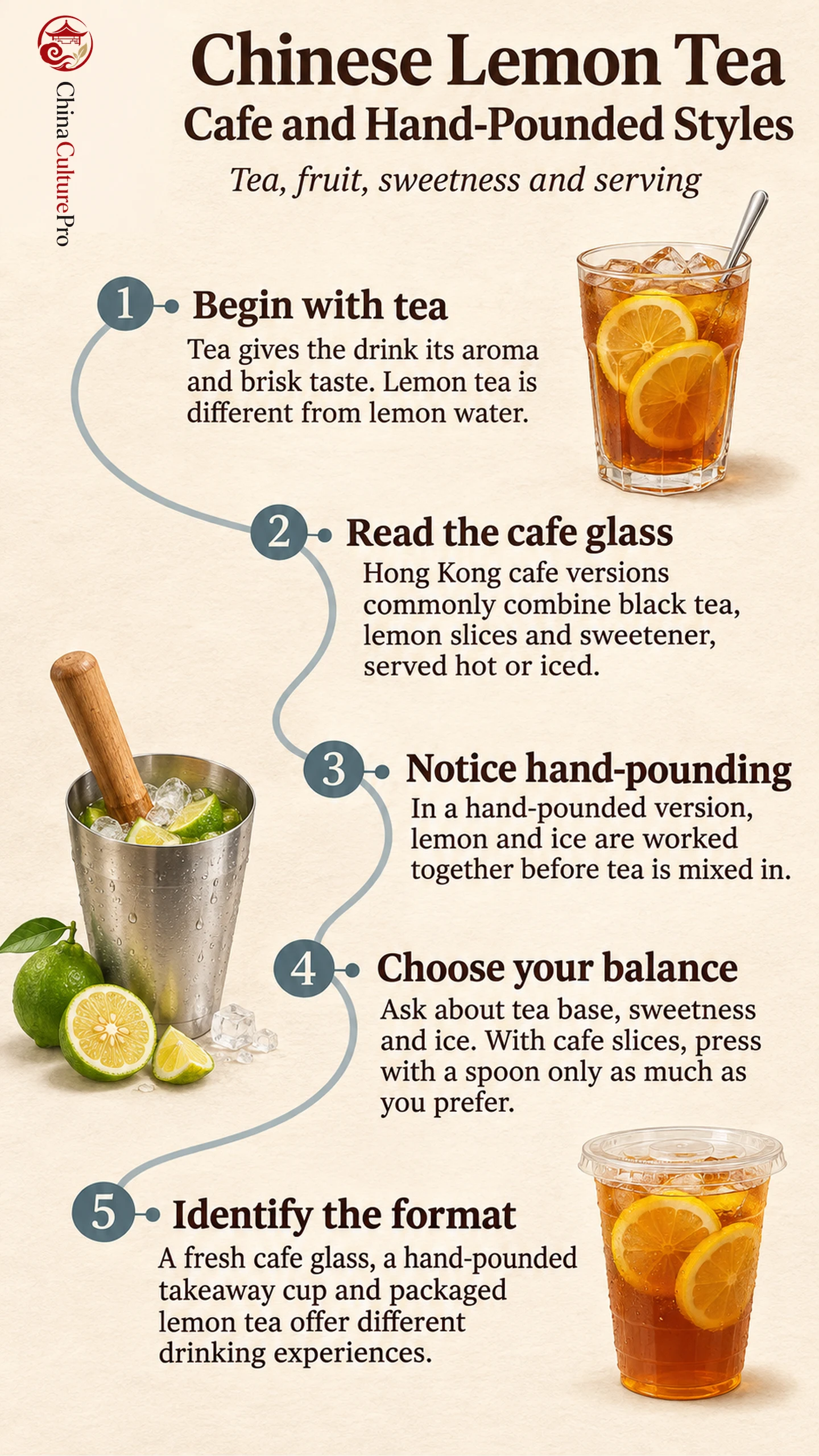
Amber tea, pale lemon slices and a long spoon create a familiar cafe scene. The drink also appears in takeaway cups and ready-to-drink cartons.
Tea, Lemon, Sweetener and Ice
A Hong Kong-style glass commonly begins with a strong black tea base. Ceylon tea appears in published cafe-style preparations, using loose leaves or tea bags. The resulting flavor is brisk enough to remain noticeable beside lemon and ice; one particular brand is not the definition of the drink.[3]
| Componente | Role in the glass | Useful ordering question |
|---|---|---|
| Tea base | Tea aroma and astringency | Which tea is used? |
| Lemon | Citrus aroma and tartness | Sliced, juiced or hand-pounded? |
| Sweetener | Balances sour and bitter notes | Can the sweetness be adjusted? |
| Ice | Chills the drink and dilutes it as it melts | Is a hot or less-ice version available? |
Sugar and syrup are common, while honey appears in some preparations. Those choices change flavor as well as sweetness. Lemon tea does not need to be a milky drink: the familiar cafe version brings tea and citrus together without the dairy component of milk tea.[3][6]
Hong Kong Cafe Tea and Guangdong Hand-Pounded Tea
In a cha chaan teng(茶餐廳,chá cāntīng), or Hong Kong-style cafe, lemon tea is an everyday hot or cold order. A black tea blend and fresh lemon slices are familiar features, but tea strength, sweetness and the amount of lemon differ between establishments.[1]
Guangdong hand-pounded lemon tea(手打柠檬茶,shǒudǎ níngméngchá)uses a different preparation emphasis: lemon pieces are pounded with ice before being combined with tea and other ingredients. The pounding takes place during preparation, rather than being left entirely to the customer’s spoon.[4]
Tea-shop examples pair fragrant perfume lemon with Phoenix Dancong oolong. Ya Shi Xiang(鸭屎香,yāshǐxiāng)is one named tea style on such menus. It identifies the tea base, not an extra animal ingredient. Black, green and scented tea versions also belong to the wider hand-pounded category; no single tea defines every cup.[4][5]
How the Drink Is Assembled
For a familiar iced cafe version, tea preparation and final glass assembly are separate jobs. The broad sequence is straightforward:[2]
- Brew the tea and remove the leaves or tea bags.
- Add the chosen sweetener and prepare the tea for an iced serving.
- Place ice and fresh lemon slices in a glass, then add the tea.
- Serve with a spoon so the drinker can press the slices to taste.
A hand-pounded version changes the fruit-handling stage: ice and lemon are worked together, then tea and sweetener are mixed or shaken in. These are related drinks with different assembly methods, not proof that one is the only authentic Chinese lemon tea.[4]
Lemon Tea in Everyday Food Culture
Within Hong Kong food culture, lemon tea belongs to the cafe table as much as to a standalone drinks menu. It is a drink to consider when reading cafe food menus, including familiar items such as pineapple buns and Hong Kong French toast. Its strength and citrus flavor allow different preferences within a familiar order.[1]
Packaged lemon tea has a parallel everyday presence. Personal accounts of school outings and family gatherings describe cartons as familiar companions and carriers of memory. That packaged-drink experience is part of the culture too, although opening a carton is different from receiving fresh lemon slices in a cafe glass.[7]
How to Order and Adjust Your Glass
First choose hot or iced. Then ask about the tea base and sweetness, especially at a shop offering several hand-pounded styles. “Less sweet” is a useful request, but availability depends on whether the drink is mixed to order or uses a prepared base.
With sliced cafe tea, begin by tasting before pressing the fruit. A spoon lets you release more juice gradually; there is no requirement to crush every slice. Stir after adjusting so the sweetness and lemon are distributed through the glass.[2][6]
If you avoid honey or other particular ingredients, confirm the sweetener. A tea-and-lemon name does not identify everything added to a flavored drink. For packaged versions, read the actual ingredients rather than assuming they reproduce the cafe preparation.[3][6]
FAQs About Chinese Lemon Tea
Is Lemon Tea the Same as Lemon Water?
No. Lemon tea includes brewed tea, which contributes its own aroma and taste. Lemon water can contain lemon without any tea base.
Do You Have to Crush Every Lemon Slice?
No. Pressing the slices is a matter of preference. Taste first and use the spoon to release more juice if you want it.[2]
Is Lemon Tea Always Sweetened with Sugar?
No. Syrup and honey are also used, and some freshly mixed versions can be adjusted or left unsweetened. Ask how that particular drink is made.[3][6]
Fuentes
[1] Chan Kit / PMQ. The Lemon Tea Theory: Tea Taster and Cafe Worker Interviews
[2] Ellen L. Hong Kong Style Iced Lemon Tea
[3] Michelle / Sift & Simmer. Hong Kong-Style Iced Lemon Tea
[4] Guangdong Quality Inspection Association. Hand-Hammered Lemon Tea: Consultation Draft
[5] TANING. Signature Lemon Tea: Current Product Description
[6] Hong Kong Cafe Central. Lemon Tea: Ingredients and Serving Method
[7] Dolby Ng. Grasping the Juice Box: Tracing the Lemon Tea Culture in Hong Kong