


Quick Answer: What Is Chinese Eggplant?
Chinese eggplant(茄子,qiézi)usually refers in English-language markets to slender eggplants with relatively tender skin. It is an ingredient category, not the name of one finished dish.
- Shape: Common examples are long and narrow rather than broad and globe-shaped.
- Color: Light purple is familiar, but Chinese varieties include other colors.
- Texture: Young fruit have tender skin; cooking softens the flesh.
- Uses: Steaming, stir-frying and combining with sauces produce different results. [1][2][3][6]
The Chinese word qiézi means eggplant more broadly. Neither that word nor the English label guarantees one cultivar, one skin color or one seasoning.
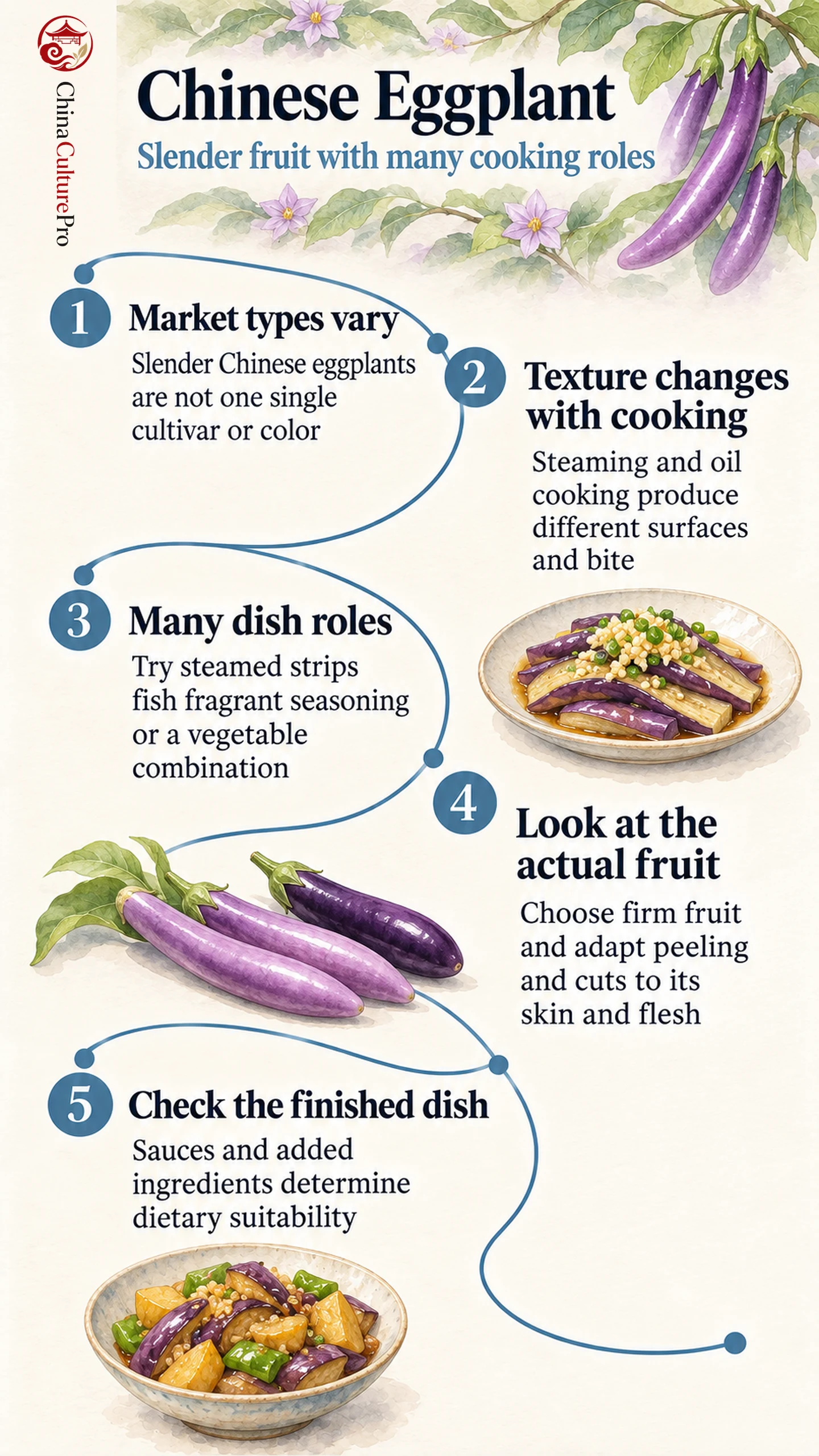
Slender purple eggplants can become soft steamed strips or glossy pieces in a savory sauce. Their mild flavor leaves room for garlic, chili and other seasonings, while the flesh supplies the dish’s tender bite. Recognizing the fruit and the preparation as separate choices makes menus easier to understand.
Chinese, Japanese and Globe Eggplants: What Changes?
Common Chinese market types are elongated, narrow and light purple. Japanese types also have an elongated shape, with skin ranging from light to dark purple, while standard American types are broader and often dark purple. These descriptions are useful buying clues, not complete botanical boundaries. [1]
Chinese and Japanese types are valued for thinner skin and a more delicate flavor. Choosing one instead of a large globe eggplant changes the relationship between skin, flesh and the size of a cut piece; it does not turn the ingredient into a different dish. [2]
Chinese varieties are not all identical. They include white, lavender-streaked and purple forms; Ping Tung Long is one documented slender purple example. An unfamiliar color should therefore prompt a label check rather than an automatic conclusion that it cannot be a Chinese type. [3]
Within the wider range of Chinese vegetables, “Chinese eggplant” is best understood as a practical market description. Look at the actual fruit and the recipe’s needs together.
From Firm Flesh to Tender Cooked Pieces
Eggplant is harvested before full maturity, while its seeds have not become large and hard. Firmness and a glossy surface are useful quality indicators. Overmature fruit can develop pithy flesh and bitterness; size alone does not tell the whole story. [1]
Cooking transforms the flesh. A steamed preparation aims for soft strips that accept a dressing, while a pan-cooked version may have browned surfaces around a tender interior. Steaming can also be followed by a brief finish with sauce rather than being the entire preparation. [4][6]
The flesh can take up considerable oil during frying. This helps explain the rich texture of some restaurant dishes, but deep-frying is not required for every Chinese eggplant preparation. A steamed version and an oil-cooked version offer different eating experiences; neither is the definition of the ingredient. [5][6]
The broader distinctions between Chinese cooking methods matter here: changing how heat reaches the eggplant changes its surface and texture before the final seasoning is considered.
Three Ways Eggplant Appears in Chinese Cooking
These examples show different roles for the same vegetable. The named dishes are not interchangeable labels for “Chinese eggplant.” [4][6][7]
| Preparation | What the eggplant contributes |
|---|---|
| Garlic-steamed eggplant | Soft strips provide a base for garlic, soy dressing and other optional garnishes. |
| Fish-fragrant eggplant(鱼香茄子,yúxiāng qiézi) | Tender pieces carry a layered sweet, sour, spicy and savory seasoning. |
| Di san xian(地三鲜,dìsānxiān) | Eggplant joins potato and peppers, adding a softer texture to a vegetable combination. |
Fish-fragrant eggplant takes its name from a seasoning profile, not from the shape of the fruit. Garlic, ginger, chili seasoning, sweetness and vinegar are important parts of the flavor in the version examined. The dish need not contain fish, although some adaptations add fish sauce. [5]
In di san xian, the vegetables have different cooking needs. One household version cooks them separately before combining them with the final seasoning, preserving the contrast between soft eggplant, potato and pepper. This is a combination dish rather than eggplant in a generic garlic sauce. [7]
Buying, Peeling and Substituting Eggplant
Choose firm fruit with a fresh-looking calyx and without decay or significant handling damage. Glossiness is a useful clue alongside those features, not a standalone guarantee. Avoid assuming the largest fruit will give the most tender result. [1]
Young Chinese varieties generally do not need peeling. Skin thickness and the condition of the actual fruit matter more than a rigid rule: a thicker-skinned substitute may need different preparation. [3][4]
Japanese eggplant is a practical alternative when a recipe calls for a slender type. Globe eggplant can also work, but its thicker pieces or tougher skin may need adjustment to achieve a similarly tender result. Check the flesh for the texture the dish needs rather than relying on an unchanged method. [4][5]
The goal is a suitable cooked piece for the dish: strips for a steamed preparation, for example, or larger pieces in a mixed vegetable dish. Shape and tenderness should guide the adaptation. [6][7]
Checking the Ingredients in an Eggplant Dish
An eggplant-centered dish is not automatically a vegetarian preparation. Published versions of eggplant with garlic sauce can include oyster sauce; other versions of fish-fragrant eggplant offer minced pork or fish sauce as additions. Ask about the whole recipe. [4][5]
Ask about soy sauce, sesame oil, cooking wine and any other seasonings relevant to your diet. The vegetable’s name does not establish whether the sauce contains wheat, soy, sesame or animal ingredients. A plain steamed eggplant and a fully dressed restaurant dish are separate ingredient questions. [4]
Conversely, vegetable-only versions do exist. One documented di san xian uses eggplant, potatoes and peppers with plant-based seasonings. That example shows a possible preparation, not a guarantee that every restaurant uses the same formula. [7]
FAQs About Chinese Eggplant
Do You Need to Peel Chinese Eggplant?
Usually not when the fruit is young and the skin is tender. Check the actual eggplant, especially if using a thicker-skinned substitute; peeling is a preparation choice rather than a defining rule. [3][4]
Is Chinese Eggplant Always Purple?
No. Slender light-purple types are familiar, but documented Chinese varieties also include white and lavender-streaked forms. Color alone is insufficient to identify a cultivar. [3]
Does Fish-Fragrant Eggplant Contain Fish?
The name describes a seasoning profile and does not require fish. Actual recipes can still add fish sauce or other animal ingredients, so the name alone cannot establish a seafood-free or vegetarian dish. [5]
Fuentes
[1] Marita Cantwell and Trevor V. Suslow, UC Davis. Eggplant: maturity and quality indices
[2] University of Maryland Extension. Growing Eggplant in a Home Garden
[3] Clemson Cooperative Extension. Chinese Vegetables: eggplant types and young fruit
[4] Chung Sun Lau and family. Eggplant with Garlic Sauce: original preparation
[5] Bill Leung. Fish Fragrant Eggplant: original recipe and optional ingredients
[6] Lee Kum Kee. Steamed Eggplant with Garlic: original dish
[7] Judy Leung. Stir-fried Eggplant, Potatoes and Peppers: original di san xian version