


Quick Answer: What Goes into Beijing Lamb Hot Pot Sauce?
The familiar dipping sauce for Beijing lamb hot pot (涮羊肉; shuàn yángròu) is built around a nutty paste and savory fermented condiments. It is served in a separate bowl for dipping cooked food, rather than poured into the copper pot as its broth.[1]
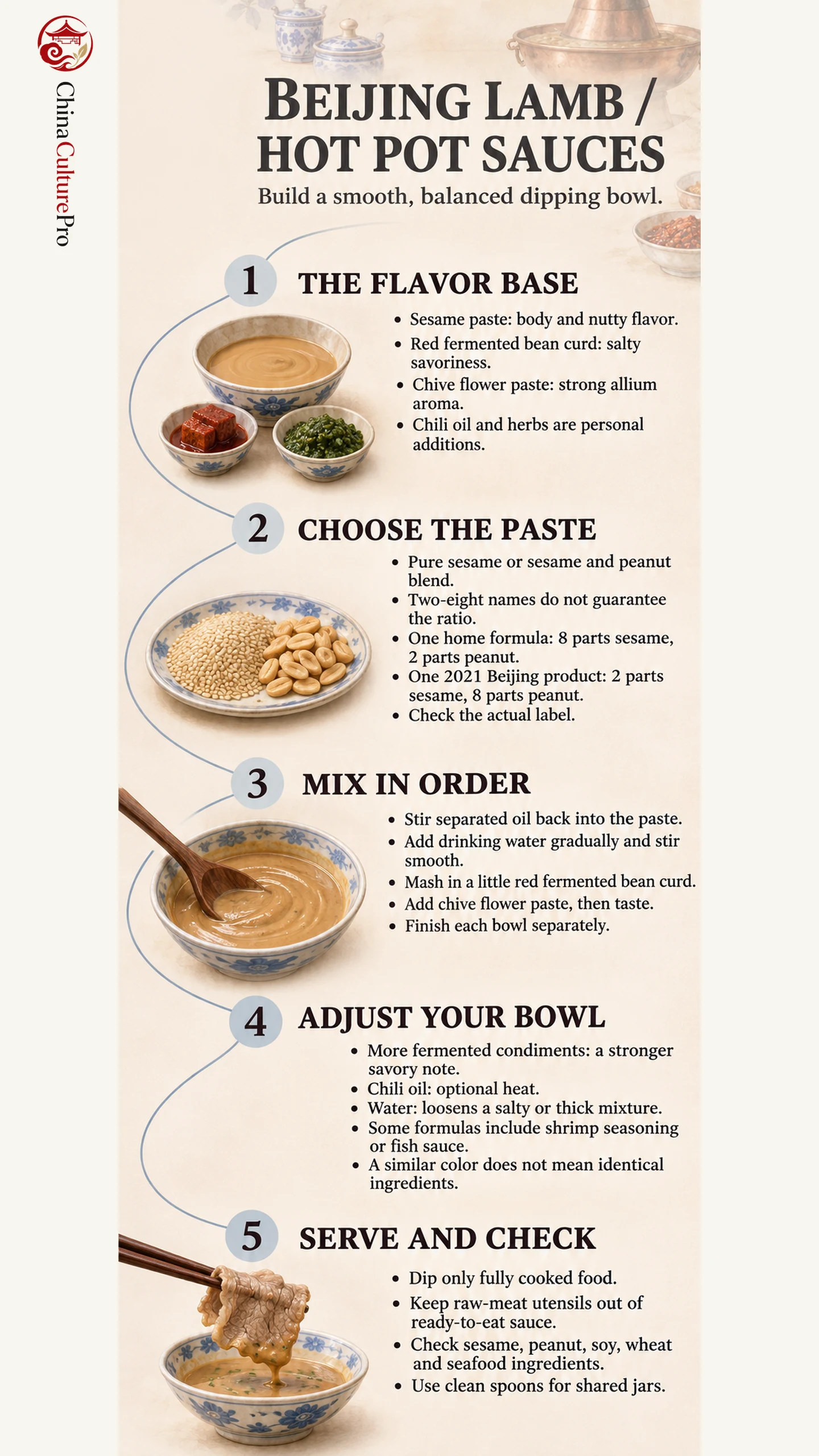
- Base: Sesame paste (芝麻酱; zhīmajiàng) may be pure sesame or a sesame–peanut blend.
- Savory depth: Red fermented bean curd (酱豆腐; jiàng dòufu) and chive flower paste (韭菜花酱; jiǔcàihuā jiàng) are characteristic additions.
- Method: Loosen the paste with water before adding concentrated condiments.
- Personal finish: Chili oil, scallion and cilantro can be added to suit each diner.[2][6]
There is no single compulsory bowl. House formulas, packaged bases and personal additions can differ, including whether the sauce contains peanuts or seafood seasonings.
The clear broth in Hot pot de Pekín leaves much of the seasoning to the dipping bowl. A smooth, balanced sauce coats a cooked slice of lamb without needing to turn the entire pot spicy. For the wider food tradition, see Beijing cuisine.[1]
The Three-Part Flavor Base
Sesame paste supplies the rich, nutty foundation. Chinese roasted sesame paste has a deeper toasted flavor than many tahini products, so choosing a substitute changes the result even when the consistency looks similar.[5]
Red fermented bean curd is mashed into the sauce for salty, fermented savoriness. It is a prepared tofu condiment, distinct from fresh tofu. The Chinese tofu types guide explains that distinction.[2][5]
Chive flower paste brings a concentrated allium aroma and saltiness. A documented Beijing preparation uses flowers crushed with salt, distinct from fresh leaves. Explore related condiments in the guide to Chinese fermented foods.[6]
| Componente | Main contribution | Qué conviene comprobar |
|---|---|---|
| Sesame or sesame–peanut paste | Body and nutty flavor | Pure paste or a blend |
| Red fermented bean curd | Fermented savoriness and salt | Product ingredients and strength |
| Chive flower paste | Strong allium character | Add gradually rather than treating it as garnish |
| Soy, shrimp seasoning or cooking wine | Additional seasoning in some formulas | These are not identical across recipes |
| Chili oil and fresh herbs | Optional heat and fresh aroma | Add to individual bowls |
These components appear in a documented traditional formula; chili is left to personal preference.[2]
Pure Sesame Paste or a Sesame–Peanut Blend?
Erba sauce (二八酱; èrbā jiàng), literally a “two-eight” sauce, refers to a sesame-and-peanut mixture, but the name is not a reliable instruction for which ingredient gets the larger share.
One published home formula uses eight parts sesame paste to two parts peanut butter. A Beijing tourism-bureau account of a 2021 retail product gives the opposite order: two parts sesame to eight parts peanut. A separate product record lists peanuts and sesame at 80:20. These are specific examples, not proof of one universal ratio.[3][4][10]
Choose pure sesame paste when you want its roasted sesame character, or a blend when you want the peanut flavor it brings. Neither choice makes the remaining condiments automatic: a plain paste still needs thinning and seasoning, while a finished dipping sauce may already contain both.
If peanuts matter to your meal, read the ingredients instead of relying on the words “sesame sauce” or erba.[7]
How to Mix a Smooth Dipping Sauce
Begin with a modest amount so you can adjust it before making everyone’s bowl. Gradual dilution is the key: sesame paste can become thicker after the first small addition of water, then loosen as more water is worked in. Do not pour in all the liquid at once.[5]
- Stir the paste before measuring: Mix any separated oil back into the sesame or sesame–peanut paste before spooning some into a bowl.
- Loosen it gradually: Add clean drinking water a little at a time, stirring until each addition is incorporated. Continue until the paste becomes a smooth sauce that coats cooked food.
- Blend in the fermented bean curd: Mash a small amount of red fermented bean curd into the loosened paste until no large lumps remain.
- Add chive flower paste and taste: Stir in a little chive flower paste, then taste before adding more salty seasonings such as soy sauce.
- Finish each bowl separately: Divide the base among individual bowls and add preferred herbs, chili oil or other seasonings in small amounts.[1][6][10]
Beijing House Styles and Personal Adjustments
Some Beijing kitchens serve a base with chive flowers, fermented bean curd, scallion and cilantro alongside it, so diners can build their own balance.[6]
For a stronger fermented note, add a little more bean curd or chive flower paste. For heat, add Chinese chili oil. If the sauce is already salty enough, loosen it with water rather than repeatedly adding soy. Make changes to a small portion first; the whole batch does not have to follow the boldest bowl at the table.
Some formulas include shrimp seasoning, while a documented chef’s version uses fish sauce and Worcestershire sauce. These additions show why two sauces that look similarly brown can have different ingredients.[2][9]
For comparisons beyond Beijing, use the hot pot dipping sauces guide. A garlic-oil or another regional dip is a different seasoning choice, not something that must be folded into this sesame bowl.
Serving and Checking the Ingredients
Cook the lamb or vegetables before dipping them. Keep the chopsticks or utensils used for raw meat away from the ready-to-eat sauce and use a separate set for cooked food. The sauce adds flavor; it does not finish cooking an underdone piece of meat. The how to eat hot pot guide covers the wider table sequence.[8]
Check for sesame, peanuts and soy, along with wheat in some soy sauces or fish and shellfish in added seasonings. Read the full ingredient list, not only a product’s front label. At a restaurant, ask about the prepared house sauce as well as the individual condiments on display.[7]
Use clean spoons for shared jars and follow their storage instructions after opening. Keep each person’s used dipping bowl separate from the unused base.[10]
FAQs About Beijing Copper-Pot Lamb Sauces
Can I use tahini or peanut butter instead of Chinese sesame paste?
Yes, as an adaptation. Tahini or unsweetened peanut butter gives a different flavor from roasted Chinese sesame paste; loosen it gradually and season the mixture to taste.[5]
Is Beijing lamb hot pot sauce vegetarian?
Some mixtures can be, but do not assume the house sauce is. Shrimp seasoning and fish sauce appear in documented versions, so check the complete formula.[2][9]
Is fresh chopped chive the same as chive flower paste?
No. The salty flower condiment has a concentrated flavor and a different form from fresh chopped leaves. Fresh chives can be a garnish, but they do not reproduce that condiment.[6]
Fuentes
[1] China University of Geosciences (Beijing), IAGS visitor guide. Old Beijing Copper Hot Pot Swished Lamb
[2] Donglaishun. Traditional Lamb Hot Pot Seasonings
[3] Beijing Municipal Culture and Tourism Bureau. Liubiju and Hema Present Old Beijing Erba Sauce
[4] China CDC National Institute for Nutrition and Health. Erba Sesame and Peanut Paste
[5] Maggie Zhu, Omnivore’s Cookbook. Beijing Hot Pot Dipping Sauce
[6] Beijing Tourism official portal. A Copper Pot and the Warmth of Old Beijing
[7] US Food and Drug Administration. Have Food Allergies? Read the Label
[8] Hong Kong Centre for Food Safety. Hot Tips for Safe Hot Pot
[9] Chef Bao Qiu, Taste Life. Beijing Hot Pot
[10] Lo Fo Tong. Northern Sesame and Peanut Sauce