

Quick Answer: What Is Cuban Chinese Food Culture?
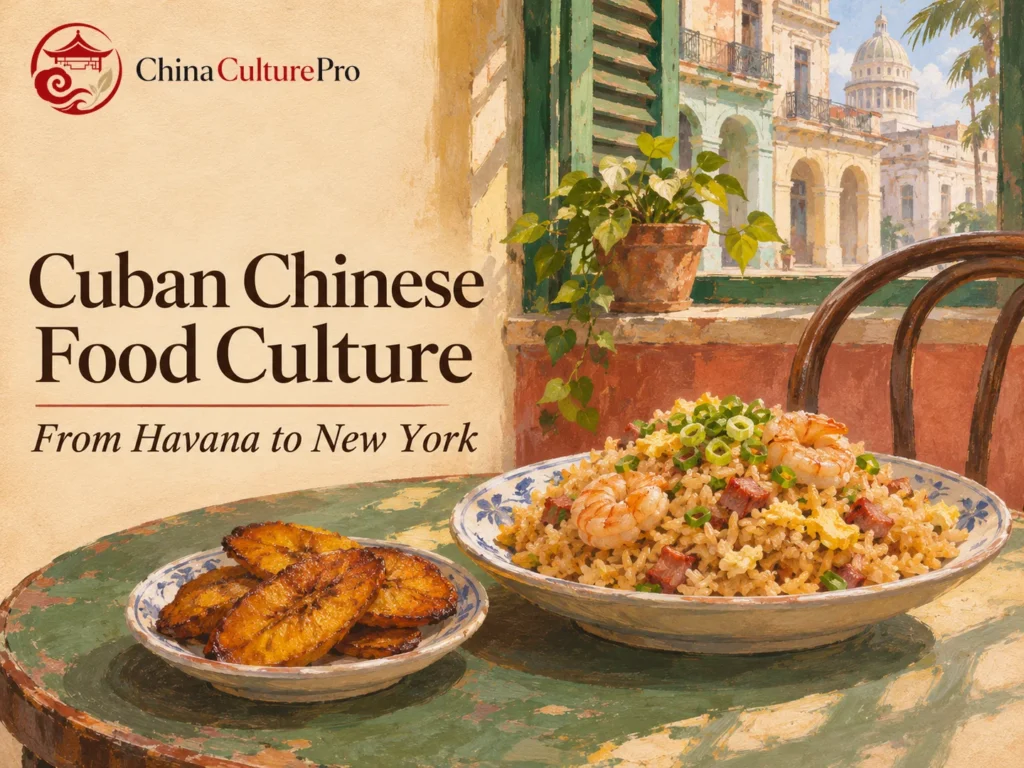
Cuban Chinese food culture grew from Chinese migration to Cuba and the markets, groceries and restaurants migrants built there. In Havana, diners could order fried rice, chop suey or fried wontons alongside meals familiar to Cuban families. Later migrants carried these restaurant traditions to the United States, where a New York plate might pair fried rice with sweet plantains. [1][2][3]
- Havana: Neighborhood food businesses were one way Chinese migrants and Cuban customers met. [1][2]
- Fried rice: Arroz frito is the Spanish name for fried rice. Ingredients and accompaniments vary by kitchen and menu. [1][3]
- New York: Chinese Cuban restaurants served menus shaped by both Cuba and a new city. [1][2]
A named restaurant or dated menu tells you more than treating Cuban Chinese food as one fixed set of recipes.

In a recollection of 1950s Havana, a family bought complete meals from one Chinese restaurant and went to another for fried rice and fried wontons. Decades later, a New York menu paired fried rice with sweet plantains. The examples show how Chinese Cuban restaurants fed local customers in two different cities. [1]
Havana’s Groceries, Markets and Restaurants
Chinese contract workers first arrived in Cuba in 1847. The University of Florida’s archive preserves agreements for workers in places including Havana and Matanzas. Food shops and restaurants emerged as Chinese migrants settled and built businesses in Cuba. Historian Franklin W. Knight traces businesses around Havana’s Zanja Street to the nineteenth century, including a produce stand and grocery that helped lay foundations for the city’s Chinese district. For the wider labor history, see Chinese migration to Latin America. [2][4]
Food businesses could serve neighbors beyond the people who founded them. Historian Kathleen López quotes a Havana journalist’s memory of taking a metal container to a nearby Chinese restaurant in the 1950s. The family bought meals with meat, rice and beans and ripe plantains. They went to La Estrella de Oro on Monte Street for fried rice, chop suey and fried wontons. The memory documents what one family bought from two different Havana shops. [1]
What Arroz Frito Means in a Cuban Chinese Kitchen
Arroz frito means fried rice. Chunyi Lei’s study of Chinese cultural influences in Cuba describes seafood among the ingredients in Cuban versions of fried rice. The ingredients tell you about a particular version of the dish. The words fried rice leave the choice of meats, seafood and seasonings to the kitchen. The guide to Chinese fried rice explains the broader cooking family. [1][3]
Look at what arrives alongside the rice. In the Havana examples, fried rice and fried wontons appear among dishes remembered from one restaurant, while the complete meal of meat, rice and beans and plantains came from another. Those memories help explain why the category spans several restaurant styles and why one menu cannot define the whole tradition. [1]
Why a New York Menu Pairs Fried Rice With Plantains
After the Cuban Revolution, some Chinese Cuban entrepreneurs relocated to the United States. López traces businesses in Miami, on Manhattan’s west side and in Union City, New Jersey. In these places, a Chinese Cuban restaurant could give customers familiar dishes and a place to gather while adapting to new neighborhoods. [1]
La Caridad 78 on Broadway provides one example. López records a combination platter with fried rice containing ham, roast pork and shrimp, alongside choices including sweet ripe plantains, known as plátanos maduros, or fried chicken chunks. At Mi Chinita, another New York example, a menu could include fried rice and ropa vieja, shredded beef in tomato sauce. The two menus give named examples of how New York restaurants paired dishes. [1]
How to Read a Cuban Chinese Menu in Context
First identify the dish. Then look at the sides, the place and the date. Fried rice may tell you about a cooking technique, while a plate with plantains tells you about a restaurant’s combinations. A Havana grocery and a Manhattan restaurant also had different audiences. Those details help you understand which part of the migration story the menu records. [1][2][3]
Latin America has several food traditions shaped by Chinese migration. Peruvian chifa offers a comparison with a different migration history and local vocabulary. The Chinese diaspora culture guide places both restaurant traditions alongside other ways communities carried and changed their customs. [1][3][4]
FAQs About Cuban Chinese Food Culture
What does Chino-Cubano mean on a menu?
It describes a Chinese Cuban food tradition or restaurant. The menu may include dishes from both culinary traditions and combinations that developed in particular restaurants. [1][3]
Is fried rice with plantains a traditional pairing?
It is a documented pairing at some Chinese Cuban restaurants in the United States. A historical menu from La Caridad 78 is one example. Other restaurants and households can serve different sides. [1]
Is Cuban Chinese food the same as Peruvian chifa?
They are separate restaurant traditions shaped by different local histories. Both reflect Chinese migration, but the names, dishes and settings belong to their own communities. [1][3][4]
出典
[1] Kathleen López, ReVista, Harvard University. Fried Rice and Plátanos
[2] Franklin W. Knight, Boston University historical conference. Migration and Culture: A Case Study of Cuba, 1750–1900
[3] Chunyi Lei, Letras. Las influencias y huellas de la cultura china en Cuba: 1847–1959
[4] University of Florida, George A. Smathers Libraries. Chinese Indentured Workers in Cuba Contracts