

Quick Answer: Why Are Bats Carved on Chinese Walls?
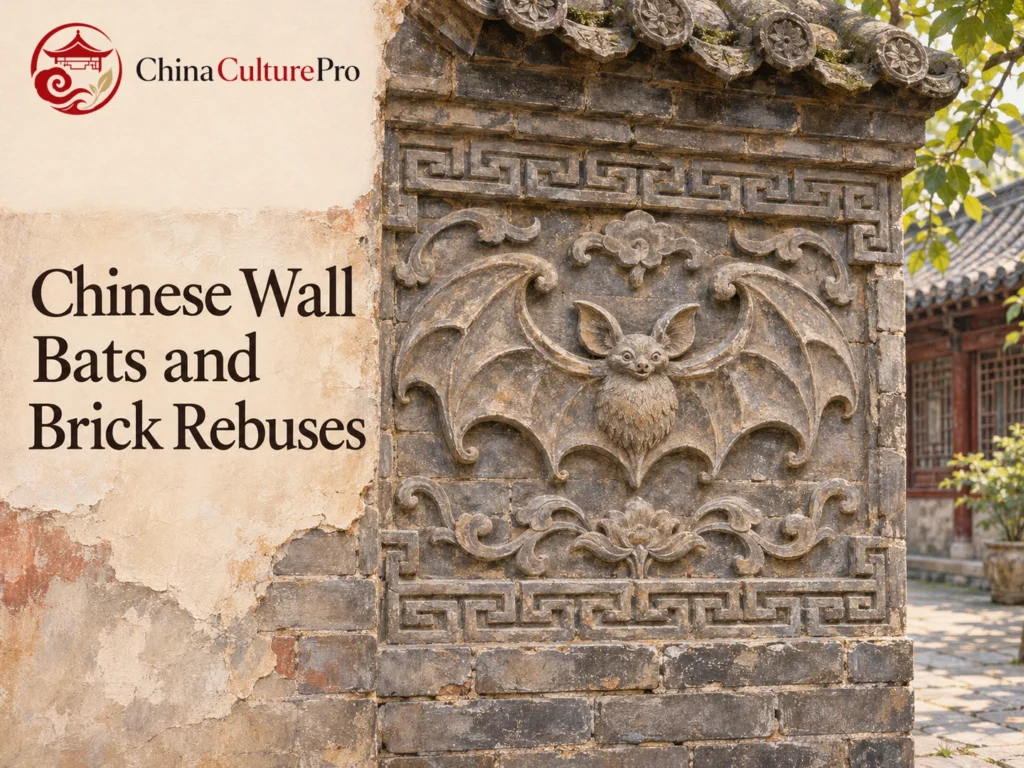
On Chinese walls, a carved bat can stand for a blessing. In Mandarin, the character for bat (蝠, fú) sounds the same as the character for blessing (福, fú). A design that uses a picture to suggest a word through its sound is a rebus.[1]
- Spot the wings: Look for a small body with outspread or curling wings.[1][2]
- Count the bats: A group of five can stand for five kinds of blessing.[1][2]
- Read the center: A blessing character and a longevity character give otherwise similar designs different emphases.[2][3]
The wall itself can screen a doorway. The design on its face adds an auspicious wish.[3][4]
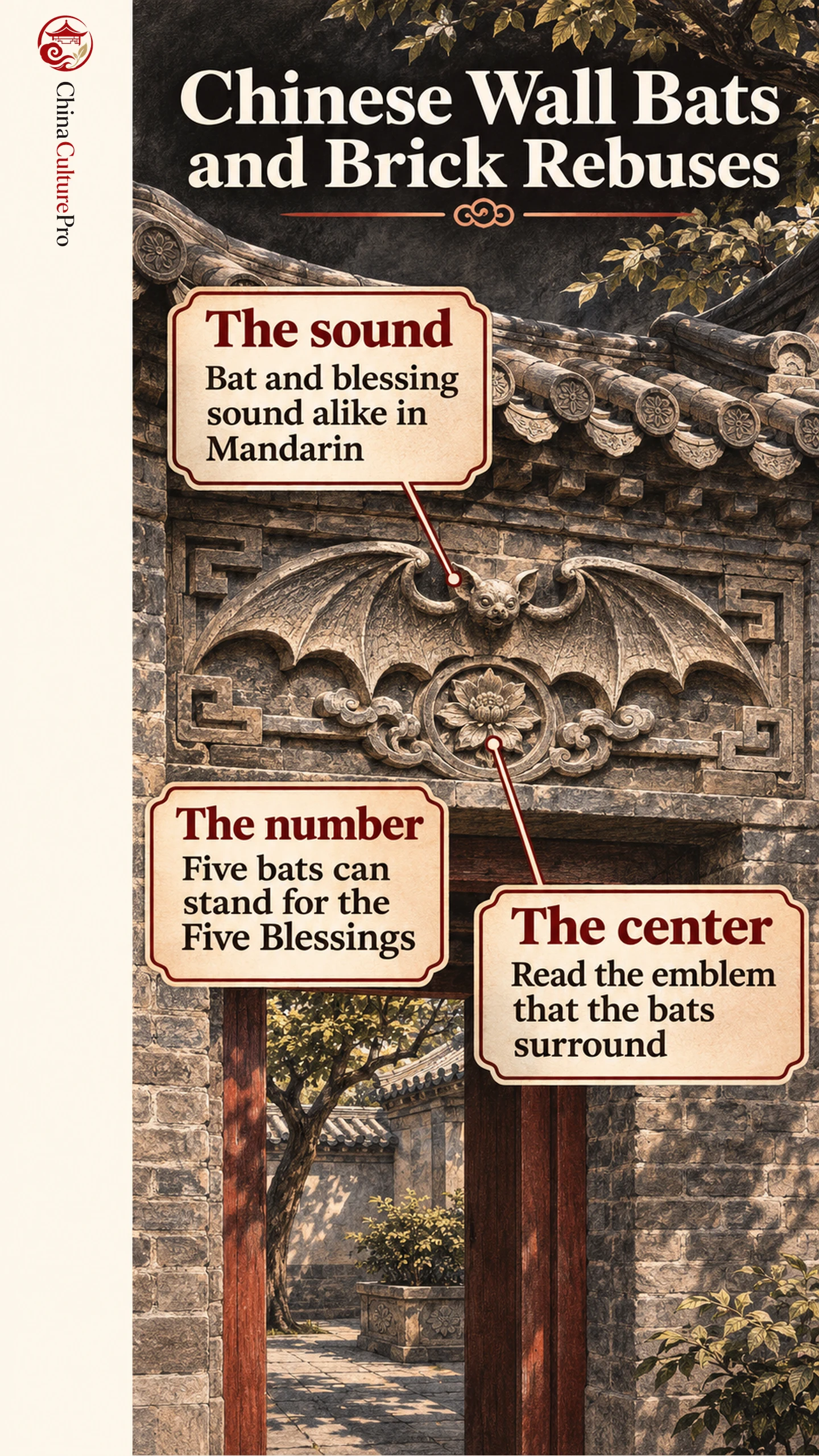
Two carvings can use nearly identical bats and mean different things. The clue is often in the character, fruit or other object next to them.[1][2][3]
How to Read the Bat Rebus
The Five Blessings (五福, wǔfú) name a traditional group of wishes. The Palace Museum gives them as long life, wealth, health and peace, love of virtue, and a good end to life. The number invokes the set as a whole, so there is no need to assign a particular blessing to each bat.[1][2]
Start by looking for pairs of wings and a small central body. Repeated curves may blend into scrollwork or floral borders, particularly in worn relief. In a design with a readable center, the surrounding animals and the character work together. A longevity character can focus the surrounding blessings on a wish for long life. If the center is damaged or unreadable, the motif may support a general reading of good fortune without revealing a more specific wish.[1][2]
A Carved Screen Wall in Beijing
A screen wall (影壁, yǐngbì) near the gate can block the line of sight into a courtyard. The Palace Museum also describes walls outside gates that mark an area or guide the approach. The wall’s position explains what it does in the plan. Its placement also brings the relief into view before visitors turn into the courtyard.[4]
At the Dongsi Hutong Museum, the wall facing the gate has five bats around the character for blessing (福). The Beijing municipal account describes this as an auspicious design of five blessings. The central character repeats the idea already suggested by the bats. The wall and the motif work at different scales: one shapes the approach to the house, and the other sets an auspicious tone at the entrance.[3]
From Gilded Brick to Palace Doors
The design Five Bats Surround Longevity (五蝠捧寿, wǔ fú pěng shòu) places five bats around a round longevity character (寿, shòu). Gilded brick reliefs in the halls of Empress Dowager Cixi’s Dingdong Mausoleum include this motif. There the pattern forms part of the interior wall treatment, showing that bat reliefs also appear away from entrances.[2][5][6]
At Yikun Palace in the Forbidden City, the Palace Museum records the same design on the lower panels of doors. That difference matters when identifying an object. A repeated motif can tie together several kinds of Chinese architectural decoration, while its material and placement tell you which feature of the building you are looking at.[2][5][6]
FAQs About Chinese Bat Brick Carvings
Does the Chinese word for bat mean blessing?
The two characters have different meanings. Their shared pronunciation in Mandarin makes the pictorial pun work.[1]
Must there be five bats in every carving?
A single bat can already signify a blessing. Five bats form a conventional group that invokes the Five Blessings.[1][2]
Can the same bat design appear on objects besides walls?
Yes. Bat designs also appear on wooden door panels and on decorated porcelain.[1][2]
出典
[1] Asian Art Museum. Hidden Meanings in Chinese Art
[2] The Palace Museum. Yikun Palace and the Five Bats Motif
[3] Beijing Municipal Civilization Office. Hutong Museum Courtyards and Their Cultural Details
[4] The Palace Museum. Screen Wall
[5] Palace Museum Journal. Architectural Features of the Dingdong Mausoleums
[6] Hebei Cultural Heritage Series. Eastern Qing Tombs