


Quick Answer: What Is Hong Shao Kao Fu?
Hong shao kao fu (红烧烤麸, hóng shāo kǎo fū) is a Shanghai sweet-savory braise of porous wheat gluten with mushrooms and other accompaniments.[2][3]
- The sponge-like ingredient absorbs the soy-based cooking liquid.
- Wood ear, dried daylily buds and peanuts appear in common combinations.[3]
- It is often served as a cold appetizer, including at New Year meals.[2]
The recipe below uses one home-braised version; the accompaniments and preliminary frying vary.
The satisfaction comes from contrasting textures: yielding gluten, firmer peanuts and slippery mushrooms. This is a distinctive corner of Shanghai cuisine, with the sauce carried inside the sponge rather than simply coating its surface.
Buy Wheat Gluten, Not Tofu
Kao fu (烤麸, kǎo fū) is porous wheat gluten, sold fresh or dried. Dried sheets need rehydrating; fresh ones do not. It is a different ingredient from soy-based tofu.[1]
Check the package form before measuring. A dry product, its water-soaked weight and a fresh refrigerated block cannot be treated as equal quantities just because their English labels all say wheat gluten.
Ingredients for One Home Braise
Use U.S. measures for this batch:[1]
- Two dried kao fu sheets, each approximately 5 × 5 inches.
- Twelve dried shiitake mushrooms; ½ cup dried wood ear; ½ cup dried daylily buds.
- ¼ cup unsalted, shelled peanuts, skins removed; 3 ginger slices; 3 tbsp neutral oil.
- 3 tbsp Shaoxing wine (绍兴酒, shàoxīng jiǔ); 3 tbsp light soy sauce; 1 tbsp dark soy sauce; 3 tsp sugar; 3 cups water.
Salsas de soja clara y oscura have different jobs here: seasoning and color. The cooking wine adds another aromatic element rather than replacing either sauce.
Hydrate, Brown and Braise
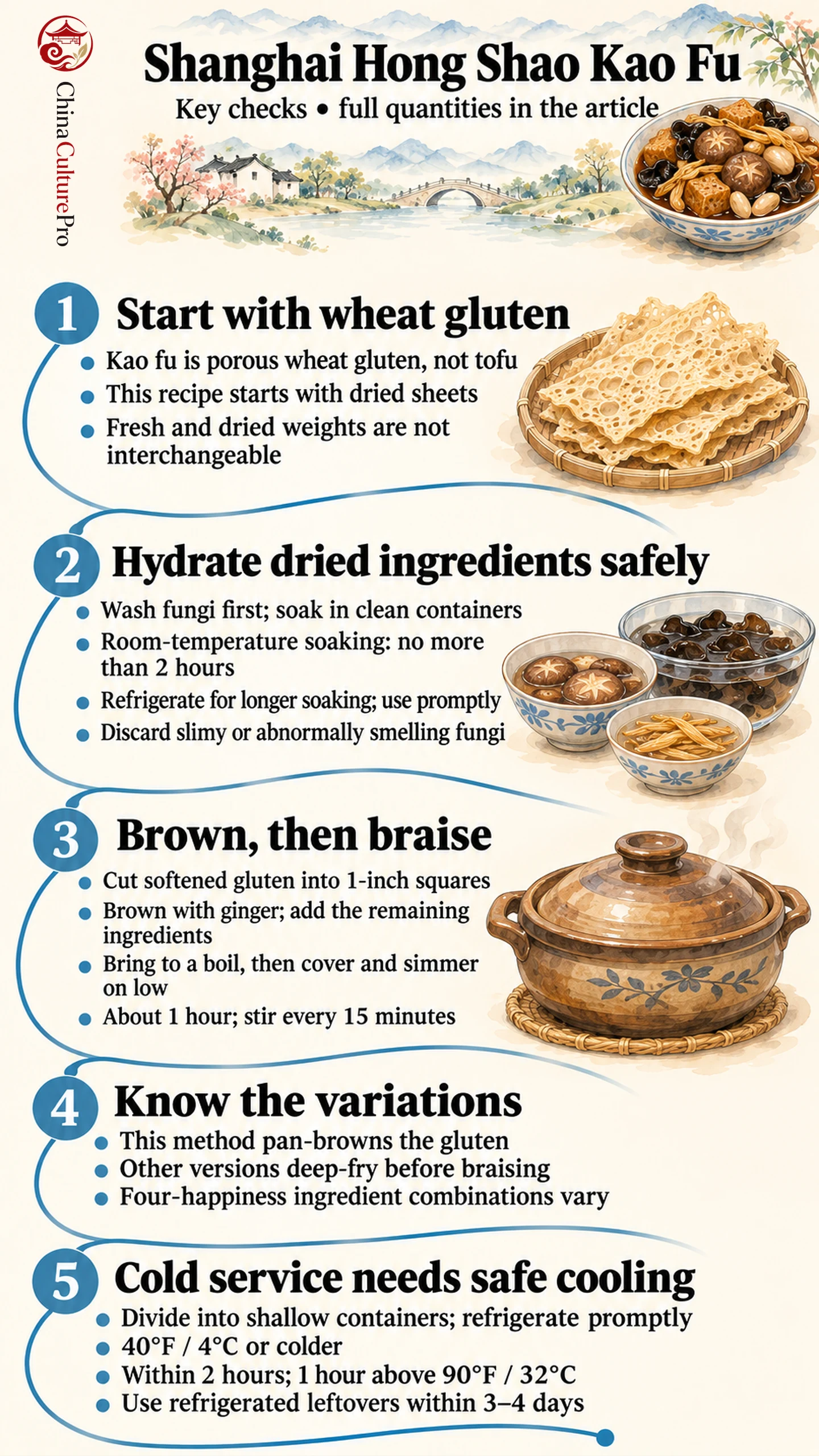
Wash dried fungi first and soak in clean containers. Keep room-temperature soaking within two hours; refrigerate if longer soaking is needed. Use promptly after hydration and discard anything slimy or abnormally smelling.[4]
- Soften the gluten in water, rinse and cut into 1-inch squares. Hydrate, rinse and drain the mushrooms, wood ear and daylily buds.[1]
- Heat the oil in a wok over high heat. Fry ginger for about 30 seconds, then lightly brown the gluten for about two minutes. Add the other solid ingredients, wine, soy sauces, sugar and water.[1]
- Bring to a boil, cover and simmer over low heat for about one hour. Stir every 15 minutes to prevent sticking.[1]
- Check that the gluten is tender and the accompaniments are cooked. For cold service, divide into shallow containers and refrigerate promptly.[5]
This method uses browning followed by a covered braise. For the broader distinction between frying and braising, focus on what happens after the ingredients enter the liquid.
Four-Happiness Versions and Serving
Sixi kao fu (四喜烤麸, sì xǐ kǎo fū), or four-happiness wheat gluten, carries a celebratory association. One Shanghai description combines gluten, wood ear, daylily flowers and peanuts. The auspicious name does not establish a single ingredient list for every cook.[3]
Other local preparations deep-fry the gluten first and use aromatics such as star anise and cinnamon. Their shorter braising instructions belong to that preparation, not the measured home method above.[2]
Serve small portions among other dishes, especially on a festival table. Cold service requires safe cooling: refrigerate at 40°F/4°C or below within two hours, or one hour above 90°F/32°C. Use refrigerated leftovers within three to four days.[5]
FAQs About Shanghai Hong Shao Kao Fu
Is this dish gluten-free or vegetarian?
Wheat gluten rules out a gluten-free dish. Check sauces and additions for vegetarian suitability, and read labels for wheat, peanut and soy allergens.[6]
Must the wheat gluten be deep-fried?
No. The method here uses pan-browning; another Shanghai preparation deep-fries first.[2]
Can fresh and dried kao fu be swapped by weight?
Do not make a gram-for-gram swap without accounting for hydration. This formula specifies dry sheets by size; a fresh-block recipe needs its own starting quantity.
Fuentes
[1] Judy Leung, The Woks of Life. Hong Shao Kao Fu: Braised Wheat Gluten with Mushrooms
[2] Shanghai Jiading government account via The Paper. 美食厨房丨四喜烤麸
[3] Shanghai Municipal Government. A taste of Shanghai: Traditional New Year foods and their hidden meanings
[4] Centre for Food Safety. Soaking Mushrooms and Food Safety
[5] USDA FSIS. How do I handle leftovers safely?
[6] U.S. FDA. Food Allergies