


Quick Answer: What Is Qixiong Ruqun?
Qixiong ruqun (齐胸襦裙, qíxiōng rúqún) is a modern hanfu label for an upper garment and skirt ensemble in which the skirt is worn up near the chest. The high line has parallels in Tang depictions. Different historical figures and surviving garments provide evidence for different details.[1][4][5]
- Position: Look for the top edge of the skirt near the chest rather than at the natural waist.[2]
- Tang comparison: A glazed figure and a painted wooden figure show high skirt lines with upper garments.[2][3]
- Modern fit: Ask how the skirt is supported and fastened. A silhouette seen on a figure can leave the fastening hidden.
Check the reference and construction before using one modern pattern to interpret several historical examples.
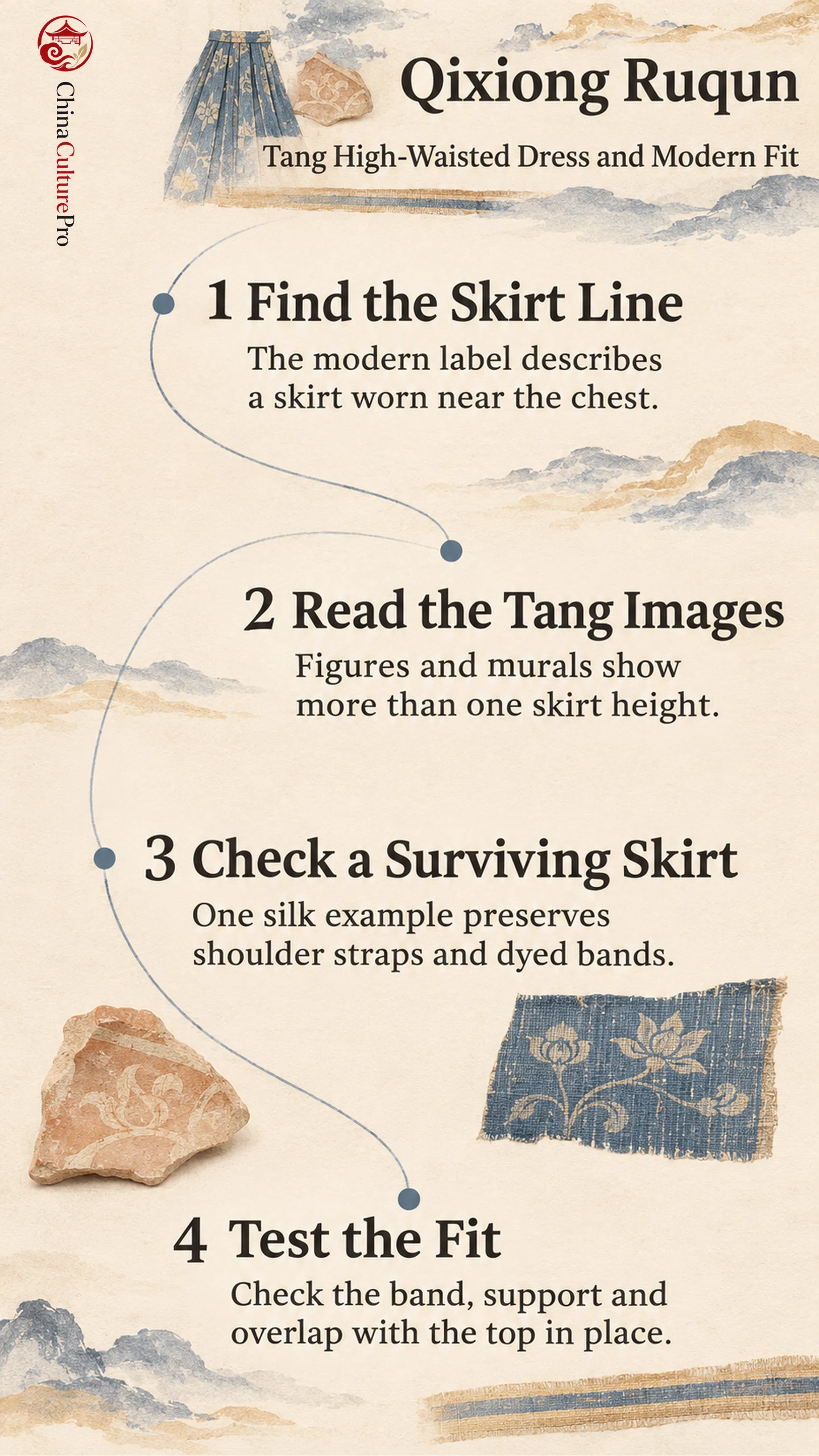
A high skirt can hide much of the top. Follow the visible collar and sleeves to see where the two garments meet. That is the first thing to check in a modern outfit or a historical figure.
Where the Skirt Sits
A ruqun (襦裙, rúqún) is an ensemble of an upper garment and a skirt. In modern hanfu use, qixiong identifies the high position of the skirt band. The skirt top can sit near the upper chest. A qiyao ruqun (齐腰襦裙, qíyāo rúqún) instead uses a band positioned around the natural waist.[1]
Collar shape gives a different clue. One figure has a crossed front, while examples discussed in modern dress interpretation also include center-opening tops. Read the cross-collar ensemble guide to compare neckline and skirt placement as two different features.[1][2]
What Tang Figures and Paintings Show
A glazed figurine in the National Museum of China wears a small-sleeved green cross-front upper garment, a long blue skirt tied at the upper chest and a pibo (披帛, pībó), a scarf draped over the shoulder. A wooden attendant in the Metropolitan Museum from the late seventh to early eighth century also shows a high-waisted garment with a short jacket. These images give a clear silhouette and evidence for the layers that can be seen.[2][3]
A study of tomb paintings near Xi’an distinguishes several waistlines, including natural-waist, underbust and high underarm examples. The study concerns women represented in particular social and performance roles. For the wider wardrobe, compare other examples of Tang women’s clothing. Treat the high skirt line as one of several arrangements seen in the paintings.[4]
What a Surviving Skirt Adds
A long silk skirt shown by the China National Silk Museum has shoulder straps, a broad hem and horizontal resist-dyed stripes below the chest. The fabric and straps are visible in the object itself. On a sculpted or painted figure, a top layer can conceal similar details, so use the object to learn how that particular skirt was made.[5]
The textile also shows how different materials can work within one garment. Its dark ground and narrow dyed bands sit above a wider patterned hem. The bands and straps document this skirt’s construction. The glazed figure shows a different kind of evidence, the position of a skirt on the body.[5]
Think of the two sources as answering different questions about Tang dynasty dress. A figure can show how an outfit appears on a body. A surviving garment can show whether particular straps, seams or fastenings are present.
How to Fit a Modern Chest-High Ensemble
Check whether your skirt uses an overlap and ties, shoulder supports, or another closure. Ask the maker where the band should sit with the upper garment in place. When trying it on, check that you can breathe and raise your arms comfortably, and that the band stays in place without extra tightening.
Check the overlap when sitting or walking and see whether the hem clears the floor in your intended shoes. Follow the closures used on your garment and use the hanfu dressing guide for the other layers. If you are presenting a reconstruction, identify which detail comes from the visual reference and which fastening the maker selected.
FAQs About Qixiong Ruqun
Is qixiong ruqun a Tang-period name?
It is a label used in modern hanfu for a chest-high skirt ensemble. Tang sources such as figurines can show the raised skirt line without supplying that modern classification.[1]
Can a Tang figurine tell you how to tie a skirt?
A figure can show the skirt line or a visible tie. Look to surviving garments or dated descriptions for seams and supports hidden under the upper layer.[2][5]
How does qixiong differ from qiyao?
The names describe where the skirt band sits. Qixiong places it near the chest, and qiyao places it near the waist.[1]
Fuentes
[1] The Paper, Arts and Culture. Comparing Tang and Song Women’s Dress on Screen
[2] National Museum of China. Three-Color Glazed Tang Female Figurine
[3] Metropolitan Museum of Art. Standing Female Attendant, 1997.442.7.2
[4] Journal of Donghua University. Waistline Proportions in High Tang Tomb Paintings
[5] China National Silk Museum. Resist-Dyed Textiles of Ancient China