


Quick Answer: What Is the Happy Family Chinese Dish?
Happy Family, often paired with the Chinese name quan jia fu(全家福,quán jiā fú), is a mixed meat, seafood and vegetable dish commonly encountered on Chinese-American menus.
- Proteins: Several meats and seafood share the plate.
- Vegetables: A mixed selection provides color and contrasting textures.
- Sauce: The familiar takeout version has savory brown sauce rather than a dry finish.[1]
The name does not guarantee a fixed ingredient list. A Chinese regional dish with the same name may have a different cooking method.
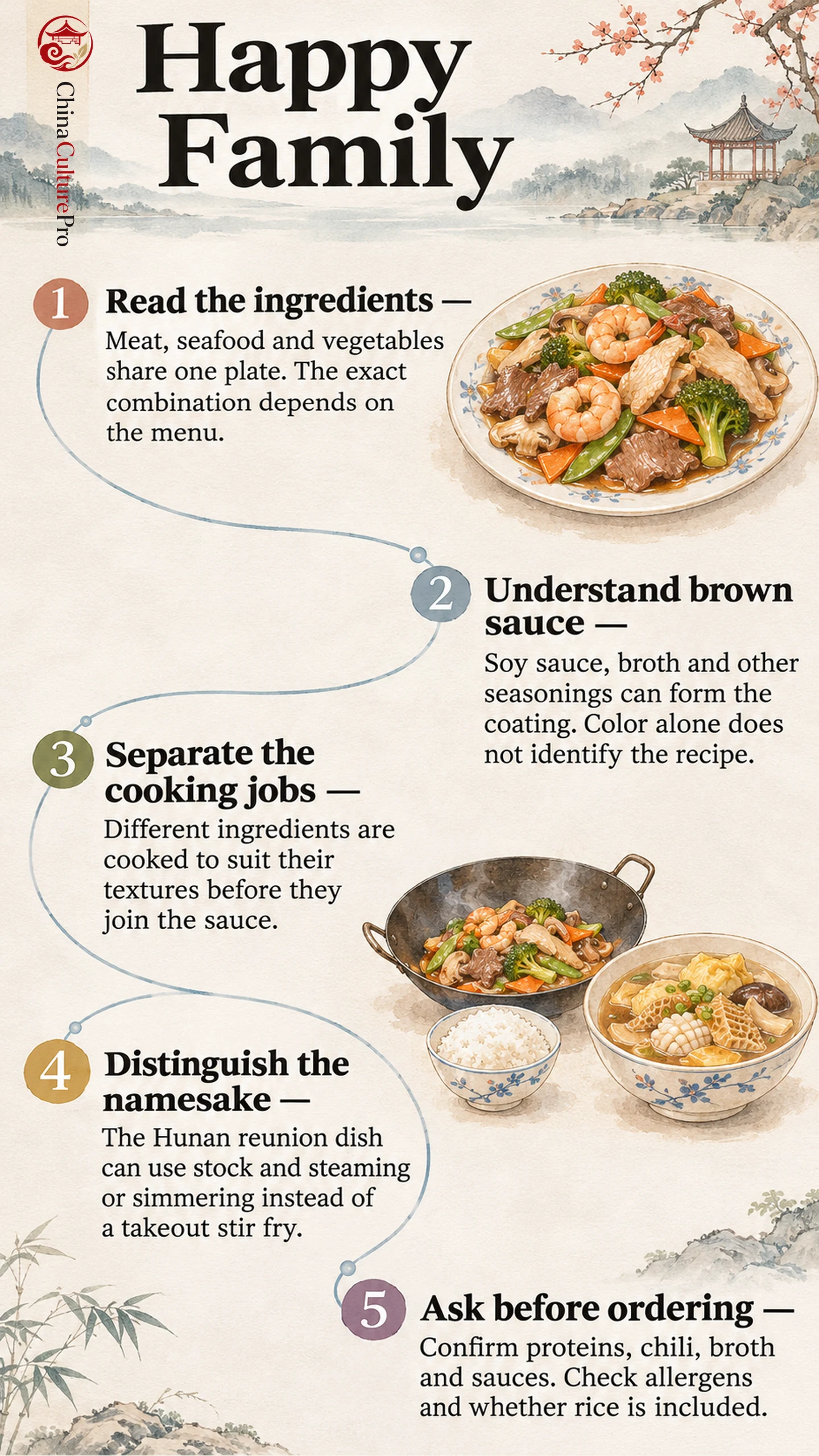
Shrimp, sliced meat and bright vegetables arrive together under a glossy coating of sauce. Happy Family offers several kinds of ingredients in one order, but the name alone leaves the exact combination unclear. Understanding the difference between Chinese and Chinese-American food helps explain why the same translated name can lead to different plates.
Meat, Seafood, Vegetables and Brown Sauce
The stir-fry is built from four components. Meat might include beef, chicken and pork; seafood can include shrimp, scallops or crab. Vegetables such as broccoli, carrots, snow peas, mushrooms, bamboo shoots and water chestnuts create a mixture of tender and crunchy bites. Some versions use both fresh and canned vegetables, so baby corn or bamboo shoots need not be fresh market produce to belong in the dish.[2]
Brown sauce binds these ingredients. One published preparation combines soy sauces, oyster sauce, broth, sesame oil and cooking wine. Its color alone does not reveal that mixture. Our guide to Chinese soy sauce explains one important part of that seasoning vocabulary.[2]
The finished plate should offer contrast: sliced meat, plump seafood and vegetables with their own textures. It is not necessarily battered or deep-fried, and it does not require the sticky sweet coating associated with some other takeout dishes.
How the Stir-Fry Comes Together
Preparation separates ingredients that behave differently in the pan. Meat is sliced and seasoned before cooking; seafood and vegetables are handled according to their own cooking needs. In one original preparation, shrimp and batches of meat are cooked separately, vegetables follow, and everything joins the sauce toward the finish. This prevents a large collection of ingredients from being treated as though they all cook identically.[3]
The method matters as much as the shopping list. Slicing makes the meats manageable in a shared dish; separate cooking helps preserve the seafood and vegetable textures; the final combination distributes sauce across the mixture. Some versions include a starch-thickened marinade or sauce, but this does not make the dish a thick soup.[3]
These Chinese cooking methods explain how the dish retains a mixture of textures. A restaurant’s choice of proteins changes the preparation needed.
Menu Variations and the Hunan Connection
Actual examples show why the menu description matters more than a presumed standard.
| Ejemplo | Qué lo distingue |
|---|---|
| Six-protein takeout version | Chicken, pork, beef, shrimp, scallops and crabmeat with vegetables in brown sauce.[1] |
| Four-protein restaurant version | Chicken, pork, beef and jumbo shrimp, with mushrooms and carrots.[4] |
| Changsha-style quan jia fu | Egg dumplings, pork tripe, squid and pork skin among the ingredients, cooked with stock by steaming or simmering.[5] |
The Hunan dish belongs to a reunion-meal tradition: its name expresses the wish for a happy gathering of the whole family. The stock-based preparation gives a concrete regional counterpart to the overseas stir-fry. It should not be used to claim that every brown-sauce Happy Family descends from one documented inventor or recipe. Explore Hunan cuisine for that regional setting.[5]
Ordering, Sharing and Ingredient Checks
Ask which meats and seafood are included, whether the sauce contains chili, and whether rice comes separately. Steamed rice makes a simple accompaniment to the sauced stir-fry. The dish can be shared with other plates rather than ordered as a prescribed family-size set.[2]
Check seafood, soy, wheat-containing seasonings and sesame where relevant. These ingredients can matter even when they are not obvious on the finished plate. Packaged sauces need their own label check, and a shared wok or utensils can create allergen cross-contact.[6]
For a vegetarian meal, request a separately prepared vegetable or tofu version and confirm broth, oyster sauce and other seasonings. Removing visible meat after cooking leaves the sauce and cooking juices behind. Anyone avoiding cooking wine should ask before preparation.
FAQs About the Happy Family Chinese Dish
Is Happy Family the same as Triple Delight?
Sometimes the names overlap, but not consistently. One restaurant lists Happy Family and a separate three-protein scallion dish. Read the descriptions rather than treating the names as interchangeable.[4]
Is Happy Family spicy?
It need not be. A savory brown sauce can be mild; chili or a spicy house sauce changes that. Ask about the particular version.
Can Happy Family be vegetarian?
A specially adapted version can be. The usual meat-and-seafood dish requires changes to the main ingredients, broth and sauces.
Fuentes
[1] Chinatown Kitchen. Restaurant menu
[2] Bee Yinn Low. Happy Family
[3] Jason Beiser. Happy Family Stir Fry
[4] Happy Family Chinese Restaurant. Restaurant menu
[5] Hunan Daily. Quan jia fu and reunion food
[6] US Food and Drug Administration. Food Allergies: What You Need to Know